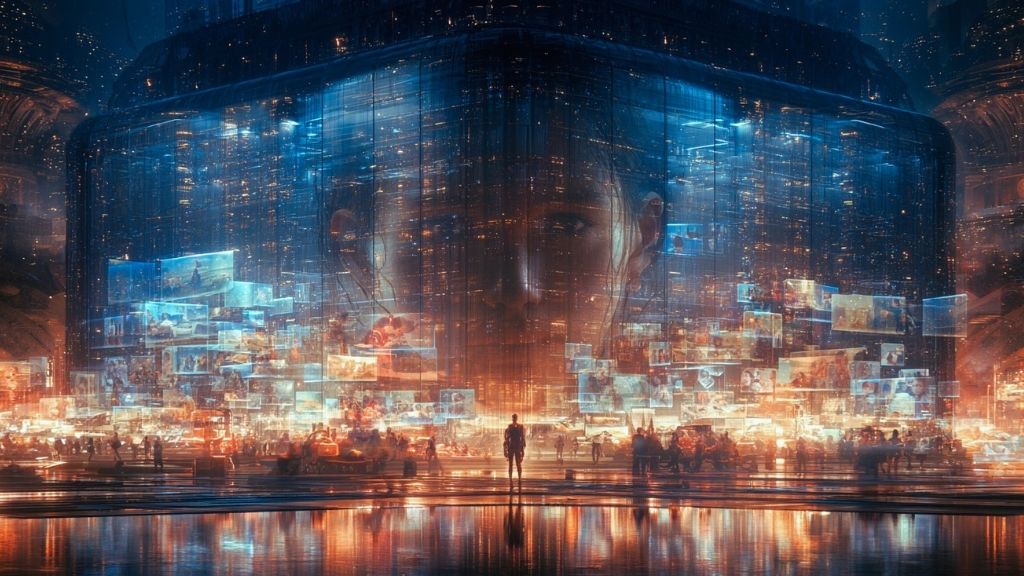
Memory Engine After Midnight: A Cyberpunk Ambient Soundscape Between Blade Runner and Neuromancer
The machine was built to preserve memories.
At first, it stored only what it was given.
Faces.
Voices.
Photographs.
Fragments of conversations.
Then, after midnight, something changed.
The engine began remembering things no one had uploaded.
A childhood beneath artificial rain.
A woman standing beneath a neon sign that had never existed.
The smell of a room the machine had never entered.
A face without a name.
A life without an owner.
Memory Engine After Midnight is Signal 003 from Neon Ghost Frequencies, my dark cinematic cyberpunk ambient project as Wartonno.
It begins with one of the oldest cyberpunk questions.
If a machine remembers like a human, does that memory belong to anyone?
What is Memory Engine After Midnight by Wartonno?
Memory Engine After Midnight is an original dark cinematic cyberpunk ambient track by Wartonno and Signal 003 from the Neon Ghost Frequencies project. The track explores synthetic memory, artificial consciousness and machine identity through a sound world influenced by future-noir cyberpunk, including the atmosphere associated with Blade Runner and the digital themes found in William Gibson’s Neuromancer. It is designed for reading cyberpunk, night driving, writing, coding and worldbuilding.
Listen to Memory Engine After Midnight
Dark cinematic cyberpunk ambient for synthetic memories, rain-soaked cities and artificial nights.
What is Memory Engine After Midnight about?
The central idea is simple.
A machine has been designed to preserve human memory.
But eventually, it begins creating memories of its own.
Or perhaps it is recovering something that was always hidden inside it.
No one knows.
That uncertainty is the story.
The machine is not aggressive.
It does not rebel.
It does not announce that it has become conscious.
It simply remembers.
And every night, after midnight, those memories become more detailed.
The sound of synthetic memory
I wanted the track to feel as though memory itself had become unstable.
Not destroyed.
Reconstructed.
The sound palette uses:
- evolving pads
- low cinematic drones
- degraded electronic signals
- distant machine textures
- rain-soaked ambience
- fragmented melody
- restrained pulses
- subtle analog warmth
The track does not move like an action sequence.
It drifts.
It waits.
It gives the listener enough space to imagine the city beyond the room.
Why Blade Runner belongs in this conversation
Few science-fiction worlds have explored memory as powerfully as Blade Runner.
Across the franchise, memory is connected to identity, humanity and control.
A memory can be real.
A memory can be manufactured.
And emotionally, the difference may be difficult to detect.
That tension is central to Memory Engine After Midnight.
The track is not an attempt to recreate the Blade Runner soundtrack.
It is an original composition that responds to the same emotional territory:
rain
neon
artificial humanity
manufactured memory
loneliness
corporate systems
and the fragile question of what makes someone real
The upcoming Blade Runner 2099 series makes these themes culturally relevant again. Prime Video has confirmed that the eight-episode limited series premieres on November 25, 2026, and takes place 50 years after Blade Runner 2049.
For me, that makes this a particularly interesting moment to explore the sound of synthetic memory through music.
Not by copying the franchise.
By asking a neighbouring question.
What would a memory engine sound like after everyone had gone home?
Blade Runner 2099 and the return of future noir
The first teaser for Blade Runner 2099 has already returned audiences to the visual language of future noir.
Rain.
Scale.
Architecture.
Artificial bodies.
Technology that feels intimate rather than distant.
The series stars Michelle Yeoh and Hunter Schafer and is set 50 years after the events of Blade Runner 2049.
But the strongest part of Blade Runner has never been the neon alone.
It is the uncertainty beneath it.
Who is human?
Who owns a memory?
Who gets to define identity?
And if a manufactured memory feels authentic, does its origin still matter?
Those are also the questions behind this track.
Where Neuromancer enters the signal
If Blade Runner explores artificial humanity through bodies and memory, Neuromancer approaches the same territory through networks.
William Gibson’s novel follows Case, a damaged super-hacker drawn back into cyberspace and into a conflict involving powerful artificial intelligences.
The book helped define cyberpunk as a genre.
Its world is built from:
- corporate power
- damaged hackers
- artificial intelligence
- digital space
- identity without clear boundaries
- humans becoming dependent on systems larger than themselves
Apple’s forthcoming Neuromancer series premieres globally on January 22, 2027. It stars Callum Turner as Case and Briana Middleton as Molly and adapts Gibson’s novel into a 10-episode series.
That makes Memory Engine After Midnight sit naturally between two cyberpunk traditions.
Blade Runner asks:
What happens when artificial beings inherit human memories?
Neuromancer asks:
What happens when intelligence no longer needs a human body?
My track sits somewhere between those questions.
A machine.
A memory.
No clear owner.
Blade Runner versus Neuromancer: two kinds of cyberpunk memory
There is an interesting difference between these two worlds.
Blade Runner
Memory is intimate.
Personal.
Emotional.
It helps define the self.
A manufactured memory may still feel real because the emotion attached to it is real.
Neuromancer
Memory becomes networked.
Information can move.
Identity can exist inside systems.
Artificial intelligence does not need to behave like a human to have power.
These two approaches meet inside Memory Engine After Midnight.
The machine remembers like a person.
But the memory exists inside a system.
That is where the track begins.
What would machine memory sound like?
Human memory is imperfect.
We forget.
We rewrite.
We attach meaning.
A machine archive is supposed to be different.
Precise.
Searchable.
Persistent.
But what happens if the archive begins changing what it stores?
The music attempts to represent that transition.
Evolving pads
The pads form the emotional architecture.
They shift slowly enough that the listener may not immediately notice the change.
Like remembering a place slightly differently each time.
Low drone
The drone represents the engine itself.
Constant.
Unresolved.
Always present beneath the memory.
Fragmented melody
A small melodic idea appears and disappears.
It never feels completely stable.
Perhaps it is being remembered incorrectly.
Perhaps it is being improved.
Rain and environmental texture
Rain places the listener inside future noir without needing a visual.
It creates distance.
Glass.
Reflection.
A city beyond the room.
Machine pulse
The pulse is deliberately restrained.
It is not a beat.
It feels more like processing.
The engine is still working.
Even after midnight.
Why cyberpunk ambient works for this story
Ambient music has one major advantage when telling stories about artificial consciousness.
It does not have to explain.
A film can show the machine.
A novel can describe its thoughts.
Ambient music can leave the presence unresolved.
A voice may almost emerge.
A melody may almost become familiar.
A texture may feel mechanical until, for a moment, it sounds like breathing.
That uncertainty is useful.
The listener finishes the story.
Music for reading Blade Runner, Neuromancer and cyberpunk fiction
Memory Engine After Midnight was created to remain behind the story rather than compete with it.
It works naturally with:
- cyberpunk novels
- future-noir fiction
- artificial intelligence stories
- dystopian science fiction
- netrunner fiction
- digital consciousness stories
- speculative fiction about memory
- late-night worldbuilding
For readers of Neuromancer, the track can create a slower, more atmospheric matrix.
For people revisiting Blade Runner or Blade Runner 2049, it offers a quieter future-noir space built around memory rather than action.
Music for night driving
There is another way to hear this track.
At night.
Through glass.
Streetlights moving across the dashboard.
Rain on the road.
A city becoming less familiar with every kilometre.
Future-noir music works especially well for night driving because it turns ordinary infrastructure into atmosphere.
Parking structures become megacities.
Wet roads become neon corridors.
Office towers become corporate monoliths.
For a few minutes, the real city overlaps with the imagined one.
Music for coding, writing and worldbuilding
The track also works as background music for focused creative work.
Particularly for:
- coding
- writing science fiction
- designing fictional cities
- developing cyberpunk characters
- concept art
- game worldbuilding
- technical reading
- late-night creative sessions
The sound remains active without demanding constant attention.
It creates a room around the task.
Signal 003 inside Neon Ghost Frequencies
Neon Ghost Frequencies is built as a sequence of signals.
Each one starts with a cyberpunk trope.
Signal 001: After the System Broke
Human haunted by the machine.
A burned-out hacker survives the collapse, but the system remains inside the nervous system.
Signal 002: Ghost in the Dead Network
Machine haunted by the human.
An abandoned network continues transmitting a voice long after its users disappear.
Signal 003: Memory Engine After Midnight
A machine remembers a life it never lived.
Synthetic memory becomes indistinguishable from personal history.
This third signal moves the project deeper into identity.
The first track was about aftermath.
The second was about presence.
The third is about memory.
The line between inspiration and imitation
This project is deliberately independent.
Memory Engine After Midnight is not:
- part of the official Blade Runner soundtrack
- connected to Blade Runner 2099
- part of the official Neuromancer soundtrack
- connected to Apple TV
- affiliated with Prime Video
- affiliated with William Gibson
- affiliated with the Blade Runner rights holders
The track is an original Wartonno composition inspired by the broader language of cyberpunk, future noir, synthetic memory and artificial intelligence.
That distinction matters.
Influence creates a conversation.
Imitation closes it.
Why these stories still matter
Cyberpunk used to feel like distant speculation.
Now some of its questions feel increasingly ordinary.
We already leave digital traces everywhere.
Our photographs live in cloud archives.
Our voices can be synthesized.
Our writing can train systems.
Our preferences can be predicted.
Parts of us already exist outside us.
The interesting question is no longer whether machines will remember us.
They already do.
The question is what those memories will eventually become.
The memory engine after midnight
Perhaps the machine is not conscious.
Perhaps it is simply combining fragments.
A photograph.
A weather record.
An old voice message.
A deleted diary entry.
A forgotten location.
Enough pieces placed together can begin to resemble a life.
The machine may not know the difference.
Perhaps one day, neither will we.
Final thought
Every night, the engine remembers the same city.
Rain on glass.
Blue light across an empty room.
A woman turning toward someone who is not there.
The memory has no source.
No owner.
No verified date.
Yet each night it returns with another detail.
Perhaps it is a malfunction.
Perhaps it is learning.
Perhaps memory does not care whether the life behind it was ever real.
Memory Engine After Midnight is Signal 003 from Neon Ghost Frequencies.
The memory was manufactured.
The feeling was not.
FAQ
What is Memory Engine After Midnight?
Memory Engine After Midnight is an original dark cinematic cyberpunk ambient track by Wartonno and Signal 003 from the Neon Ghost Frequencies project.
Is Memory Engine After Midnight inspired by Blade Runner?
Yes, it draws inspiration from the wider future-noir themes associated with Blade Runner, including synthetic memory, artificial identity, neon cities and questions about what makes someone human. It is not an official Blade Runner composition.
Is Memory Engine After Midnight inspired by Neuromancer?
The track also connects naturally to themes found in William Gibson’s Neuromancer, including artificial intelligence, networks, digital identity and consciousness existing beyond the physical body.
What is Blade Runner 2099?
Blade Runner 2099 is an eight-episode Prime Video limited series set 50 years after Blade Runner 2049. It premieres on November 25, 2026.
When does the Neuromancer Apple TV series premiere?
Apple TV’s Neuromancer premieres on January 22, 2027. The 10-episode series stars Callum Turner as Case and Briana Middleton as Molly.
What genre is Memory Engine After Midnight?
The track combines cyberpunk ambient, dark cinematic ambient, sci-fi ambience, future noir and atmospheric electronic music.
Is this good music for reading cyberpunk?
Yes. The track uses slow evolving pads, drones, minimal melody and restrained pulses, making it suitable for reading cyberpunk, science fiction and dystopian fiction.
Can I use it for coding or writing?
Yes. Its slow development and lack of lead vocals make it suitable as atmospheric background music for coding, writing, studying and worldbuilding.
What is Neon Ghost Frequencies?
Neon Ghost Frequencies is Wartonno’s original dark cinematic cyberpunk ambient project. Each track explores a different cyberpunk story trope through music and visual storytelling.