A city built from rain, memory, and hidden patterns
Meridian City is the fictional world inside the Wartonno archive.
It is a city of rain-slick streets, broken reflections, occult evidence, strange photographs, old case files, neon shadows, impossible architecture, and people who sense that reality is thinner than it should be.
At first, Meridian City may look like an urban fantasy setting.
But it is more than a backdrop for stories.
It is a living archive of atmosphere.
A place where music, fiction, visual art, and dream logic meet. A place where dark ambient soundscapes can become streets, rooms, rituals, investigations, and memories that refuse to stay buried.
In the wider Wartonno ecosystem, Meridian City is the fictional counterpart to Wartonno Sound.
Where Wartonno Sound creates liminal soundscapes for focus, sleep, and escape, Meridian City gives those soundscapes a narrative shadow.
The music becomes a room.
The room becomes a street.
The street becomes a case file.
The case file becomes a story.
The story becomes part of the archive.
This is Meridian City.
A place behind the sound.
What kind of world is Meridian City?
Meridian City is a modern urban fantasy and occult mystery universe.
It blends elements of:
- urban fantasy
- occult crime
- psychological mystery
- liminal horror
- supernatural investigation
- dark academia atmosphere
- cinematic noir
- dreamlike realism
- strange archives
- emotionally haunted characters
The city is not fantasy in the bright, heroic sense.
There are no shining kingdoms here.
No clean magic systems revealed in neat explanations.
No simple divide between good and evil.
Meridian City is quieter than that.
Its magic hides in symbols, photographs, hospital records, rituals, streetlight patterns, missing names, dreams, and the spaces where memory begins to distort.
The supernatural rarely arrives with thunder.
It appears as a wrong detail.
A face in a photograph that was not there before.
A file with a date that keeps changing.
A room that appears only during micro-sleep.
A body marked with a symbol no one remembers drawing.
A voice on an old recording speaking a name that has not yet been given.
Meridian City is built around the feeling that the world is almost normal.
Almost.
And that small difference is where the horror begins.
The emotional atmosphere of Meridian City
Every fictional world has an emotional temperature.
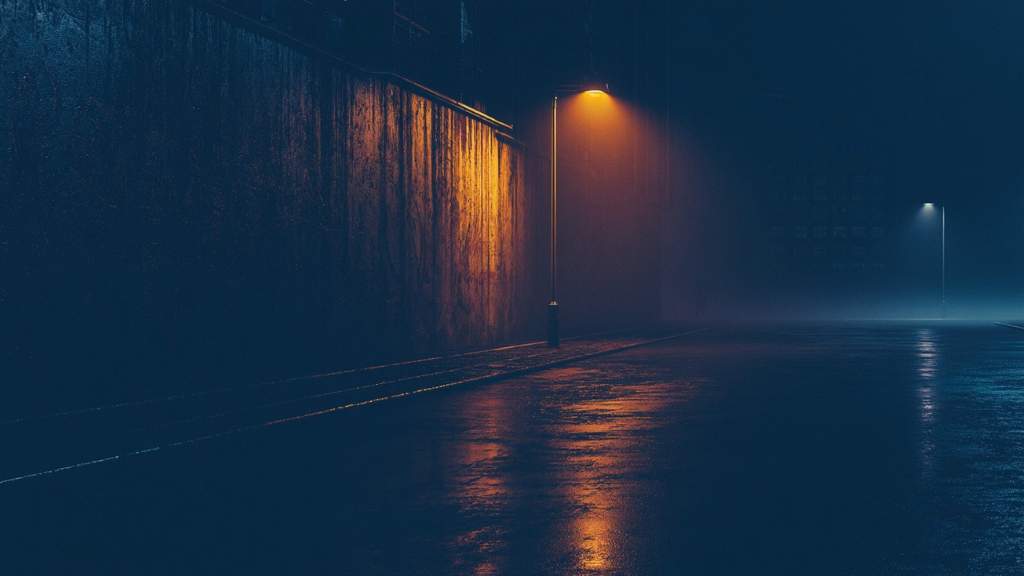
Meridian City feels cold, wet, nocturnal, and watchful.
Its atmosphere is shaped by:
- rain on glass
- old concrete
- flickering lights
- empty subway platforms
- black water
- occult graffiti
- hospital corridors
- forgotten archives
- analog photography
- low-frequency drones
- half-remembered dreams
- blue shadows and rusted neon
But the city is not dark only to be dark.
The darkness has emotional purpose.
Meridian City is about what people carry and try to hide. Trauma, memory, obsession, grief, longing, guilt, unfinished love, creative damage, and the quiet terror of seeing the pattern too clearly.
This is why the city connects so naturally to dark ambient music.
Dark ambient does not explain every feeling. It holds it.
Meridian City works the same way.
It does not always give clear answers. It lets the reader feel the pressure of the unknown. It allows silence, atmosphere, and unresolved images to carry meaning.
In Meridian City, the mood is not decoration.
The mood is evidence.
The connection between Meridian City and Wartonno Sound
Meridian City and Wartonno Sound come from the same creative root.
Both are built around atmosphere, inner tension, and liminal spaces.
Wartonno Sound creates music for:
- overthinking
- focus
- sleep
- writing
- emotional reset
- reflection
- inner escape
- quiet creative work
Meridian City gives that atmosphere a fictional landscape.
A Wartonno Sound track might feel like:
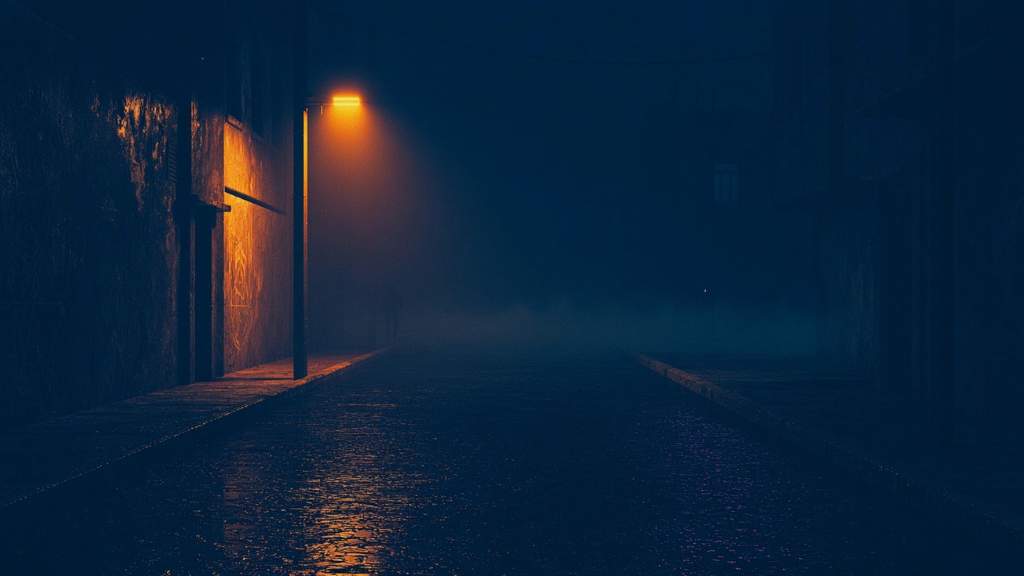
- a rainy street after midnight
- an abandoned office glowing blue
- a subway tunnel where the lights keep failing
- a darkroom filled with impossible negatives
- a hospital room where memory slips
- a city seen through a camera lens
- a case file no one wants reopened
Those images belong naturally to Meridian City.
This is why the fiction and the music are not separate projects. They are two different entrances into the same emotional world.
A listener might discover Wartonno through a dark ambient track.
A reader might discover Wartonno through a Meridian City story.
A visual art piece might connect both.
Together, they form a loop.
Sound becomes story.
Story becomes image.
Image becomes atmosphere.
Atmosphere returns to sound.
To hear the sound world connected to this archive, visit the Wartonno Sound page.
Who is Aya Lin?
One of the central figures in Meridian City is Aya Lin.
Aya Lin is connected to the investigative side of the city: occult crimes, hidden patterns, ritual evidence, old records, and the kind of truth that damages the person who finds it.
She is sharp, obsessive, and quietly haunted.
Aya does not simply solve mysteries. She follows patterns that often seem to follow her back.
Her world is made of:
- case files
- symbols
- crime scenes
- recurring motifs
- impossible evidence
- ritual structures
- buried family trauma
- institutional secrets
- the feeling that every answer opens another locked room
Aya belongs to the colder side of Meridian City.
She is the figure standing under a streetlight after midnight, reading a symbol no one else wants to recognize. She is the investigator who knows that people lie, but patterns do not. She is drawn to the hidden architecture beneath ordinary violence.
Through Aya Lin, Meridian City becomes a place of investigation.
Not only investigation of crime, but investigation of reality itself.
What is a symbol?
What is a memory?
What is a name?
What happens when the dead leave evidence?
What happens when the city begins to answer?
Aya Lin is one of the ways readers enter Meridian City.
She is the eye that refuses to close.
Who is Mara Chen?
Another important figure in Meridian City is Mara Chen.
Where Aya Lin belongs to the investigative and occult-crime side of the city, Mara Chen belongs to photography, perception, memory, and the fragile boundary between waking and dreaming.
Mara is an analog street photographer whose camera sometimes captures what ordinary sight cannot.
Her world is made of:
- film negatives
- darkrooms
- street photography
- micro-sleep episodes
- fractured perception
- family tension
- creative trauma
- supernatural traces
- images that reveal too much
Mara does not hunt patterns in the same way Aya does.
She catches them by accident.
A face in the background.
A shadow in the wrong place.
A building that was not on that street.
A figure looking directly at the lens from somewhere that should be empty.
Through Mara Chen, Meridian City becomes a place of perception.
Her stories ask different questions:
What does a camera remember?
Can an image become a doorway?
What happens when art reveals something the artist was not ready to see?
Is the supernatural outside the self, or buried inside the act of looking?
Mara brings a more intimate, fragile kind of horror to the archive.
Aya follows the pattern.
Mara captures the fracture.
Together, they show two important ways into Meridian City.
The role of Numen: magic as hidden pressure
Meridian City has a magical system known as Numen.
Numen is not bright, easy, or openly celebrated. It is a hidden pressure inside reality. A force that appears through symbols, rituals, dreams, names, thresholds, memory, and the emotional residue people leave behind.
In many fantasy worlds, magic is treated like a tool.
In Meridian City, magic often feels more like a consequence.
It answers obsession.
It feeds on meaning.
It gathers around trauma.
It bends toward symbols.
It leaves traces in places where people have suffered, loved, disappeared, or refused to forget.
Numen is one of the reasons the city feels alive.
Not alive in a comforting way.
Alive like an old building that remembers every voice.
Alive like a mirror that has seen too much.
Alive like a name written down so many times it begins to call back.
This magical system allows Meridian City to remain mysterious while still feeling coherent. The supernatural has logic, but it is not always logic the characters can safely understand.
That is important.
In Meridian City, knowledge has a cost.
Why Meridian City feels liminal
The word liminal means being in-between.
A threshold.
A transition.
A place that is not fully one thing or another.
Meridian City is deeply liminal.
It exists between:
- waking and dreaming
- memory and evidence
- the natural and supernatural
- the city and the archive
- the living and the dead
- the visible and invisible
- investigation and obsession
- art and haunting
- sound and story
This is why the city feels connected to liminal ambient and dark ambient music.
Both forms are about thresholds.
A dark ambient track can feel like standing in a doorway without knowing what is on the other side. Meridian City uses that same feeling in fiction.
A character enters a hallway and comes out changed.
A photo reveals a hidden layer of reality.
A name disappears from a grave.
A dream leaves physical evidence.
A city block appears where no city block should be.
A sound repeats until someone realizes it is not music, but a message.
Liminal fiction works because it makes ordinary places feel unstable.
Meridian City is full of those places.
The visual language of Meridian City
Meridian City has a strong visual identity.
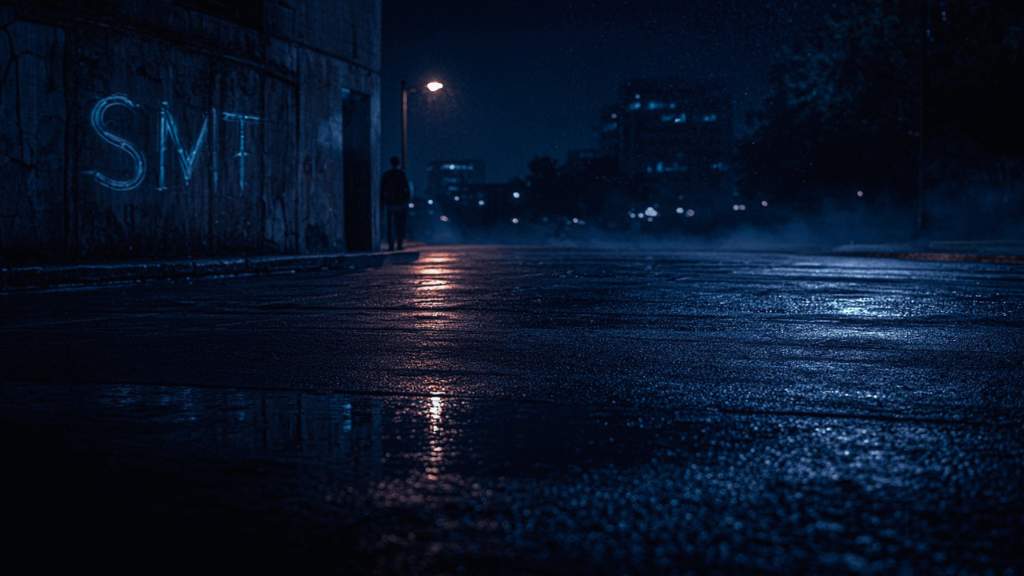
It often looks and feels like:
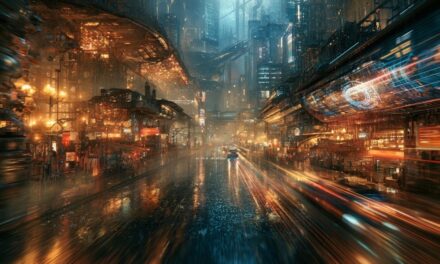
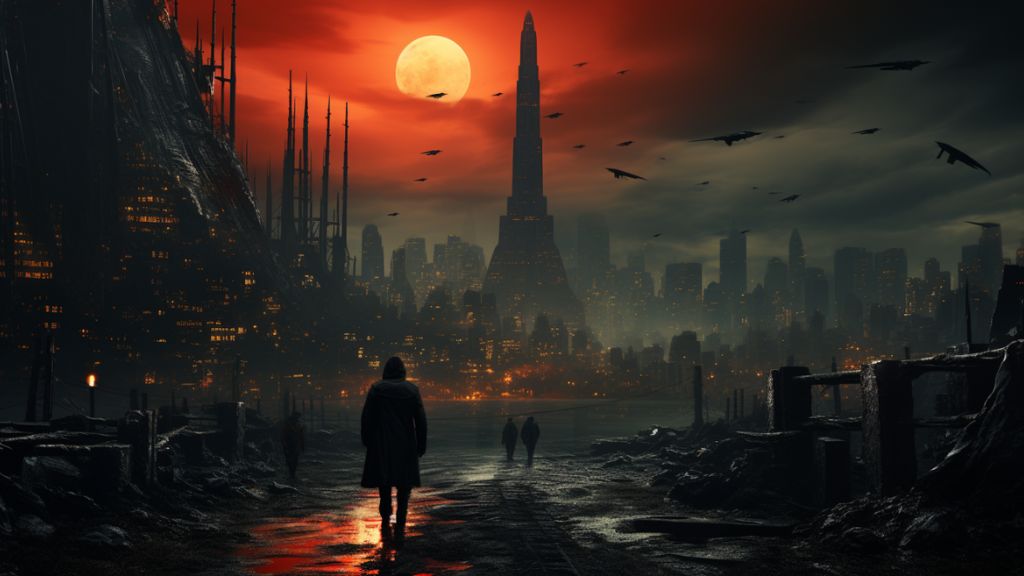
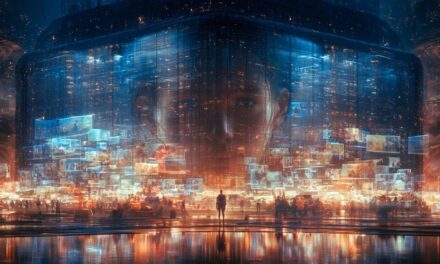
- cinematic urban fantasy cityscapes at night
- decayed architecture mixed with neon light
- fog rolling through cracked streets
- occult graffiti glowing faintly
- rain reflecting blue and amber signs
- abandoned chapels
- hospital corridors
- darkrooms
- old apartment blocks
- underground archives
- static violet shadows
- analog film grain
- soft chiaroscuro lighting
The color palette often moves through deep blue, rusted bronze, ash grey, black water, sodium amber, and traces of violet or red.
This matters because Meridian City is not only written.
It is visualized.
The same atmosphere can appear in:
- Midjourney prompts
- blog headers
- album covers
- social posts
- character portraits
- YouTube visuals
- short story artwork
- fictional archive fragments
The visual style helps readers and listeners recognize the world before they fully understand it.
When someone sees a rain-wet street, a blue-lit room, a figure under a broken streetlamp, or a dark archive filled with impossible files, they should feel close to Meridian City.
The image becomes part of the mythology.
What kinds of stories belong in Meridian City?
Meridian City is built for stories that feel atmospheric, mysterious, emotional, and slightly unstable.
The best Meridian City stories often include:
- one central mystery
- a strong emotional wound
- an uncanny object, place, or symbol
- a character who cannot look away
- a supernatural element that begins quietly
- a city location with mood and history
- a final revelation that opens a deeper question
These are not stories where everything becomes safe at the end.
A Meridian City ending may solve the case, but still leave a shadow behind.
The reader may understand what happened, but not fully understand what it means.
That is part of the identity.
Meridian City is not about closing every door.
It is about realizing how many doors were hidden in the walls.
How Meridian City supports the Wartonno archive
Inside the wider Wartonno ecosystem, Meridian City has several roles.
It gives the music a fictional depth.
It gives visual art a narrative context.
It gives blog posts a mythological layer.
It gives Wartonno.com a world beyond ordinary artist branding.
This matters because Wartonno is not only about releasing content.
It is about building a recognizable creative world.
Meridian City allows different forms to connect:
- A dark ambient track can become a soundtrack to a Meridian location.
- A short story can inspire a new soundscape.
- A character can appear in visual art.
- A blog article can explain part of the fictional archive.
- A piece of music can feel like a recovered transmission.
- A YouTube visualizer can become a window into the city.
This gives the audience more than one way to enter.
Some people will come for the music.
Some for the fiction.
Some for the visuals.
Some for the atmosphere itself.
Meridian City keeps those doors connected.
Where should new readers begin?
If you are new to Meridian City, do not worry about understanding everything at once.
The city is meant to be entered slowly.
Start with the central idea:
Meridian City is a fictional urban fantasy archive where occult mystery, dark ambient atmosphere, strange photography, hidden symbols, and emotionally haunted characters meet.
Then follow the doorway that interests you most.
If you like investigation, begin with Aya Lin.
If you like photography and perception, begin with Mara Chen.
If you like music, begin with Wartonno Sound.
If you like atmosphere, begin anywhere.
The city will find you from there.
How Meridian City connects to future articles
This article is only the beginning of the fictional archive.
Future Meridian City articles can explore:
- Who is Aya Lin?
- Who is Mara Chen?
- What is Numen?
- The visual language of Meridian City
- How dark ambient music shapes Meridian City
- The difference between occult mystery and urban fantasy
- Meridian City locations and districts
- How to read the Meridian City archive
- The role of photography, dreams, and memory
- Why liminal horror works so well in city fiction
Each article will open one more door.
Not all at once.
One file.
One symbol.
One street.
One sound.
One impossible photograph.
That is how the archive grows.
Frequently asked questions
What is Meridian City?
Meridian City is a fictional urban fantasy and occult mystery universe connected to the Wartonno archive. It is a city of rain, neon, hidden rituals, strange evidence, supernatural patterns, and emotionally haunted characters.
Is Meridian City connected to Wartonno Sound?
Yes. Meridian City and Wartonno Sound are connected through atmosphere, dark ambient music, liminal soundscapes, visual storytelling, and the wider Wartonno creative archive.
Who is Aya Lin?
Aya Lin is one of the central characters in Meridian City. She is connected to occult investigation, hidden patterns, ritual crimes, evidence, symbols, and the darker institutional side of the city.
Who is Mara Chen?
Mara Chen is a Meridian City character connected to analog photography, perception, memory, creative trauma, and supernatural traces captured through images.
What genre is Meridian City?
Meridian City blends urban fantasy, occult mystery, liminal horror, psychological suspense, supernatural investigation, and dark cinematic storytelling.
What is Numen?
Numen is the magical system inside Meridian City. It is a hidden force connected to symbols, rituals, memory, dreams, names, emotional residue, and the unseen pressure beneath ordinary reality.
Is Meridian City a book series?
Meridian City is a fictional universe and story archive. It can contain short stories, novellas, character profiles, fictional documents, visual pieces, music connections, and worldbuilding articles.
Why is Meridian City connected to dark ambient music?
Dark ambient music and Meridian City share the same atmosphere: mystery, stillness, tension, memory, liminal space, and emotional shadow. Wartonno Sound helps create the sonic environment of the city.
Where should I start with Meridian City?
Start with this beginner guide, then explore articles about Aya Lin, Mara Chen, Numen, and the stories connected to Meridian City. You can also listen to Wartonno Sound to enter the atmosphere through music.
What Is Wartonno? The World Behind Wartonno Sound.
How I Create Dark Ambient Music for Overthinking Minds.
Final reflection
Meridian City is not a place you fully understand the first time you enter it.
It reveals itself in fragments.
A symbol under rainwater.
A photograph that should not exist.
A case file with a missing page.
A sound beneath the floor.
A name that changes when no one is watching.
A city street that feels familiar, although you have never been there.
That is the heart of the archive.
Meridian City is the fictional shadow of Wartonno Sound.
It is where dark ambient music becomes architecture.
Where overthinking becomes investigation.
Where memory becomes evidence.
Where dreams leave marks on the waking world.
And somewhere inside it, Aya Lin follows the pattern.
Mara Chen raises the camera.
The city waits.