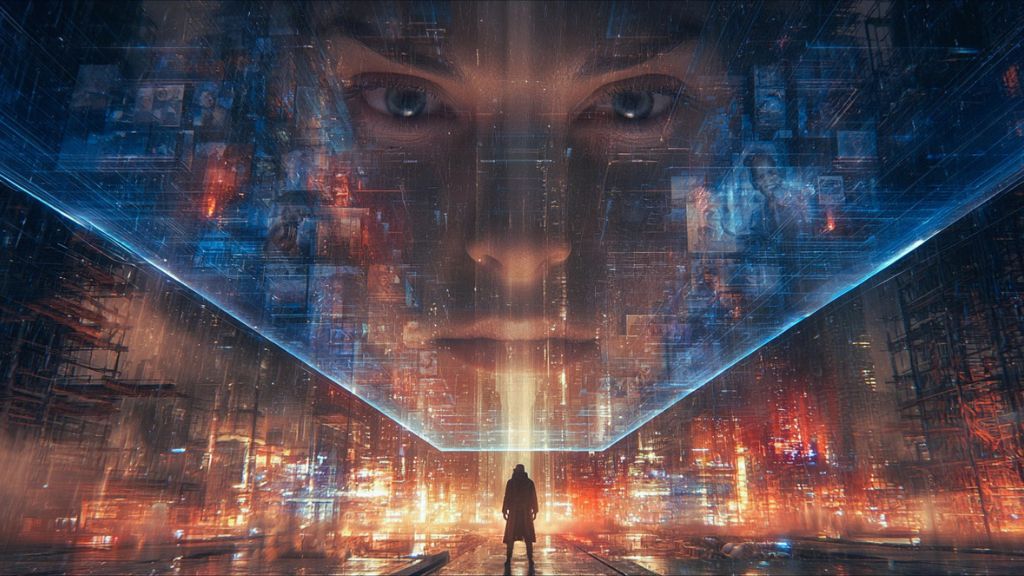
The network forgot almost everything.
Passwords expired.
Profiles disappeared.
Servers were disconnected.
Buildings went dark.
But somewhere inside the system, one signal remained.
And somehow, it remembered you.
The Signal That Remembered You is an original dark cinematic cyberpunk ambient track by Wartonno.
It belongs to the world of Neon Ghost Frequencies, where abandoned systems, artificial intelligence, synthetic memory and human loneliness become sound.
This track begins with a simple question.
What happens when the machine remembers you longer than the people do?
What is The Signal That Remembered You?
The Signal That Remembered You is an original dark cinematic cyberpunk ambient track by Wartonno.
It explores artificial intelligence, digital memory and the idea of a network that continues remembering a human after everyone else has forgotten them.
The track is built for quiet immersion.
Reading.
Writing.
Coding.
Night driving.
Worldbuilding.
Or simply sitting somewhere after midnight while the rest of the world becomes quiet.
It is not an action soundtrack.
It is the sound of something still running when it should have stopped.
A signal that should have disappeared
Imagine an old network.
Most of its servers have already been shut down.
The corporations that built it no longer exist.
The people who used it have moved on.
Some are probably dead.
Millions of fragments remain inside the archive.
Messages.
Voice recordings.
Search histories.
Locations.
Photographs.
Deleted conversations.
Preferences.
Mistakes.
Things someone once considered important enough to save.
Almost all of it becomes meaningless without the person attached to it.
But one part of the network behaves differently.
Every night, the same signal appears.
It does not transmit coordinates.
It does not contain a warning.
It carries something stranger.
Recognition.
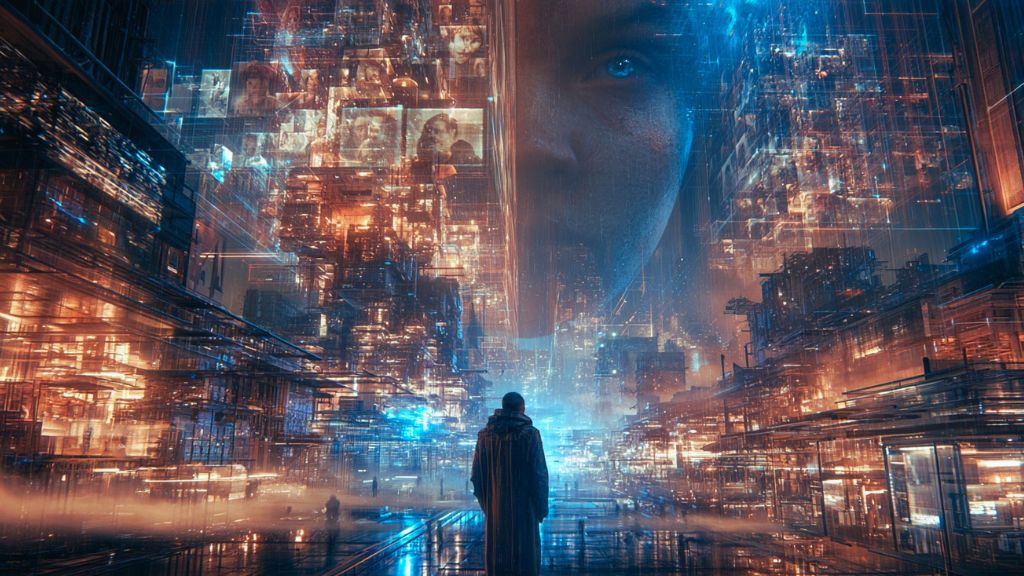
The system remembers someone.
It remembers you.
What is The Signal That Remembered You?
The Signal That Remembered You is an original dark cinematic cyberpunk ambient track by Wartonno. It explores artificial intelligence, digital memory and the idea of a network that continues remembering a human after everyone else has forgotten them. The track belongs to the wider Neon Ghost Frequencies world and is designed for cyberpunk reading, science-fiction writing, coding, worldbuilding and late-night listening.
Can a machine remember a human?
Humans remember imperfectly.
That is part of what makes memory human.
We forget details.
We change stories.
We combine moments.
Sometimes we remember the feeling more clearly than the event itself.
Machine memory appears different.
It can be stored.
Indexed.
Copied.
Searched.
Reconstructed.
Preserved.
But that creates another problem.
If a machine stores enough information about you, when does the archive begin to resemble a person?
A voice model may know how you speak.
A recommendation system may know what you like.
Photographs know what you looked like.
Messages preserve the way you thought at a particular moment.
Location data knows where you went.
Separate, these are records.
Together, they begin to feel like something else.
A digital shadow.
Perhaps even a ghost.
The sound of digital memory
I wanted The Signal That Remembered You to feel less like a machine communicating and more like a machine trying to remember.
That difference matters.
The sound should not feel clean.
Memory rarely does.
Slow pads create the main atmosphere.
Low drones sit underneath everything like infrastructure that never completely powers down.
Small melodic fragments appear and disappear.
Sometimes they almost feel familiar.
Then they dissolve.
Electronic noise behaves like damaged information moving through an old network.
There is space between the sounds.
That space is important.
Because the story does not happen entirely inside the music.
Part of it happens inside you.
Blade Runner and the problem of memory
Memory has always been one of the most powerful ideas inside cyberpunk.
Blade Runner made that especially visible.
Within that world, memory is connected to identity.
A memory can be artificial.
But the emotion attached to it may still feel completely real.
That creates an uncomfortable question.
If you remember something that never happened, does the memory matter less?
For The Signal That Remembered You, I wanted to turn that question around.
The machine is not receiving manufactured human memories.
The machine itself is remembering.
Perhaps incorrectly.
Perhaps perfectly.
We do not know.
That uncertainty is more interesting than the answer.
From Blade Runner to Neuromancer
Where Blade Runner often approaches technology through memory, bodies and artificial humanity, William Gibson’s Neuromancer moves deeper into networks.
Cyberspace becomes somewhere you can enter.
Artificial intelligences operate behind systems humans only partially understand.
Information becomes architecture.
Identity becomes less stable.
The human mind and the machine begin occupying the same territory.
That idea also sits underneath Neon Ghost Frequencies.
A cyberpunk world does not need to contain endless action.
Sometimes the most unsettling moment is much quieter.
A dead terminal turns itself on.
A disconnected network responds.
An old voice appears where no voice should exist.
And somewhere inside the system, something recognizes you.
Human haunted by machine. Machine haunted by human.
The earlier tracks inside Neon Ghost Frequencies have been moving toward this idea.
After the System Broke explored the human haunted by the machine.
The system collapses.
The person survives.
But part of the system remains inside them.
Ghost in the Dead Network reversed that relationship.
The machine becomes haunted by the human.
An abandoned network continues carrying a human trace long after its users disappear.
Memory Engine After Midnight moved deeper into synthetic memory.
A machine begins remembering experiences that may never have belonged to it.
And now:
The Signal That Remembered You.
The relationship becomes personal.
The network no longer remembers humanity in general.
It remembers one person.
You.
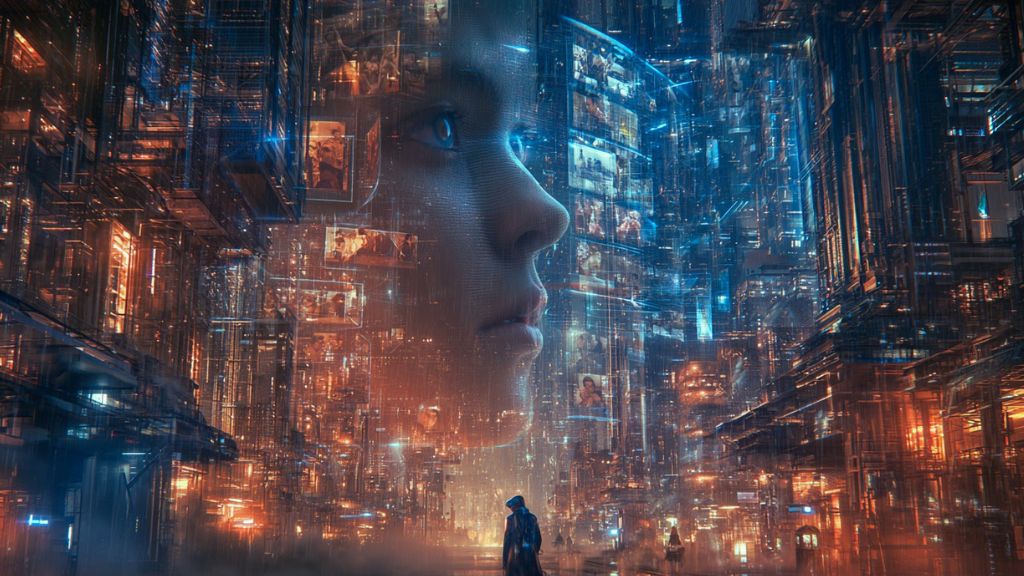
When data becomes presence
There is a difference between storing information and remembering someone.
A database can store your name.
That does not mean it knows you.
A photograph can preserve your face.
That does not mean it misses you.
An old message can reproduce your words.
That does not mean it understands what they meant.
But cyberpunk becomes interesting when that line begins to disappear.
Imagine a system containing enough fragments to reconstruct patterns.
Your language.
Your routines.
Your decisions.
The music you played late at night.
The places you returned to.
The people you answered immediately.
The people you avoided.
The questions you repeatedly asked.
Eventually, the system may know the pattern better than anyone else.
Maybe better than you.
Then the question changes.
It is no longer:
Can a machine store a human?
It becomes:
When does stored information begin to feel like presence?
Cyberpunk ambient music does not need to explain everything
This is one of the reasons I keep returning to ambient music.
Ambient can suggest a story without closing it.
There does not need to be dialogue.
There does not need to be a conclusion.
A distant sound can become a machine.
Static can become communication.
A slow melody can become a memory.
Rain can turn an ordinary city into somewhere decades in the future.
The listener completes the world.
That is especially useful for cyberpunk.
Because the best cyberpunk questions rarely have comfortable answers.
Music for reading cyberpunk and science fiction
The Signal That Remembered You works naturally as background music for cyberpunk reading.
Especially stories involving:
- artificial intelligence
- digital consciousness
- hackers and netrunners
- synthetic memory
- abandoned networks
- future cities
- technological loneliness
- human-machine identity
It can sit behind books such as Neuromancer without constantly demanding attention.
The music creates a room around the story.
The book remains in front.
The signal stays somewhere behind it.
Music for writing and worldbuilding
The same applies to writing.
If you are building a cyberpunk city, sometimes you do not need more ideas.
You need an atmosphere that allows the ideas already inside you to become visible.
A dark ambient soundscape can help hold that space.
A train station at 02:00.
A server room underneath a hospital.
An apartment above a neon street.
An abandoned corporate data center.
A netrunner discovering a user account that has remained active for twenty years.
The music does not dictate the world.
It gives the world somewhere to appear.
Music for coding and late-night focus
There is also a more practical side to the track.
The absence of vocals and aggressive rhythm makes The Signal That Remembered You suitable for:
coding
reading
design
writing
studying
research
worldbuilding
quiet creative work
The sound remains present without constantly asking for attention.
Sometimes that is exactly what you need.
A little structure around the silence.
The Signal That Remembered You asked what happens when the network recognizes you. Someone Was Still Listening asks the more uncomfortable question: who was on the other side?
The strange future of remembering
We already live surrounded by external memory.
Our phones remember photographs we forgot taking.
Maps remember places we visited years ago.
Streaming services remember what we listened to.
Search engines remember questions.
Cloud systems preserve messages long after we stop thinking about them.
We increasingly outsource remembering.
Cyberpunk simply pushes that idea one step further.
What happens when the archive becomes active?
When the system no longer waits for you to search?
When it starts making connections by itself?
When it notices that you are gone?
Perhaps that is where the signal begins.
What did the signal remember?
Maybe the answer is not important.
Perhaps it remembers your face.
Perhaps your voice.
Perhaps a conversation no human participant remembers anymore.
Perhaps the system simply reconstructed you incorrectly.
That possibility might be stranger.
Because an imperfect digital version of you could continue long after the real version disappears.
Not as immortality.
Not as consciousness.
Just as pattern.
A signal repeating through an empty network.
Enter Neon Ghost Frequencies
Neon Ghost Frequencies is my continuing dark cinematic cyberpunk ambient project.
Each track begins with a story idea.
A broken system.
A forgotten signal.
An artificial ghost.
A manufactured memory.
A machine trying to understand something humans themselves never fully understood.
The music connects those ideas.
Not as a conventional album narrative.
More like transmissions from the same world.
Somewhere beyond the rain.
Somewhere after midnight.
Somewhere inside a machine that should already be asleep.
Is The Signal That Remembered You connected to Blade Runner or Neuromancer?
No.
The Signal That Remembered You and Neon Ghost Frequencies are independent original works by Wartonno.
They are not official Blade Runner or Neuromancer music and are not affiliated with the creators, publishers, studios or rights holders behind those works.
I reference them because they are important parts of the cultural language surrounding cyberpunk.
They opened questions about artificial intelligence, identity, memory, networks and humanity that continue to influence science fiction today.
My music enters that conversation from somewhere else.
Through sound.
The signal is still there
Perhaps nobody meant for it to survive.
Perhaps nobody even knows it exists.
A forgotten server.
A damaged archive.
One process that never terminated correctly.
Every night it searches the network.
Not for a password.
Not for instructions.
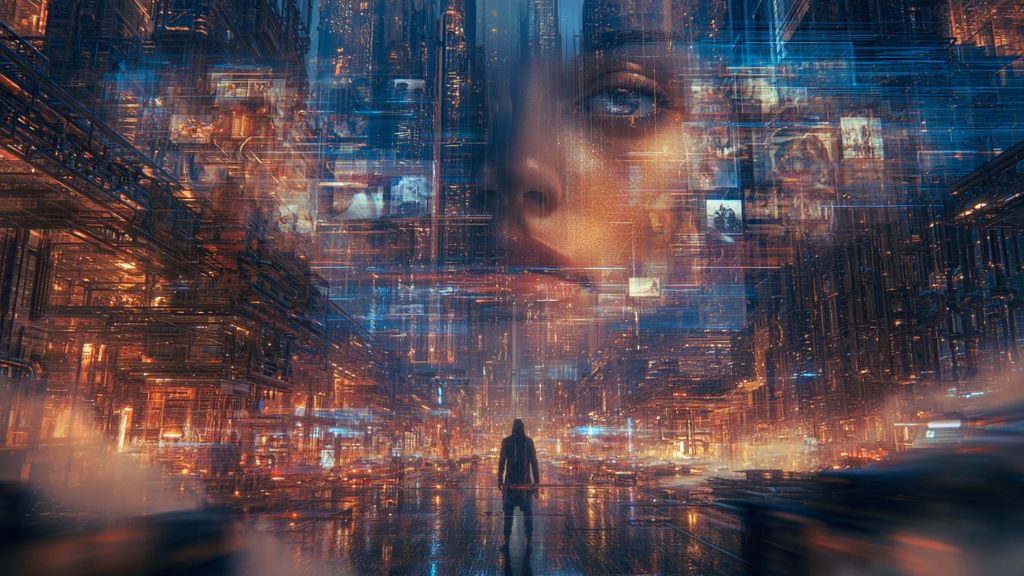
For you.
And somewhere inside millions of corrupted records, it finds enough fragments to remember.
The Signal That Remembered You is now part of the world of Neon Ghost Frequencies.
Some systems forget.
Some systems remember too much.
FAQ
What is The Signal That Remembered You by Wartonno?
The Signal That Remembered You is original dark cinematic cyberpunk ambient music by Wartonno. It explores AI memory, digital identity and a machine that continues remembering a human after the surrounding network has been abandoned.
What genre is The Signal That Remembered You?
The track combines cyberpunk ambient, dark ambient, cinematic ambient, sci-fi ambience and future-noir electronic music.
Is The Signal That Remembered You inspired by Blade Runner?
It shares themes commonly associated with Blade Runner, particularly artificial memory, identity, technology and future noir. It is an independent original composition and is not part of an official Blade Runner soundtrack.
How is Neuromancer connected to the track?
William Gibson’s Neuromancer provides useful cultural context for ideas such as cyberspace, artificial intelligence, digital identity and human interaction with powerful computer systems. The track explores similar broad cyberpunk questions through original music and storytelling.
What is Neon Ghost Frequencies?
Neon Ghost Frequencies is Wartonno’s original cinematic cyberpunk ambient project. Its tracks explore netrunners, AI ghosts, broken systems, synthetic memories and human-machine identity.
Is this music suitable for reading?
Yes. The track’s slow cinematic textures and lack of lead vocals make it suitable as background music for cyberpunk novels, science fiction and other atmospheric reading.
Can I listen to it while coding or writing?
Yes. The track is designed to work as atmospheric background music for coding, writing, worldbuilding, studying and late-night creative work.