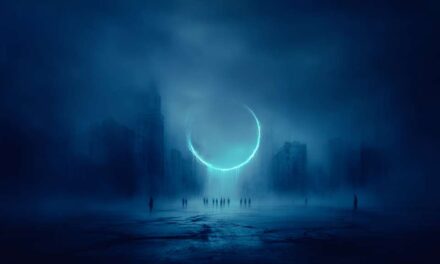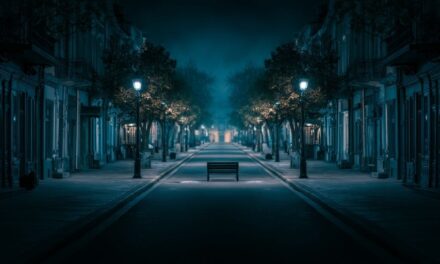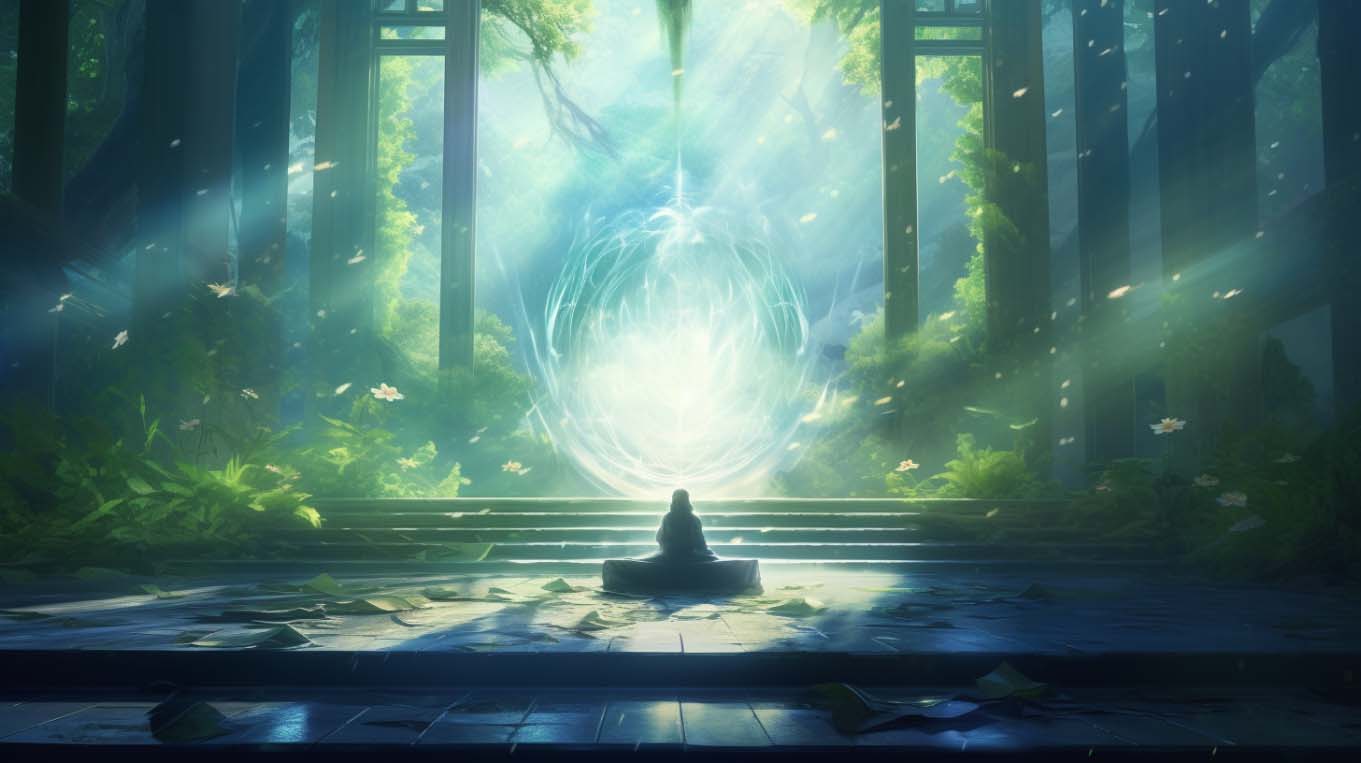
Two cyberpunk worlds are returning to our screens. For me, their influence began decades ago, with a film soundtrack I never forgot and a book that made me imagine the future differently.
Some films stay with you long after the screen goes dark.
For me, Blade Runner has always been one of them.
I first watched the original 1982 film when I was young. The world Ridley Scott created was unlike anything I had experienced before. The rain. The enormous buildings. The artificial lights. A city that seemed alive, yet somehow lonely.
But what truly stayed with me was the music.
Vangelis created something that felt magical and completely new to me.
Those synthesizers did more than accompany the images. They made the city feel real. They gave emotions to machines, loneliness to buildings, and a strange sense of humanity to a future that seemed to have forgotten what being human meant.
I remember dreaming of making sounds like that myself.
Not necessarily writing music for a science-fiction film, but creating something that could take someone somewhere else.
Something that could make an imaginary place feel almost familiar.
Years later, I read William Gibson’s Neuromancer.
A different world opened.
I wondered whether someone would ever turn that book into a movie. For years, I waited, but the adaptation I imagined never arrived.
Now, in 2026, something interesting is happening.
Blade Runner 2099 is coming to Prime Video on November 25, 2026. Neuromancer arrives on Apple TV on January 22, 2027.
And somewhere between those two worlds, I am creating my own cinematic cyberpunk ambient music.
Perhaps that is why these upcoming series feel more personal to me than most new science-fiction releases.
They connect the worlds I discovered when I was younger with the sounds I am creating today.
Blade Runner 2099: Returning to a Future I Never Really Left
The original Blade Runner eventually became a cult classic.
But when I think about the film, I do not immediately think about its reputation, its place in cinema history, or even the replicants.
I think about how it felt.
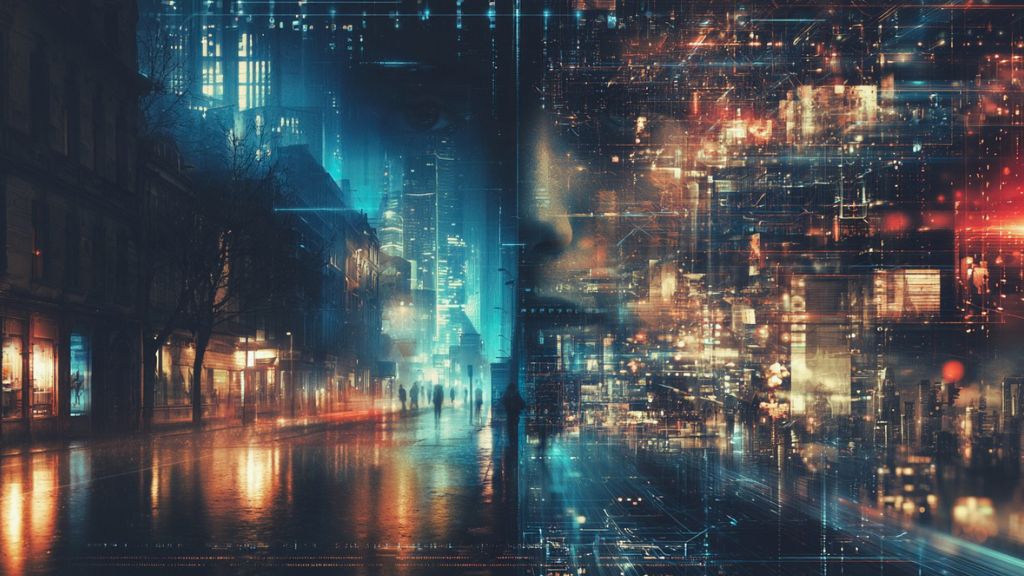
I remember a city filled with enormous advertisements, heavy rain and artificial light.
I remember the spaces between conversations.
And I remember the soundtrack.
Vangelis understood something important about electronic music.
A synthesizer does not always need to sound futuristic.
Sometimes it can sound deeply human.
A slow melody can carry sadness. A distant electronic texture can suggest an entire city beyond the frame. A long note can express something that dialogue cannot.
That became one of the things I loved about ambient music.
You can create a whole world without explaining everything inside it.
What is Blade Runner 2099 about?
Blade Runner 2099 is an upcoming eight-episode limited series set 50 years after the events of Blade Runner 2049.
The series introduces a Los Angeles transformed by the rise of replicants. Michelle Yeoh plays Olwen, a replicant approaching the end of her life, while Hunter Schafer plays Cora, a woman surviving in a world where humanity no longer holds the same power.
The series is scheduled to premiere on November 25, 2026, with all eight episodes arriving on Prime Video.
I am curious about where this story will go.
The original film asked what it means to be human when machines begin to resemble us.
Decades later, that question feels much closer to everyday life.
Artificial intelligence is no longer something that exists only in books and films. We interact with systems that generate images, write conversations, imitate voices and make decisions.
The fictional future has not arrived exactly as we imagined it.
But some of its questions are already here.
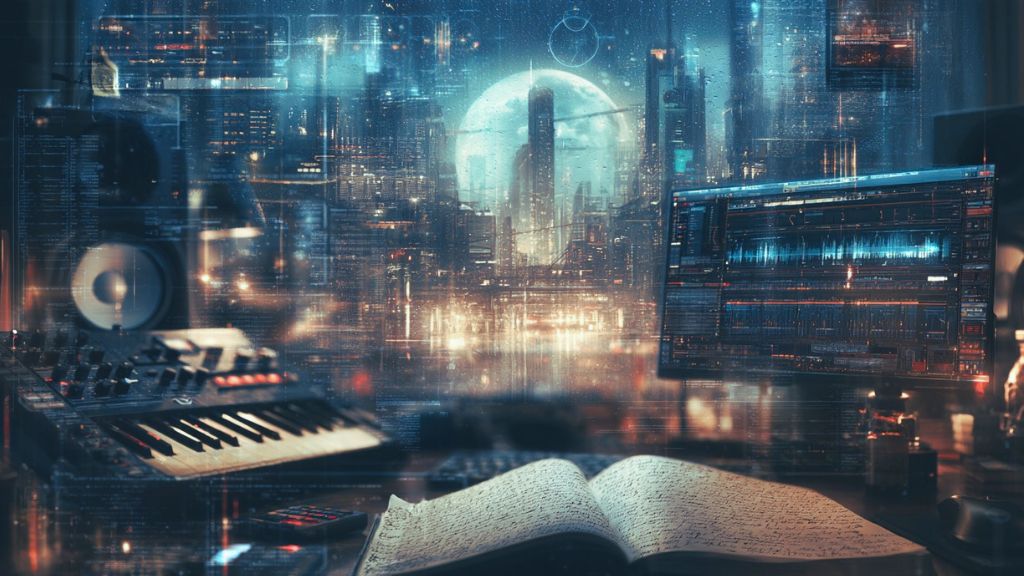
The Music of Blade Runner: Why Vangelis Still Matters to Me
One of the reasons the original Blade Runner soundtrack remains so special is that it never feels like ordinary background music.
It has its own presence.
You can listen to it without watching the film and still imagine the world around it.
That was something new to me when I first discovered it.
The music did not need a conventional rhythm to move forward.
It could drift.
It could remain inside one emotion.
It could allow a single synthesizer sound to become the most important thing in the room.
I wanted to understand how to create that feeling.
Today, when I open Logic Pro and begin working on a cinematic ambient track, I sometimes find myself returning to a similar idea.
Not the same notes.
Not the same melodies.
The same possibility: that sound can make an imaginary world feel real.
There is also something about imperfect electronic sound that I have always liked.
Small fluctuations.
Textures that seem almost damaged.
A tone that feels warm one moment and unfamiliar the next.
These details can make electronic music feel less like a machine performing a sequence and more like a place with its own history.
For me, that is where the magic begins.
Neuromancer: The Cyberpunk World I Waited Years to See
My connection to Neuromancer began differently.
I discovered William Gibson’s novel many years ago.
Published in 1984, the book helped define cyberpunk through its vision of cyberspace, corporate power, cybernetic technology and artificial intelligence.
It presented a future where human identity could become tangled with computer networks.
While Blade Runner gave me a visual and musical atmosphere, Neuromancer gave me another kind of imagination.
One built around information.
Connections.
Digital spaces.
And people trying to survive inside systems far larger than themselves.
After reading the book, I wondered why it had not become a movie.
It seemed like such an obvious world to bring to the screen.
But years passed.
Now Apple TV is finally bringing Gibson’s novel to television.
What is the new Neuromancer series about?
Apple TV’s Neuromancer is a 10-episode science-fiction series based on William Gibson’s novel.
Callum Turner plays Case, a highly skilled hacker drawn into a dangerous criminal operation. Briana Middleton plays Molly, a cybernetically enhanced assassin who becomes his partner.
Together, they become involved in a high-stakes mission involving corporate power and hidden secrets.
The series premieres on January 22, 2027, with two episodes, followed by weekly releases through March 19.
For readers who have lived with the book for many years, this is an interesting moment.
The world of Neuromancer was once difficult to imagine outside its pages.
Now audiences will have a chance to see another interpretation of it.
But the part that interests me most is the sound.
What will cyberspace sound like?
How will the series express artificial intelligence through music?
Will its electronic world feel fast, cold and mechanical?
Or will it leave room for loneliness, reflection and the quieter moments between human and machine?
I hope it gives those questions enough space.
Blade Runner and Neuromancer: Different Worlds, Connected Feelings
I have always felt that Blade Runner and Neuromancer are different.
But they also belong to one another.
They approach many of the same questions from different directions.
Blade Runner feels physical to me.
Rain against a window.
Footsteps along an empty street.
A face illuminated by a distant advertisement.
The sadness of someone wondering whether their memories are real.
Neuromancer feels more connected to movement and information.
Networks.
Signals.
Digital identities.
A person moving through systems they cannot completely understand.
One world looks inward.
The other moves through the network.
Yet both are interested in the uncertain boundary between humans and technology.
And both leave me with the same question.
What happens to our sense of being human when technology begins to occupy more and more of our inner world?
That is also a question I return to in my music.
Not because every track needs to provide an answer.
Sometimes the question itself is enough.
From Blade Runner to Neon Ghost Frequencies: My Own Cyberpunk Ambient Music
Over the years, I have created different kinds of music.
Cinematic ambient.
Dark ambient.
Electronic soundscapes.
Music for imagined places and stories.
With my project Neon Ghost Frequencies, I wanted to explore the space between the emotional atmosphere of Blade Runner and the digital imagination of Neuromancer.
Not by recreating their soundtracks.
But by exploring what those worlds have continued to mean to me.
The music lives somewhere between abandoned networks, artificial memories, rain-soaked cities and machines that might be more aware than we think.
Each track can stand on its own, but together they form a larger world.
Here are some of the recent transmissions.
Blade Runner After Midnight: The City That Never Switches Off
Blade Runner After Midnight, released October 9, 2026, is one of my most direct reflections on the atmosphere that first drew me toward electronic music.
Slow-moving synthesizers.
Distant textures.
A city after midnight.
I imagined the streets remaining illuminated long after the people have gone home.
The systems continue working.
The advertisements continue glowing.
Somewhere, a machine is still awake.
It is music for late-night listening, reading science fiction, writing and spending time inside an imagined city.
I did not try to recreate Vangelis.
I wanted to return to the feeling that made me interested in this kind of music in the first place.
Listen to Blade Runner After Midnight
Neuromancer Signal: What If the Network Answers Back?
With Neuromancer Signal, I wanted to imagine a very different environment.
Instead of looking across a futuristic city, you are entering the network beneath it.
The track uses slow machine-like pulses, evolving electronic textures and fragments that resemble corrupted transmissions.
The idea behind it is simple.
You connect to a system.
You begin searching.
Then, unexpectedly, the system responds.
And you realize that something inside it may have been waiting for you.
This is where my musical interpretation of Neuromancer becomes different from the atmosphere of Blade Runner.
The city becomes less important.
The connection becomes everything.
Memory Engine After Midnight: Can a Machine Remember Something It Never Lived?
Another track, Memory Engine After Midnight, explores artificial memory.
Imagine a machine designed to preserve human experiences.
Photographs.
Recorded voices.
Places.
Fragments of conversations.
One night, the machine begins remembering events that were never entered into its memory.
Who do those memories belong to?
Are they simply data?
Or is something else beginning to happen?
I like that uncertainty.
Ambient music allows a question like this to exist without turning it into a dramatic action sequence.
Sometimes a small melody surrounded by electronic noise can be enough.
Explore Memory Engine After Midnight
The Signal That Remembered You: When Technology Becomes Personal
The Signal That Remembered You takes another step into the same world.
The technology is no longer something distant.
It remembers an individual.
Perhaps it recognizes their voice.
Perhaps it has collected fragments of their life.
Perhaps the connection means something different to the machine than it does to the person using it.
There is a strange loneliness inside that idea.
Technology can connect us to almost anything, yet connection does not always mean understanding.
This is one of the emotional contradictions that makes cyberpunk interesting to me.
Explore The Signal That Remembered You
What Does Cyberpunk Ambient Music Actually Sound Like?
Cyberpunk music is often associated with synthesizers, futuristic cityscapes and electronic rhythms.
But my approach is usually quieter.
Cyberpunk ambient music, as I create it, focuses on atmosphere rather than constant movement.
It may contain deep drones, slow pulses, layered synthesizers, distant electronic noise and fragments of melody.
The purpose is not always to tell you exactly what is happening.
It is to give your imagination somewhere to go.
I like working with the spaces between the sounds.
A low hum can become the ventilation inside an abandoned building.
A fading tone can suggest a transmission moving away.
A slowly changing pad can make an empty room feel enormous.
And a small melody can remind you that there might still be something human inside the machinery.
This is also why I enjoy creating music for reading and worldbuilding.
When you read a science-fiction novel, your imagination is already building the environment.
Music can support that process without taking control of it.
I think this is an important difference between music made to accompany a specific scene and ambient music created for an imagined world.
One follows the image.
The other leaves room for the image to appear inside your own mind.
Why These Two TV Series Matter in 2026 and 2027
It is interesting that Blade Runner 2099 and Neuromancer are arriving so close together.
Their original inspirations belong to a period when computers, artificial intelligence and global networks were very different from what they are today.
The original Blade Runner arrived in 1982.
Neuromancer was published in 1984.
Back then, much of what they explored seemed distant.
Today we live with artificial intelligence, algorithmic recommendations, constant digital communication and technology that increasingly shapes how we work and create.
Of course, our world is not the future imagined in those stories.
But the concerns behind them remain surprisingly familiar.
Who controls technology?
What happens to personal identity when so much of life exists as information?
Can a machine imitate something human without experiencing it?
And what happens when the world becomes so connected that finding a quiet place becomes difficult?
These are not only science-fiction questions anymore.
They are also questions about everyday life.
Perhaps that is why cyberpunk keeps returning.
The visual language may change.
The technology certainly changes.
But the human questions remain.
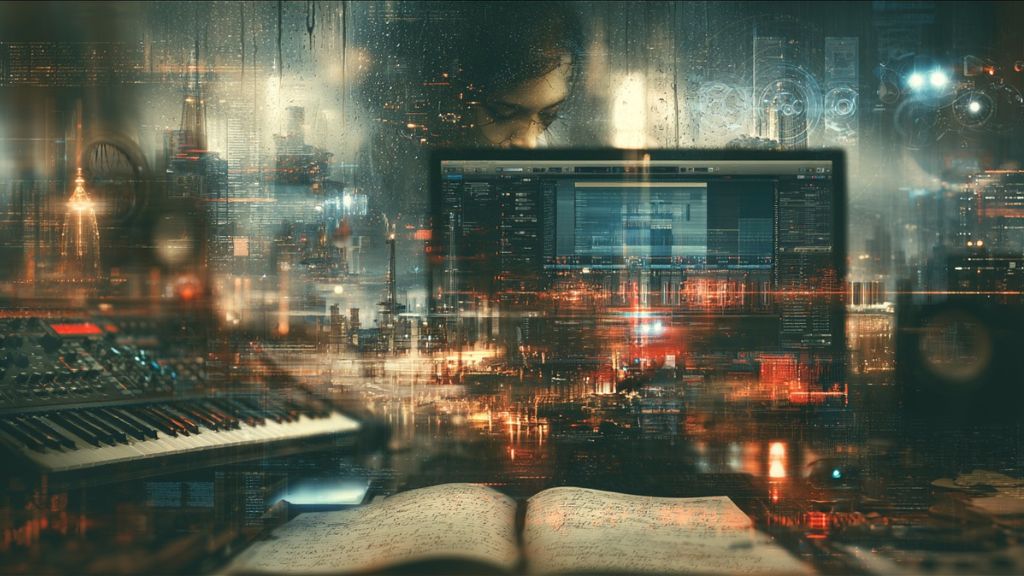
Music for Reading Neuromancer, Writing Science Fiction and Entering Imagined Cities
I have always enjoyed the idea that music can create a place you can return to.
Sometimes that place is an empty city.
Sometimes it is a forgotten room.
Sometimes it is a digital network.
My Neon Ghost Frequencies project is intended for listeners who enjoy those environments.
You might listen while reading Neuromancer, writing your own science-fiction story, creating concept art, building a fictional city or working late at night.
You do not need to follow a specific narrative.
The music gives you an atmosphere.
The rest belongs to you.
That has always been one of the things I love most about ambient music.
It can become part of someone else’s imagination without demanding to be the center of it.
You can explore the full collection on the Neon Ghost Frequencies project page.
A Personal Circle That Took More Than Forty Years
When I think about the upcoming Blade Runner 2099 and Neuromancer series, I realize that this is more than nostalgia for me.
It is also about the way creative influences stay with us.
As a young person, I watched Blade Runner and heard sounds I did not know how to make.
I simply knew I wanted to make something like that one day.
Later, I read Neuromancer and imagined a world that had not yet appeared on screen.
I wondered what its music might sound like.
Now, all these years later, I sit in front of my own music software and create electronic worlds.
They are not the same worlds.
They belong to the imagination I have developed through everything I have heard, read and created since those early experiences.
And I think that is how creativity often works.
Something reaches you when you are young.
You carry it without knowing exactly why.
Years pass.
Your interests change.
You learn new things.
Then one day, you realize that the feeling you discovered so long ago has become part of something you are making yourself.
Perhaps the most important sound in my music is not a synthesizer at all.
It is the memory of hearing one for the first time.
Blade Runner 2099 and Neuromancer are finally coming to television.
I am looking forward to discovering how their creators imagine these worlds today, especially how music and sound will give those worlds their own identities.
Until then, I will keep creating my own transmissions.
There are still cities I have not visited.
Networks I have not entered.
And sounds I have not found.
Perhaps that is the best part of it.
The future is still unfinished.
Frequently Asked Questions
When is Blade Runner 2099 coming out?
Blade Runner 2099 premieres on Amazon Prime Video on November 25, 2026. The eight-episode limited series stars Michelle Yeoh and Hunter Schafer and takes place 50 years after Blade Runner 2049.
When is the Neuromancer TV series being released?
Apple TV’s Neuromancer premieres on January 22, 2027. The 10-episode adaptation of William Gibson’s 1984 novel stars Callum Turner as Case and Briana Middleton as Molly.
Who composed the original Blade Runner soundtrack?
The original 1982 Blade Runner soundtrack was composed by Greek electronic musician Vangelis. Its atmospheric synthesizers, expressive melodies and futuristic textures became an influential example of cinematic electronic music.
Are Blade Runner and Neuromancer connected?
Blade Runner and Neuromancer are separate fictional universes. However, both are central to the development and cultural identity of cyberpunk. They explore artificial intelligence, identity, corporate power and the relationship between humans and technology.
What is cyberpunk ambient music?
Cyberpunk ambient music combines atmospheric electronic sound design with themes of artificial intelligence, futuristic cities, digital networks and technological isolation. It often uses synthesizer drones, evolving textures, minimal rhythms and cinematic soundscapes.
Where can I find music inspired by Blade Runner and Neuromancer?
Wartonno creates original cyberpunk ambient music through his Neon Ghost Frequencies project. Tracks include Blade Runner After Midnight, Neuromancer Signal, Memory Engine After Midnight and The Signal That Remembered You.
Is Wartonno’s music part of the official Blade Runner 2099 or Neuromancer soundtracks?
No. Wartonno’s Neon Ghost Frequencies tracks are independently created original compositions. They are inspired by cyberpunk themes and atmospheres but are not affiliated with either television production.
About the author: Wartonno is an independent composer, writer and worldbuilder based in the Netherlands. His work brings together cinematic ambient music, cyberpunk fiction and visual storytelling, exploring artificial memory, digital environments, isolation and the emotional spaces between humans and technology.