
Table of Contents
Music for the room where attention returns
Deep focus does not always begin with discipline.
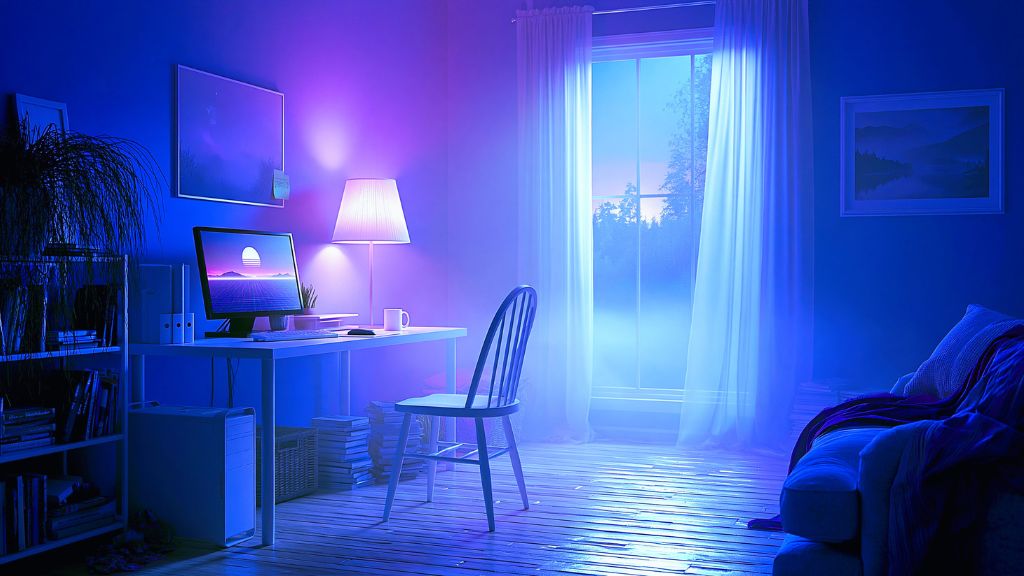
Sometimes it begins with the room.
The light becomes softer.
The screen becomes less crowded.
The phone moves slightly out of reach.
One task waits in front of you.
The rest of the world becomes quieter for a while.
Then the sound begins.
A low drone.
A soft texture.
A slow movement under the surface.
A space where the mind no longer has to jump between everything at once.
That is where ambient music for deep focus can become useful.
Not because music magically creates concentration.
But because the right sound can change the emotional shape of the room.
It can make attention feel less forced.
It can give the mind somewhere steady to rest.
It can turn scattered energy into a quieter state of entry.
For Wartonno Sound, focus is not about pressure.
It is about creating a place where the mind can return.
What is ambient music for deep focus?
Ambient music for deep focus is music designed to support concentration without demanding too much attention.
It often uses:
- slow movement
- soft pads
- drones
- subtle textures
- minimal melody
- spacious reverb
- gentle repetition
- instrumental soundscapes
- low-pressure atmosphere
The best focus music does not compete with the work.
It does not ask you to follow lyrics.
It does not create sudden emotional turns.
It does not pull the mind away every few seconds.
It does not make the room feel busier than it already is.
Instead, it becomes a quiet layer beneath the task.
A background that is not empty.
A space that is not silent.
A sound that helps the mind stay with one thing a little longer.
This is why ambient music, dark ambient, liminal ambient, drone music, minimal piano, and cinematic soundscapes often work well for deep work, writing, studying, editing, planning, and creative focus.
They create atmosphere without becoming interruption.
Why silence is not always enough
Some people focus best in silence.
Others do not.
Silence can be beautiful, but it can also become too open. If the mind is already restless, silence may leave too much room for every thought to become louder.
In silence, you may notice:
the task you have been avoiding.
the message you forgot to answer.
the sound from another room.
the worry underneath the work.
the urge to check something.
the small discomfort of beginning.
Ambient music can soften that exposed feeling.
It gives the mind a gentle surface.
Not noise.
Not distraction.
A room tone.
For people who overthink, create, write, study, or work for long periods, this kind of atmosphere can help reduce the friction of starting.
You are not trying to escape the task.
You are trying to make the task easier to enter.
Why lyrics can break concentration
Lyrics are powerful.
They can carry emotion, story, memory, identity, and meaning.
But when you are trying to focus, lyrics can also become another stream of language for the mind to process.
This is especially true during:
- writing
- reading
- editing
- studying
- planning
- research
- coding
- design work
- administrative tasks
- deep creative thinking
If the music contains words, the language part of the brain may begin listening, even when you do not want it to.
That can make it harder to stay with the sentence, the idea, the page, or the task.
Instrumental ambient music avoids that problem.
It gives you mood without language.
It offers atmosphere without another voice.
For deep focus, that can be the difference between music that supports the work and music that quietly pulls the work apart.
The focus problem: too much input
Modern attention is often not weak.
It is overloaded.
The mind is asked to move between tabs, messages, notifications, tasks, deadlines, posts, ideas, choices, and unfinished loops.
The problem is not always that you cannot focus.
Sometimes the problem is that too many things are asking for entry at the same time.
Ambient music for deep focus can help because it creates one continuous environment.
Instead of switching constantly, the mind has one steady field beneath it.
A drone continues.
A pad breathes slowly.
A texture repeats.
A tone stays long enough for attention to gather around it.
The sound does not remove every distraction.
But it can reduce the feeling of fragmentation.
It gives the mind one room instead of ten open doors.
What makes ambient music good for focus?
Not every ambient track is good for focus.
Some ambient music is too emotional.
Some is too dramatic.
Some is too cinematic.
Some is too unsettling.
Some changes too suddenly.
Some is beautiful, but too interesting.
For deep focus, the music should be useful before it is impressive.
Good ambient focus music often has these qualities:
1. It moves slowly
Fast changes can make the mind follow the music instead of the work.
Slow movement gives attention time to settle.
2. It avoids sudden peaks
A strong build, loud hit, or dramatic shift can interrupt concentration.
Focus music should stay emotionally steady.
3. It has little or no vocals
This leaves the language part of the mind free for reading, writing, thinking, or problem-solving.
4. It creates atmosphere without taking over
The music should shape the room, not dominate it.
5. It can repeat without becoming irritating
Deep focus often needs longer sessions. Repetition helps when it feels gentle, not mechanical.
6. It supports the task’s emotional state
Writing may need atmosphere.
Studying may need clarity.
Planning may need calm.
Creative work may need mystery.
Administrative work may need steadiness.
The best focus music meets the task where it is.
How Wartonno Sound approaches deep focus
Wartonno Sound is built around dark ambient and liminal ambient soundscapes for focus, sleep, overthinking, writing, and quiet escape.
For deep focus, the music works best when it becomes a room around the task.
Not too bright.
Not too loud.
Not too crowded.
Not too empty.
A Wartonno Sound focus piece may feel like:
- a quiet desk at night
- rain behind glass
- an abandoned room with one light still on
- a city heard from far away
- a low signal beneath the day
- a threshold between scattered thought and calm attention
The goal is not to make focus feel aggressive.
The goal is to make focus feel possible.
Deep work does not always need intensity.
Sometimes it needs a softer place where attention can stop defending itself.
Deep focus for writing
Writing is one of the strongest use cases for ambient music.
When writing, you need focus, but you also need atmosphere.
A silent room can feel too blank.
A lyrical song can interfere with language.
A busy playlist can pull the mind away.
But a slow ambient soundscape can give the page a world to open inside.
For writing, choose music that is:
- instrumental
- atmospheric
- spacious
- low in distraction
- emotionally suggestive
- steady enough to support long sessions
This is especially useful for fiction, worldbuilding, journaling, reflective essays, and creative notes.
Inside the Wartonno archive, this connects naturally to Meridian City.
A dark ambient soundscape can feel like rain on a fictional street.
A low drone can become the pressure beneath a mystery.
A soft texture can become a character’s silence.
A distant tone can become the room before the first sentence.
For writers, focus is not only concentration.
It is entry.
Ambient music helps open the door.
Deep focus for study and reading
Study and reading require a different kind of focus.
The music should support comprehension, not add emotional complexity.
For study or reading, the best ambient music is usually:
- minimal
- steady
- low-volume
- not too dark
- not too cinematic
- free of sharp changes
- clear but soft in tone
The purpose is to reduce distraction without making the material feel heavier than it is.
If the music becomes too dramatic, it may pull the mind into imagination instead of comprehension.
If it becomes too empty, the mind may wander.
A good focus soundscape sits in the middle.
Present enough to create a quiet field.
Subtle enough to let the words stay in front.
Choose your listening path: If you want to go directly into the sound, visit the Wartonno Sound listening gateway for playlists and tracks for overthinking at night, deep focus, overstimulation, liminal dreaming, and dark ambient escape.
Deep focus for creative work
Creative work often needs a slightly different atmosphere than study.
It may need mystery.
A designer, musician, writer, photographer, or visual artist may not want perfectly neutral background music. They may need sound that opens a mood.
Creative focus is not always clean.
It can be strange, emotional, searching, unfinished.
For creative work, ambient music can help create a liminal state: a place between control and discovery.
This is useful for:
- visual design
- AI art direction
- music planning
- worldbuilding
- editing images
- writing captions
- building blog posts
- sketching concepts
- composing music
- organizing creative projects
The sound should not overwhelm the work.
But it can color the air around it.
Sometimes that color is what helps the next idea arrive.
Deep focus for admin and simple tasks
Not every focus session is poetic.
Sometimes the task is ordinary.
Uploading files.
Organizing folders.
Checking links.
Writing descriptions.
Updating pages.
Filling in metadata.
Cleaning a project list.
Preparing a release.
Ambient music can still help.
For admin work, choose soundscapes that are steady and low-pressure. The music should create momentum without adding drama.
This kind of focus music becomes almost invisible.
It keeps the room from feeling empty.
It keeps the task from feeling too sharp.
It helps you stay inside the process.
Not every task needs inspiration.
Some tasks only need a quiet field where you can continue.

A simple deep focus ritual with ambient music
You do not need a complicated system.
A small ritual is enough.
Step 1: Choose one task
Not five.
One task.
Write the paragraph.
Edit the page.
Read the chapter.
Organize the folder.
Draft the post.
Outline the scene.
Step 2: Choose one soundscape
Do not spend too long searching.
Pick one Wartonno Sound track, playlist, or longform ambient video.
The searching can easily become another distraction.
Step 3: Lower the noise
Close one tab.
Put the phone away.
Turn off one notification.
Clear one small part of the desk.
Only one or two changes.
Enough to signal that focus is beginning.
Step 4: Press play before starting
Let the sound enter the room first.
Give it one minute.
Let the task become part of the atmosphere.
Step 5: Work for one small block
Start with 20 or 30 minutes.
Not because that is the perfect number, but because it feels possible.
Step 6: End with one note
Before stopping, write down the next step.
This makes the next focus session easier to enter.
Deep focus is not only about staying longer.
It is about returning more gently.
Choose your listening path
If you want to go directly into the sound, visit the Wartonno Sound listening gateway for playlists and tracks for overthinking at night, deep focus, overstimulation, liminal dreaming, and dark ambient escape.
Use it when you do not want to search through everything.
Choose the state you are in.
Let the music meet you there.
Go to the Wartonno Sound listening gateway!
How to choose focus music by state of mind
Before starting, ask what kind of focus you need.
If you feel scattered
Choose something minimal and repetitive.
You need steadiness.
If you feel tired
Choose something soft but not too sleepy.
You need gentle support, not a lullaby.
If you feel overstimulated
Choose low-brightness music with few changes.
You need less input.
If you feel emotionally heavy
Choose something warm and spacious.
You need room.
If you feel creatively blocked
Choose something liminal and atmospheric.
You need a doorway.
If you are writing
Choose something that supports mood without adding words.
You need atmosphere without language.
The best ambient music for focus is not always the same.
It depends on the room inside you.
Why liminal ambient works so well for focus
Liminal ambient music is music for thresholds.
Between noise and quiet.
Between scattered attention and one clear task.
Between the day and the inner room.
Between ordinary time and creative time.
This is why it works well for focus.
It helps mark a transition.
When the sound begins, the mind receives a signal:
we are entering another state now.
Not sleep.
Not entertainment.
Not scrolling.
Not solving everything.
Focus.
Softly.
Without force.
Wartonno Sound often lives in this threshold. The music does not push the listener into productivity. It creates a place where productivity can happen without becoming harsh.
That distinction matters.
The goal is not to become a machine.
The goal is to create enough stillness for the work to find you.
What volume should focus music be?
For deep focus, ambient music should usually be low enough that you can forget it is playing.
If you notice every detail, it may be too loud.
If it disappears completely, it may be too quiet.
If it makes you tense, choose something softer.
If it makes you sleepy, choose something slightly more structured.
A useful rule:
The music should feel like light in the room, not like someone speaking to you.
Present.
But not demanding.
Should you use headphones?
Headphones can help when the environment is noisy or when you want to create a stronger boundary around the task.
They are useful for:
- shared spaces
- writing sessions
- public places
- deep work
- late-night focus
- blocking household noise
Speakers can be better when you want the music to feel like part of the room instead of inside your head.
They are useful for:
- home offices
- reading
- gentle admin work
- low-pressure creative sessions
- evening planning
Neither is better.
They create different rooms.
Choose the one that helps your attention soften.
When ambient music does not help
Ambient music is useful, but not always.
Some days the mind needs silence.
Some tasks need full verbal attention.
Some soundscapes may feel too heavy.
Some music may make you sleepy when you need clarity.
Some tracks may be too emotional for the work.
That is normal.
The point is not to force ambient music into every moment.
The point is to notice what kind of support the task needs.
If the music helps you stay, keep it.
If it makes the work harder, change it or turn it off.
A good focus practice listens back.
How this guide connects to Wartonno Sound
This article is part of the wider Wartonno Sound archive on Wartonno.com.
The music connects with several listening needs:
- overthinking at night
- deep focus
- writing and worldbuilding
- sleep preparation
- overstimulation reset
- liminal dreaming
- dark ambient escape
Deep focus is one doorway.
It is the doorway for people who need a quiet atmosphere around work, writing, study, and creative attention.
From here, you can also explore:
- music for when your mind will not stop
- dark ambient music for overthinking at night
- liminal ambient music for focus, sleep, and escape
- ambient music for writing
- dark ambient music in a night routine
Together, these pages form a listening map.
Not only what to play.
But why, when, and how to enter the sound.
Frequently asked questions
What is the best ambient music for deep focus?
The best ambient music for deep focus is usually slow, instrumental, spacious, and steady. It should support concentration without demanding attention. Dark ambient, liminal ambient, soft drones, and minimal soundscapes often work well.
Is ambient music good for focus?
Yes, ambient music can support focus by creating a calm background atmosphere. It can help reduce the feeling of silence, soften distractions, and create a steady room for deep work, writing, study, and creative tasks.
Is dark ambient music good for deep work?
Dark ambient music can be useful for deep work when it is slow, minimal, and not too intense. It creates depth and atmosphere without relying on lyrics or fast rhythms.
What kind of music should I avoid when trying to focus?
Avoid music that is too loud, too lyrical, too dramatic, too fast, or full of sudden changes. These elements can pull attention away from the task.
Can I use Wartonno Sound for studying?
Yes. Some Wartonno Sound tracks and playlists can be used for studying, reading, planning, and quiet concentration, especially when you choose softer and more minimal soundscapes.
Can I use ambient music for writing?
Yes. Ambient music can be especially useful for writing because it creates atmosphere without adding another stream of words. It can support fiction writing, worldbuilding, journaling, and reflective work.
What is liminal ambient music?
Liminal ambient music is atmospheric music that feels like a threshold or in-between place. It can help mark the transition from distraction into focus, from noise into quiet, or from ordinary time into creative time.
Where can I listen to Wartonno Sound for focus?
Start with the Wartonno Sound listening gateway, where music is organized by listening paths such as deep focus, overthinking at night, overstimulation, liminal dreaming, and dark ambient escape.
Final reflection
Focus does not always arrive because you force it.
Sometimes it arrives because the room becomes ready.
The light changes.
The phone moves away.
The task becomes clear.
The sound begins.
A drone becomes the floor.
A texture becomes the air.
A slow soundscape becomes the boundary between the world and the work.
Ambient music for deep focus is not there to make you more productive in a harsh way.
It is there to make attention feel possible again.
A quieter room.
A softer beginning.
One task.
One sound.
One return.