Liminal soundscapes for focus, sleep, and escape
Some tracks begin with a melody.
Some begin with a beat.
For me, many Wartonno Sound tracks begin with a feeling.
A pressure behind the eyes.
A thought that keeps returning.
A room that feels too silent.
A night that refuses to settle.
A mind that wants quiet, but does not know how to arrive there.
That is where much of my dark ambient music begins.
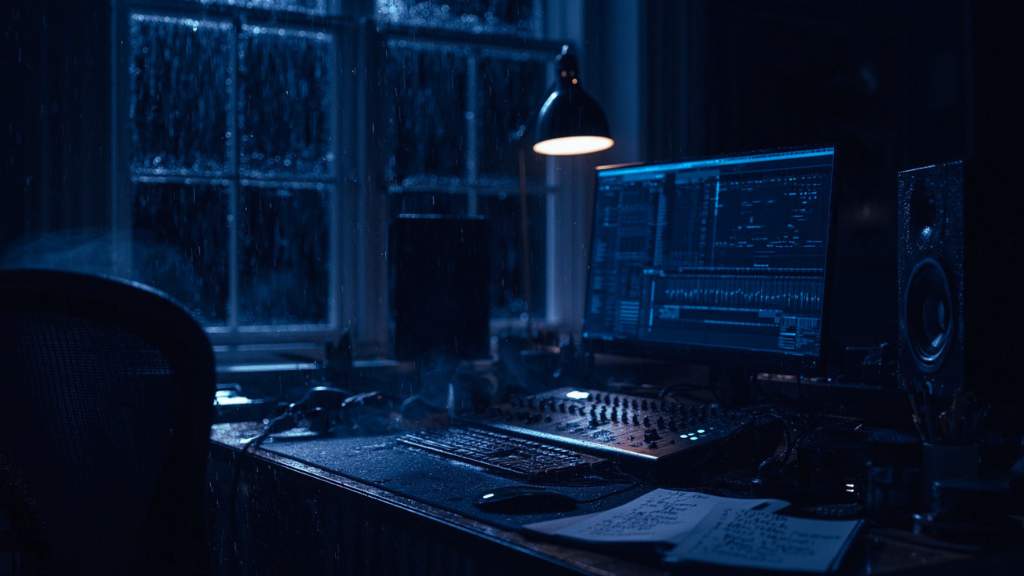
Wartonno Sound is built around liminal soundscapes for focus, sleep, and escape. The music is slow, atmospheric, and spacious. It is made for people who use sound as a place to breathe, think, write, rest, or disappear for a while.
The phrase I often return to is simple:
sound for when your mind won’t stop
That is not just a slogan. It is the emotional center of the project.
When I create dark ambient music, I am not trying to make something loud or dramatic. I am trying to create a room inside sound. A space where the mind can move without being pushed. A place where overthinking does not have to vanish immediately, but can soften around the edges.
This article is a personal look at how I create that kind of music: the emotional process, the practical workflow, and the world behind Wartonno Sound.
What dark ambient music means to me
Dark ambient music is often described as atmospheric, slow, cinematic, minimal, mysterious, or immersive. It usually focuses less on traditional song structure and more on texture, mood, tone, and space.
But for me, dark ambient is not only a genre.
It is a way of creating emotional weather.
A dark ambient track can feel like:
- a quiet room at night
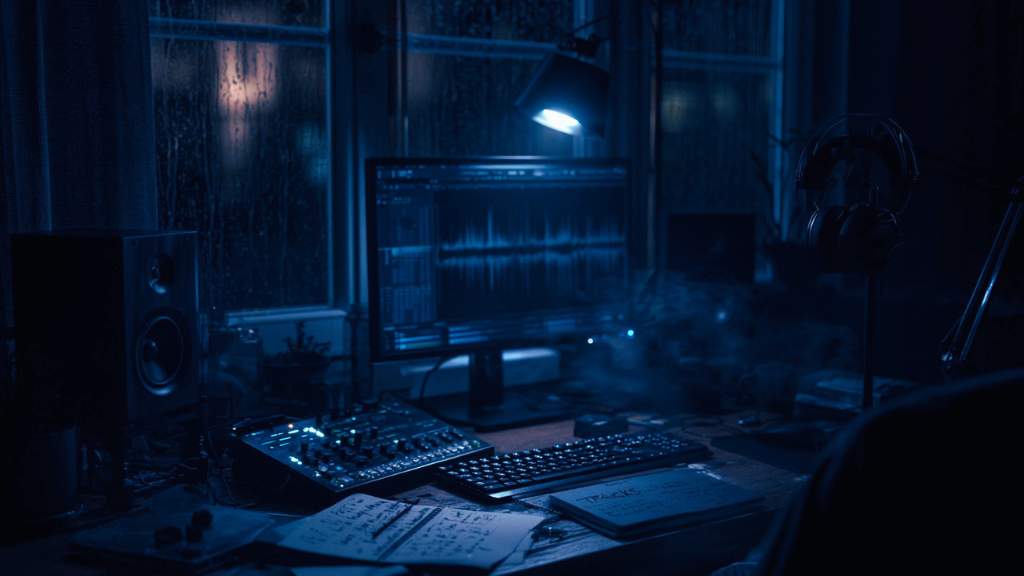
- rain against a distant window
- an abandoned station after the last train
- a memory returning without explanation
- a city seen through fog
- a soft shadow moving behind thought
- a place between sleep and waking
This is why dark ambient works so well for overthinking minds.
It does not demand attention in the same way as a vocal song. It does not fill every second with information. It gives the listener enough space to think, but enough atmosphere to avoid feeling alone with the noise inside their head.
For Wartonno Sound, dark ambient music is not about darkness as something negative.
It is about depth.
It is about the emotional space that opens when the world becomes quiet.
Why I create music for overthinking minds
Overthinking often arrives when everything else stops.
During the day, there is movement. Messages, tasks, screens, errands, decisions, noise.
But later, when the room becomes still, the thoughts can become louder.
That is the moment I often think about when creating Wartonno Sound.
Someone lying awake.
Someone writing late at night.
Someone sitting at a desk with too many thoughts open at once.
Someone trying to calm down after a long day.
Someone who wants focus, but not pressure.
Someone who wants sleep, but not silence.
I do not create this music to “fix” those moments.
That would be too simple.
Instead, I try to create soundscapes that can hold them.
A good dark ambient track for overthinking should not feel like another demand. It should not say: relax now, sleep now, focus now. It should simply make the inner room feel wider.
That is the purpose.
To give the listener a softer place to land.
Step 1: I start with a mood
Most Wartonno Sound tracks begin with a mood before they become music.
I usually do not start by asking:
What chord progression should I use?
I start by asking:
What state of mind is this track for?
That state might be:
- restless but tired
- emotionally heavy but quiet
- focused but fragile
- half-awake
- overstimulated
- reflective
- disconnected
- calm after tension
- alone but not lonely
- drifting between thoughts
This matters because the mood decides everything that follows.
If the track is for sleep, the sound should not move too sharply.
If the track is for focus, it should have enough structure to support attention.
If the track is for overthinking, it should feel steady without becoming boring.
If the track is for writing, it should create atmosphere without stealing the story.
The mood becomes the hidden map.
Before the title, before the cover art, before the final mix, I need to know what emotional room the track belongs to.
Step 2: I define the problem the track is responding to
After the mood, I think about the listener’s problem.
Not in a commercial way. More like a quiet question.
What is the listener carrying when they press play?
Maybe the problem is:
- “I cannot stop thinking.”
- “I need to focus, but my mind keeps jumping.”
- “I want to sleep, but silence makes everything louder.”
- “I need background music for writing.”
- “I feel overstimulated and need something darker, slower, and calmer.”
- “I want to escape, but not into something fake or cheerful.”
This is important because Wartonno Sound is not only made around genre keywords like dark ambient, liminal ambient, focus music, or sleep music.
It is made around real listening situations.
The track needs to answer a moment.
For example, a track for late-night overthinking might need a very soft entrance. No sudden elements. No bright melody. No rhythm that pulls the body forward too much.
A track for focus might need a subtle pulse or repeating texture, something that gives the mind a line to follow.
A track for sleep might need warmth, low movement, and fewer surprises.
The problem shapes the sound.
Step 3: I search for the title
The title often comes early in the process.
Sometimes before the first sound.
For Wartonno Sound, a title is not only a label. It is a doorway. It tells the listener what kind of emotional space they are about to enter.
A good title should feel simple enough to remember, but atmospheric enough to suggest a world.
I often look for titles connected to:
- overthinking
- silence
- sleep
- liminal spaces
- memory
- emotional reset
- night
- inner pressure
- distance
- reflection
- disappearance
- return
The title gives the track direction.
If a title feels too abstract, the track can become difficult to place. If it feels too generic, the atmosphere disappears. The best titles sit somewhere between searchable and mysterious.
That is why a title like Stop Overthinking matters.
It is direct. It names a real problem. It speaks to a listener who knows exactly what that phrase means.
The Wartonno Sound track Stop Overthinking is scheduled for release on June 5, 2026. I see it as part of this larger direction: music that does not try to overpower the mind, but gives it a darker, calmer room to settle inside.
Step 4: I build the first layer of atmosphere
Once the mood, problem, and title are clear, I begin shaping the first layer of sound.
This is usually the foundation.
It might be:
- a low drone
- a soft pad
- a distant texture
- a reversed sound
- a slow atmospheric chord
- a subtle field-recording-like layer
- a grainy lofi bed
- a cinematic rumble
- a fragile melodic fragment
This first layer is important because it decides whether the track feels safe, cold, haunted, warm, empty, or heavy.
For music made for overthinking minds, the first layer should not feel aggressive. It should invite the listener in slowly.
I often think of this layer as the room tone.
Before anything “happens,” the listener should already feel where they are.
Are they in a blue-lit apartment at 2 a.m.?
Are they standing in an empty train station?
Are they looking over a sleeping city?
Are they inside a memory?
Are they in the pause before sleep?
The first layer answers that question.
Step 5: I add movement without disturbing the stillness
Dark ambient music does not need to stand completely still.
But the movement must be careful.
Too much movement can turn the track into a distraction. Too little movement can make it feel flat. The balance is important, especially when the music is meant for focus, sleep, or emotional reset.
I like movement that feels almost hidden.
For example:
- a pad that slowly opens
- a texture that shifts in the background
- a soft pulse that appears and disappears
- a distant melodic note repeating like a memory
- subtle stereo movement
- low-frequency warmth
- small changes in reverb and space
- a sound that feels closer after several minutes
The listener may not consciously notice these changes, but the mind does.
This is what keeps a long ambient piece alive.
The track should feel like it is breathing.
Not performing.
Not demanding.
Breathing.
Step 6: I keep the arrangement simple
A lot of Wartonno Sound music is built around restraint.
That means I often remove more than I add.
When creating dark ambient music for overthinking, the temptation is to keep layering sounds until the track feels big. But bigger is not always better.
A track for an overactive mind needs clarity.
Even if the atmosphere is deep, the structure should feel simple.
I ask questions like:
- Does this new layer help the mood?
- Does this sound make the track more useful or more crowded?
- Would this distract someone who is trying to write?
- Would this wake someone who is trying to sleep?
- Does the track still feel like one emotional space?
- Is there enough silence between the sounds?
If a layer does not serve the emotional purpose, I remove it.
This is one of the most important parts of the process.
The track does not need to show everything I can do.
It needs to become a place someone can stay inside.
Step 7: I think about the listener’s use case
Before finishing a track, I think about where it will live in someone’s day.
This is where Wartonno Sound connects to practical listening needs.
A track might be good for:
- deep focus
- writing
- reading
- sleep preparation
- meditation-like stillness
- emotional decompression
- night walks
- creative worldbuilding
- tabletop RPG atmosphere
- background sound while working
- calming an overactive evening mind
Each use case has slightly different needs.
Music for focus should support attention without pulling it away.
Music for sleep should avoid sudden changes and bright interruptions.
Music for writing should create a world without becoming the story itself.
Music for overthinking should feel steady, spacious, and emotionally honest.
Music for escape should feel immersive but not overwhelming.
This is why I often describe Wartonno Sound as liminal soundscapes for focus, sleep, and escape.
The music is not only about genre.
It is about function, mood, and atmosphere working together.
Step 8: I connect the track to the visual world
After the sound begins to take shape, I think about the visual identity.
For Wartonno Sound, the cover art and visual atmosphere are not separate from the music. They help explain the emotional space before the listener presses play.
A track might need a visual that feels like:
- an empty room
- a dark corridor
- a rain-covered window
- a lonely road
- a blue city at night
- a soft glowing object
- a liminal interior
- a distant figure
- a place that feels remembered but never visited
The image should not only look beautiful. It should tell the listener what kind of silence the track contains.
This is also where AI-assisted visual art becomes useful in my workflow. Used carefully, AI can help explore atmosphere, lighting, composition, and emotional direction. But the important part is not the tool.
The important part is the art direction.
A Wartonno Sound visual should feel connected to the music. It should carry the same shadow, the same softness, the same sense of hidden space.
The cover becomes the first doorway.
The music is the room behind it.
Step 9: I prepare the track as part of a wider archive
When a track is finished, it does not exist alone.
Inside the Wartonno ecosystem, a track can connect to several places:
- Wartonno Sound
- Spotify
- SoundCloud
- YouTube
- Wartonno.com
- DarkLofi.com
- Meridian City
- quiet digital tools
- visual art
- future blog posts
- playlists
- longform ambient videos
This is why I think of Wartonno as an archive rather than only a release catalog.
A track can be more than a track.
It can become a note in a larger map.
Some tracks might connect to overthinking and emotional reset. Others might connect to fictional worlds, liminal places, or visual stories. Some may become part of playlists for focus and sleep. Others may become the seed for a blog post, a short video, or a small creative ritual.
This makes the music more alive.
It gives every release a place inside the wider world.
Why I do not want the music to feel too clean
Dark ambient music often works best when it has texture.
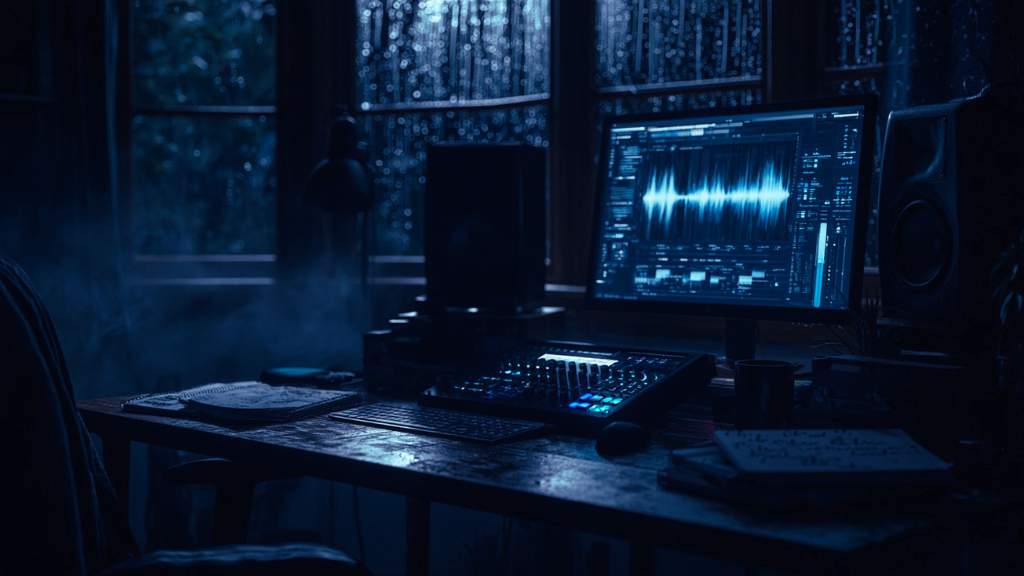
A perfectly clean sound can sometimes feel distant or artificial. For Wartonno Sound, I often prefer sounds that carry a little grain, haze, shadow, or imperfection.
That might mean:
- soft noise
- tape-like warmth
- distant reverb
- blurred edges
- low drones
- imperfect textures
- subtle distortion
- atmospheric dust
- sounds that feel old, lost, or half-remembered
This texture helps the music feel human.
Overthinking is not clean.
Memory is not clean.
Sleep is not clean.
Emotion is not clean.
So the sound does not need to be perfectly polished in a sterile way. It needs to feel honest, immersive, and emotionally believable.
The goal is not perfection.
The goal is presence.
How Wartonno Sound connects to writing and worldbuilding
Many listeners use ambient music while writing, reading, or imagining fictional worlds.
That makes sense to me, because Wartonno Sound is deeply connected to atmosphere and storytelling.
Even when a track has no lyrics, it can suggest a scene.
A low drone can feel like a city under rain.
A distant pad can feel like a memory opening.
A repeating note can feel like a signal.
A quiet texture can feel like someone waiting in a dark room.
This is why Wartonno Sound connects naturally to Meridian City, the fictional world inside the wider Wartonno archive.
The same sonic language appears in the stories:
- rain
- neon
- memory
- occult traces
- impossible evidence
- quiet dread
- emotional damage
- hidden patterns
- dreamlike perception
A track may not be written directly for Aya Lin or Mara Chen, but it can still feel like it belongs somewhere near them.
Aya Lin might move through the colder investigative side of the sound: pattern, ritual, evidence, silence.
Mara Chen might belong to the more fragile photographic side: memory, image, fracture, hidden light.
In that way, the music and fiction keep speaking to each other.
What I want the listener to feel
When someone listens to Wartonno Sound, I do not need them to have the same image in their mind that I had while creating it.
They do not need to see the same room.
They do not need to imagine the same city.
They do not need to know the story behind the title.
But I do hope they feel something close to this:
A little more space.
A little less pressure.
A little more distance from the noise.
A place to focus.
A place to rest.
A place to think without being swallowed by thought.
That is enough.
If the track helps someone write one page, sleep a little easier, slow down after work, or sit with their thoughts without feeling trapped by them, then the music has done its work.
Where to listen to Wartonno Sound
For the main music hub, visit the Wartonno Sound page.
Wartonno Sound is available across the main listening platforms.
You can start with:
- the official Wartonno Sound website
- Spotify
- SoundCloud
- the Wartonno Sound YouTube channel
For new listeners, I recommend starting with the tracks and playlists that connect to overthinking, focus, sleep, and liminal atmosphere.
If you want to understand the wider world behind the music, start with the Start Here page on Wartonno.com and the article What Is Wartonno? The World Behind Wartonno Sound.
Those pages explain how the music, stories, visuals, and quiet tools connect.
Frequently asked questions
What is dark ambient music?
Dark ambient music is a slow, atmospheric style of ambient music that focuses on mood, space, texture, and emotional depth. It often uses drones, pads, reverb, subtle noise, cinematic tones, and minimal movement to create immersive soundscapes.
Why is dark ambient music good for overthinking?
Dark ambient music can be useful for overthinking because it creates a steady atmosphere without demanding too much attention. It gives the mind something to rest inside without adding more words, speed, or noise.
What is Wartonno Sound?
Wartonno Sound is a dark ambient and liminal ambient music project creating atmospheric music for focus, sleep, writing, reading, reflection, emotional reset, and overthinking minds.
How does Wartonno Sound create music?
Wartonno Sound often begins with a mood, a listening problem, and a title. From there, the track is shaped through drones, pads, textures, slow movement, visual atmosphere, and a clear emotional purpose.
What does “liminal soundscapes for focus, sleep, and escape” mean?
It means atmospheric music that feels like a threshold space: not fully here, not fully elsewhere. These soundscapes are made to support focus, sleep, reflection, emotional reset, and inner escape.
Is Wartonno Sound good for writing?
Yes. Many Wartonno Sound tracks are designed to work as background music for writing, worldbuilding, reading, and deep creative focus. The music creates atmosphere without taking over the listener’s attention.
Is Wartonno Sound sleep music?
Some Wartonno Sound tracks can be used as sleep music or pre-sleep atmosphere. The slower, softer tracks are especially suited for nighttime listening, quiet decompression, and overthinking before bed.
What is the connection between Wartonno Sound and Meridian City?
Wartonno Sound and Meridian City share the same atmosphere: dark streets, memory, rain, hidden patterns, dreamlike spaces, and emotional tension. The music often feels like a soundtrack to the fictional world of Meridian City.
When will Stop Overthinking be released?
Stop Overthinking by Wartonno Sound is scheduled for release on June 5, 2026. It fits the larger direction of creating dark ambient music for overthinking minds, focus, sleep, and emotional reset.
Final reflection
Creating dark ambient music for overthinking minds is not only about sound design.
It is about listening to a state of mind.
The restless room.
The late-night thought.
The silence that feels too sharp.
The tired body with a mind still moving.
The need for focus without pressure.
The need for sleep without force.
The need for escape without disappearing completely.
Wartonno Sound grows from that place.
A mood becomes a title.
A title becomes a drone.
A drone becomes a room.
A room becomes a track.
A track becomes part of the archive.
And somewhere, hopefully, someone presses play and feels the room inside them become a little wider.
That is why I create this music.