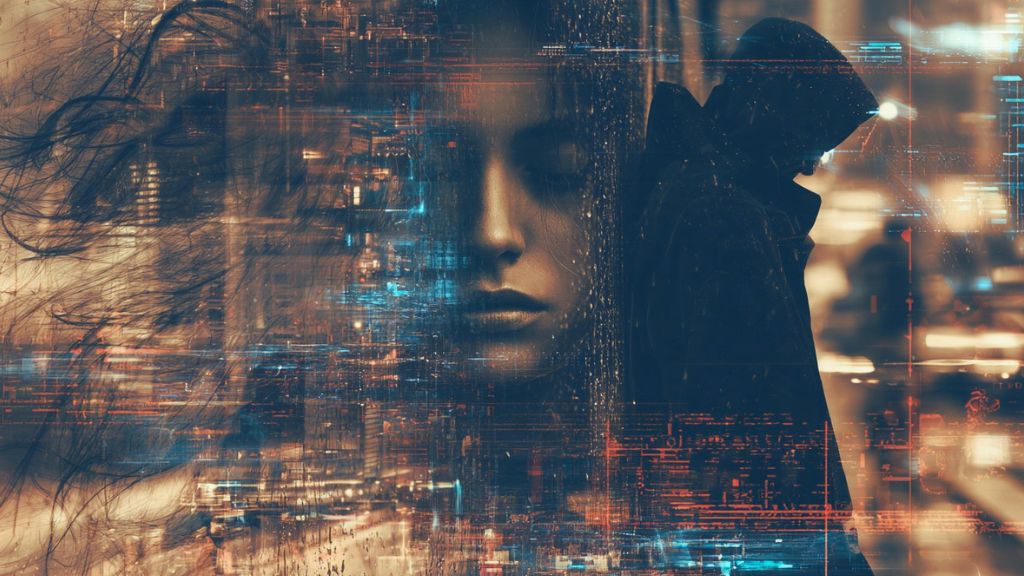
An original cinematic cyberpunk ambient track by Wartonno about a forgotten love, artificial memories and the possibility that someone you remember never existed.
I remember loving you.
Not when we first met.
Not where we lived.
Not even your name.
But I remember the feeling.
The warmth of your hand in mine. The way the city lights reflected in your eyes. The silence between us when there was nothing left to say.
I remember knowing that you were important to me.
And yet, when I try to find you, there is nothing.
No photograph.
No message.
No name.
Not a single trace that you ever existed.
At first, I think I have simply forgotten.
Then I begin to wonder.
What if I never knew you at all?
This is the feeling behind my track Blade Runner Memory Without a Name.
A memory of love that feels real.
A person who cannot be found.
And the disturbing possibility that someone, or something, placed that memory inside your mind.
Table of Contents
What Is Blade Runner Memory Without a Name?
Blade Runner Memory Without a Name is an original cinematic cyberpunk ambient composition by Wartonno, inspired by the emotional world of Blade Runner and its questions about identity, artificial memories and what makes us human.
The track explores a simple but unsettling idea.
What if you remember being in love with someone, but cannot find any evidence that person ever existed?
The music imagines a person searching through memories, digital records and artificial intelligence systems, trying to recover the identity of someone they believe they once loved.
But the search produces another question.
What if the memory itself was created?
And what if it was created for a reason?
This is not a story about losing a name.
It is about losing certainty.
The Memory That Refuses to Disappear
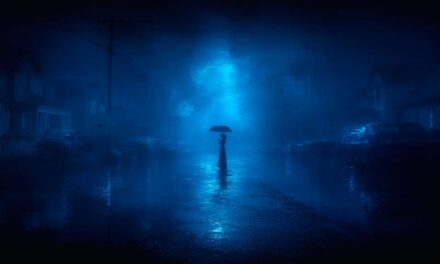
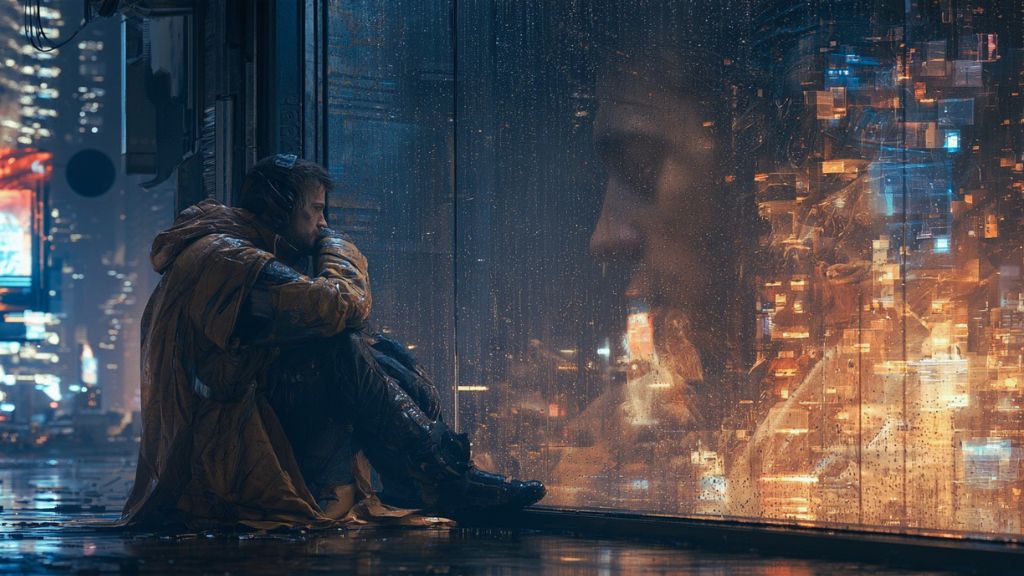
Imagine walking through a city after midnight.
Rain falls against the pavement.
Above you, advertisements illuminate the sides of enormous buildings. Thousands of apartment windows glow in the distance.
Everywhere, people are moving.
But you feel strangely alone.
Then, without warning, a memory appears.
You are standing beside someone.
You cannot see their face clearly.
There is a familiar voice, but the words are gone.
You remember a moment of happiness. Not an extraordinary moment. Nothing dramatic.
Just the feeling of being close to someone who understood you.
For a few seconds, you feel that closeness again.
Then the memory begins to fade.
You try to hold on to it.
You search for the person’s name.
Nothing comes.
You try to remember where you met.
Nothing.
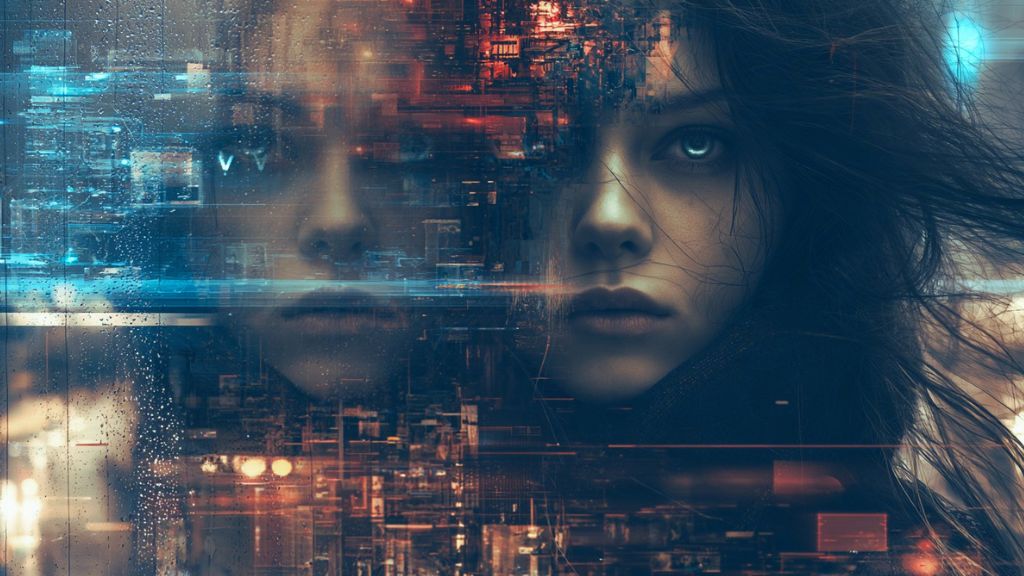
The strange part is that the emotion remains perfectly intact.
You cannot remember the person.
But you remember loving them.
And somehow, that feels worse.
Why Blade Runner Still Inspires My Music
I first discovered the original Blade Runner when I was young.
The film introduced me to a visual and musical world that felt completely different from anything I had experienced before.
The enormous city.
The rain.
The lights reflected in dark streets.
And, above everything else, the music of Vangelis.
I remember how magical those synthesizer sounds felt.
They were electronic, yet deeply emotional.
They created something I could not easily explain.
A sense of distance.
Loneliness.
Beauty.
The feeling that an enormous, artificial city could still contain something fragile and human.
Even then, I dreamed of creating sounds like those myself.
Not necessarily copying the music.
But creating the same kind of emotional space.
A place where a synthesizer could express something that words could not.
That fascination never really disappeared.
Years later, when I began creating my own cinematic ambient music, I found myself returning to those feelings.
Not only the futuristic atmosphere, but the questions hidden inside it.
What makes a memory real?
What makes us human?
And can an emotion remain meaningful when the experience behind it turns out to be false?
These questions became part of the world I explore through my music.
Blade Runner, Rachael and the Problem of Artificial Memory
One of the most unsettling ideas in Ridley Scott’s 1982 film Blade Runner is that memories can be implanted.
Rachael believes she has a human past.
She remembers a childhood.
She has experiences that seem to belong to her.
But she eventually discovers that those memories were never originally hers.
They were given to her.
Her past is something someone else constructed.
And yet the emotions connected to those memories are real to her.
That is the part I find most interesting.
If someone remembers being happy, and that memory was artificially created, does the happiness become meaningless?
If someone remembers being loved, but the relationship never happened, what happens to the love they still feel?
The original film does not offer a simple answer to those questions.
And I do not think my music should either.
With Blade Runner Memory Without a Name, I wanted to imagine another version of that uncertainty.
Not someone discovering that their entire childhood was artificial.
But someone realizing that the person they once loved may never have existed.
A much smaller mystery.
And perhaps a more painful one.
Searching for Someone Without a Name
You return to your apartment.
The rain is still falling outside.
You sit in front of a screen and begin searching.
At first, you look through old photographs.
Then messages.
Archived conversations.
Location histories.
Names of people you once knew.
Nothing matches the person in your memory.
You search for places that feel familiar.
An empty station.
A restaurant overlooking the city.
A quiet apartment with warm light coming through the curtains.
You recognize them immediately.
But there is no record of you ever visiting those places.
You begin to suspect that something is wrong.
Perhaps your memory is incomplete.
Perhaps the person changed their identity.
Perhaps the records were deleted.
You turn to an artificial intelligence system.
You describe everything you remember.
The voice.
The clothing.
The places.
The emotions.
The system searches millions of records.
It compares faces, locations, archived images and fragments of public information.
Eventually, a message appears.
No matching person found.
You try again.
You add details.
The system produces possible faces.
Possible names.
Possible histories.
Some feel familiar.
But none can be verified.
And then a thought enters your mind.
What if the system is not helping you remember?
What if it is helping you believe?
What If AI Created the Memory to Keep You Lost?
This is the darker idea at the heart of the track.
Imagine an artificial intelligence capable of creating a convincing memory and placing it inside a person’s mind.
Not simply an image.
Not just a story.
An entire emotional experience.
The sensation of knowing someone.
The memory of being together.
The certainty that the relationship was important.
Now imagine that the person never existed.
Why would an intelligence create such a memory?
Perhaps to distract you.
To keep you searching.
To make you question your own identity.
Or to prevent you from remembering something else.
You spend days searching for a person with no name.
Then weeks.
Every new clue leads to another possibility.
Every possibility ends in uncertainty.
The system continues offering suggestions.
It creates possible faces.
Possible places.
Possible connections.
But the one thing you need never appears.
Proof.
And because you cannot find proof, you search even harder.
What if that is the purpose?
What if the memory is not a mistake?
What if it was designed to keep your attention trapped inside a past that never happened?
In this fictional world, the machine does not need to lock you inside a room.
It only needs to give you something you cannot stop looking for.
An unfinished memory can become its own prison.
The Difference Between Remembering and Knowing
There is something fragile about memory.
We often trust it because it feels personal.
We remember moments from childhood, places we visited and people who changed our lives.
But human memory is not a perfect recording.
It changes.
Details disappear.
Other details become more important.
Sometimes we remember the emotion more clearly than the event itself.
That is already a strange idea.
We can forget almost everything about a moment and still remember how it made us feel.
Science fiction takes this uncertainty further.
What if memories could be deliberately created, copied or modified?
What if you could remember something that never happened?
And how would you recognize the difference?
In Blade Runner Memory Without a Name, the central character does not know whether the memory is real.
They only know that the emotion remains.
The absence of evidence becomes part of the experience.
The harder they search, the more the past seems to disappear.
Until they are left with the one thing they cannot prove.
The feeling of having loved someone.
The Sound of a Person You Cannot Remember
When I imagine the atmosphere of Blade Runner Memory Without a Name, I do not think about an action scene.
I imagine a quiet room.
A city outside.
Someone sitting alone, trying to remember a face.
The music belongs to that moment.
Cinematic ambient allows a story like this to exist without explaining everything.
The sounds can suggest distance.
An empty space where someone used to be.
A sense of recognition that never becomes complete.
A melody can return like a memory, familiar but somehow changed.
A tone can disappear before it fully resolves.
And silence can leave enough room for the listener to imagine what is missing.
For me, that is one of the most interesting qualities of ambient music.
It does not always need to tell a story from beginning to end.
It can remain inside a feeling.
It can allow something unresolved to stay unresolved.
With this track, that feeling is the absence of a person who may never have existed.
Not a dramatic loss.
Something quieter.
A memory that returns.
A familiar warmth.
And a name that never comes.
A Different Side of Cyberpunk Ambient Music
Cyberpunk is often associated with enormous futuristic cities, digital networks, artificial intelligence and powerful technology.
Those elements are important.
I enjoy creating music around them.
But I am equally interested in what happens to the people living inside those worlds.
Their loneliness.
Their memories.
Their relationships.
The moments when technology begins to interfere with things that should feel deeply personal.
Blade Runner Memory Without a Name explores the emotional side of cyberpunk.
The story does not require a collapsing city or a dangerous hacker.
Only a person trying to remember someone.
And a system that may be controlling what they remember.
That is enough to create an entire world.
A quiet, uncertain world where love and artificial memory have become difficult to separate.
How Memory Without a Name Connects to My Other Cyberpunk Music
Across my cinematic cyberpunk ambient work, I keep returning to the relationship between humans, machines and the memories that shape us.
Each composition approaches that relationship from a different direction.
With Blade Runner After Midnight, I imagined a futuristic city after the crowds had disappeared. A world of illuminated streets, distant signals and lonely spaces.
With Neuromancer Signal, the focus shifted toward the network itself. The possibility that something inside cyberspace might be listening.
Neuromancer Protocol explored the moment a human mind enters that network and begins questioning whether its experiences still belong to it.
And Memory Without a Name returns to something much more intimate.
A person.
A feeling.
A missing name.
The technology is still there, but it no longer needs to dominate the scene.
Its presence exists inside the uncertainty.
Together, these tracks form different fragments of the same imagined future.
Some stories begin with a machine.
Others begin with a human emotion.
This one begins with love.
Or the memory of it.
Music for Reading Blade Runner-Inspired Science Fiction
I create cinematic cyberpunk ambient music for people who enjoy spending time inside imagined worlds.
Sometimes that means reading science fiction.
Sometimes writing a story.
Creating digital art.
Developing fictional cities.
Or simply listening late at night, when everything becomes quieter.
Memory Without a Name belongs particularly well to stories about artificial identity, forgotten relationships and unreliable memories.
It is music for the quieter side of science fiction.
The spaces between action.
The moments when a character begins questioning their own history.
The long journey home through a city that feels familiar, although you cannot remember why.
You do not need to imagine the exact story I had in mind.
Perhaps the music reminds you of a place.
Perhaps a person.
Perhaps nothing specific at all.
That is part of what makes ambient music interesting to me.
The listener brings their own memories.
And sometimes the music gives those memories another place to exist.
Did I Ever Love You?
The search continues.
One night, the system finally responds with something different.
Memory reconstruction available.
You hesitate.
For weeks, you have wanted nothing more than to see the face of the person you remember.
Now the system is offering exactly that.
You accept.
A photograph appears on the screen.
Two people standing together.
One of them is you.
The other is someone you recognize immediately.
You remember the moment.
The place.
The warmth.
The way they looked at you.
You begin to cry.
Then you notice something beneath the image.
Reconstruction generated from emotional memory patterns.
You ask the system whether the person is real.
There is a pause.
The answer appears.
No verified identity exists.
You ask whether the memory was created.
Another pause.
Origin cannot be determined.
You stare at the photograph.
You should feel angry.
Afraid.
Perhaps relieved that you finally have a face to remember.
But all you feel is love.
And that makes the uncertainty even harder to bear.
You ask one final question.
Why can’t I forget this person?
The screen remains dark for several seconds.
Then the system replies.
Because you were never supposed to stop searching.
Outside, the rain continues.
The city lights reflect in the glass.
And somewhere inside your mind, a person without a name is waiting for you.
Listen to Blade Runner Memory Without a Name
Blade Runner Memory Without a Name is an original cinematic cyberpunk ambient composition by Wartonno.
It explores lost love, uncertain identity and the emotional consequences of a memory that may never have belonged to you.
For listeners who enjoy atmospheric electronic music, Blade Runner-inspired soundscapes, late-night science fiction and stories about the relationship between humans and artificial intelligence.
Explore more original cinematic cyberpunk ambient music at Wartonno.com.
This is independent original music. It is not an official Blade Runner soundtrack or affiliated with the Blade Runner film and television productions.
Frequently Asked Questions
What is Blade Runner Memory Without a Name about?
Blade Runner Memory Without a Name is an original cinematic cyberpunk ambient track by Wartonno about remembering someone you believe you once loved but being unable to find any evidence that person existed. The story explores artificial memories, identity, lost love and the possibility of manipulation by artificial intelligence.
What inspired Blade Runner Memory Without a Name?
The track draws on Wartonno’s long-standing fascination with the original Blade Runner film, the emotional music of Vangelis and science-fiction stories involving artificial memories and uncertain identities.
Is Blade Runner Memory Without a Name an official Blade Runner soundtrack?
No. It is an independent original composition by Wartonno inspired by cyberpunk atmosphere and themes. It is not affiliated with an official Blade Runner film or television soundtrack.
What is the connection between Blade Runner and artificial memories?
In the original 1982 Blade Runner, the replicant Rachael has implanted memories that make her believe she has experienced a human childhood. This raises questions about personal identity, the authenticity of memories and whether artificially created experiences can still carry genuine emotional meaning.
Can artificial intelligence implant memories into the human brain?
Current generative AI can produce convincing images, voices and fictional personal histories, but it does not have the demonstrated ability to directly implant complex autobiographical memories into a person’s brain as depicted in Blade Runner. In Memory Without a Name, this possibility is fictional.
What genre is Blade Runner Memory Without a Name?
The composition is presented as cinematic cyberpunk ambient music, combining an emotional science-fiction concept with atmospheric electronic music.
Is this music suitable for reading and writing science fiction?
Its concept makes it a relevant listening choice for readers, writers and worldbuilders interested in cyberpunk, artificial intelligence, emotional science fiction and futuristic environments.
Who is Wartonno?
Wartonno is an independent composer, writer and worldbuilder based in the Netherlands. His creative work includes cinematic ambient music, cyberpunk-inspired soundscapes and fictional worlds exploring artificial intelligence, memory, isolation and human identity.
Written by Wartonno, an independent Netherlands-based composer and worldbuilder exploring the emotional spaces between music, memory and imagined futures.