Music for the in-between
Some music feels like a place.
Not a song in the usual sense.
Not something that asks you to follow a story.
Not something that pulls you forward with a chorus, a beat, or a voice.
Instead, it opens a room.
A room between work and rest.
Between thought and sleep.
Between noise and quiet.
Between the visible world and the inner one.
That is where liminal ambient music begins.
The word liminal means threshold. It describes the space between one state and another: a hallway, a waiting room, a station after midnight, the hour before sleep, the pause after closing a laptop, the breath before starting again.
For me, liminal ambient music is music for those moments.
It is sound for the in-between.
Inside Wartonno Sound, liminal ambient music becomes part of a wider atmosphere: dark ambient textures, slow soundscapes, soft shadows, emotional stillness, and music for overthinking minds.
It is made for focus.
It is made for sleep.
It is made for escape.
Not escape as disappearance.
Escape as a quieter place to return to yourself.
If you are new here please Start Here.
What is liminal ambient music?
Liminal ambient music is atmospheric music that feels like a threshold.
It often uses slow movement, soft textures, drones, pads, reverb, distant tones, and subtle changes to create the feeling of being between places.
It may feel like:
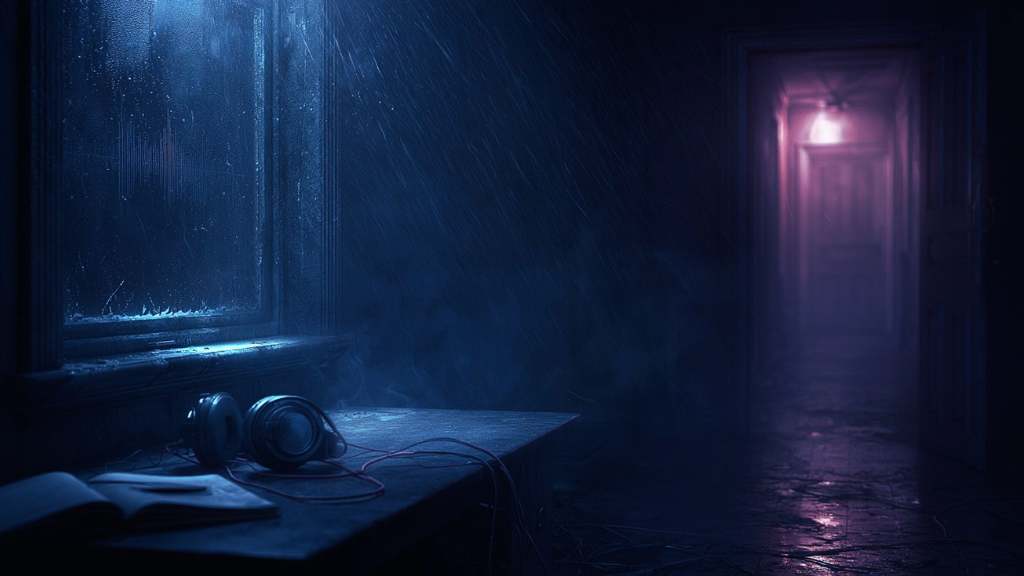
- an empty room at night
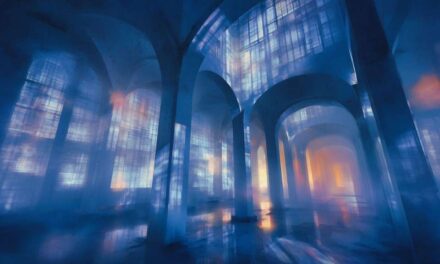
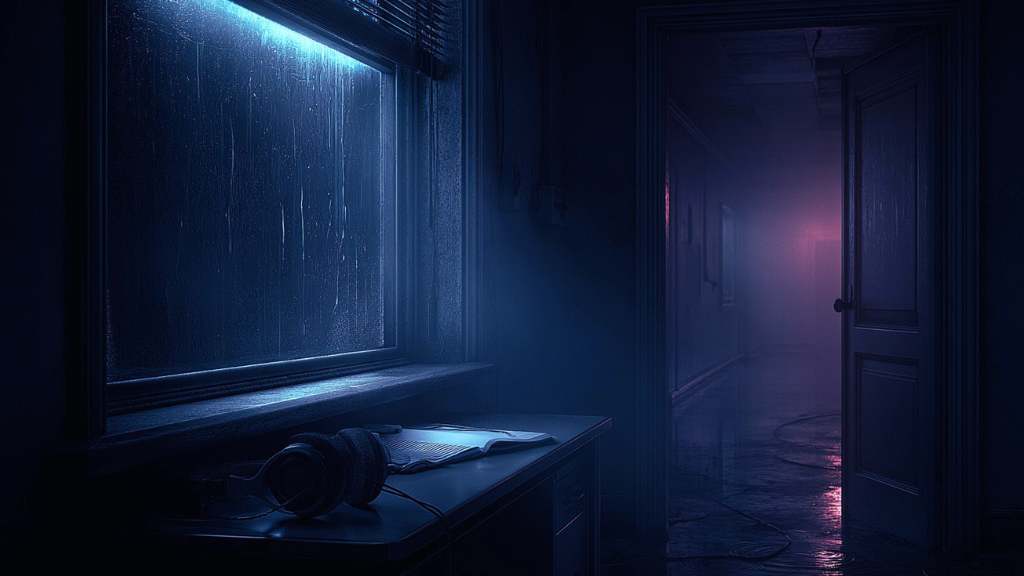
- a hallway with soft blue light
- a train station after the final departure
- a city seen through rain
- the moment before sleep
- a memory that has not fully returned
- a dream that has not fully begun
- a quiet world behind the visible one
Unlike traditional songs, liminal ambient music does not always move toward a clear climax. It often stays with a feeling long enough for the listener to enter it.
That is part of its power.
It does not rush.
It lets the room appear slowly.
Liminal ambient music can be dark, soft, warm, cold, nostalgic, cinematic, mysterious, minimal, or dreamlike. But it usually carries one important quality:
It makes ordinary time feel suspended.
For an overthinking mind, that suspension can be useful.
The mind does not always need more information.
Sometimes it needs a threshold.
A place where the day can loosen its grip.

Why liminal ambient music works for focus
Focus does not always come from force.
Sometimes focus arrives when the room becomes quieter.
Many people try to focus by adding pressure: stricter routines, louder motivation, more tools, more timers, more control. Those can help, but they can also create another layer of tension.
Liminal ambient music works differently.
It supports focus by creating atmosphere without demanding attention.
There are usually no lyrics to interpret.
No strong beat asking the body to move.
No sudden emotional shifts pulling the mind away.
No crowded arrangement filling every corner.
Instead, the sound becomes a soft container.
This can help during:
- writing
- reading
- editing
- study sessions
- deep work
- creative planning
- worldbuilding
- journaling
- quiet admin work
- late-night focus blocks
Good focus music does not steal the foreground.
It changes the background.
It gives the mind somewhere steady to rest while attention moves toward the task.
This is why Wartonno Sound often uses slow textures, spacious drones, and subtle movement. The goal is not to entertain the mind every second. The goal is to make attention feel less scattered.
A track becomes a room.
The work happens inside it.
Why liminal ambient music works for sleep
Sleep is also a threshold.
You do not enter it by command.
You move toward it slowly.
The body may be tired, but the mind can remain lit. Thoughts continue. Memories return. Small worries become larger in the dark. The silence of the bedroom can make everything feel closer.
For some people, complete silence is not restful.
It is too empty.
Liminal ambient music can soften that emptiness.
A slow soundscape can become a bridge between waking and sleep. It does not need to “make” you sleep. It simply changes the emotional environment around the process.
The best liminal ambient music for sleep preparation often has:
- slow movement
- soft edges
- no sudden interruptions
- low brightness
- minimal rhythm
- long fades
- gentle repetition
- warm or shadowed tones
- a sense of spaciousness
It should not feel like a performance.
It should feel like the room dimming.
Wartonno Sound often lives in this kind of space: music for the hour when the day is no longer active, but the mind has not yet surrendered to rest.
A small soundscape for the space between thought and sleep.
Why liminal ambient music works for escape
Escape is often misunderstood.
It does not always mean running away.
Sometimes escape means giving the mind distance from the surface of the day.
A person may need escape after too much noise, too many screens, too many small decisions, too much emotional residue. They may not need excitement. They may need atmosphere.
Liminal ambient music offers that kind of escape.
Not a loud distraction.
A quiet displacement.
The listener can feel transported into:
- an abandoned city
- a dream corridor
- a blue-lit room
- a silent archive
- a rain-covered street
- a distant inner landscape
- a place that feels familiar but unnamed
This is why liminal ambient music connects so naturally to visual imagination and fictional worlds.
A sound can become architecture.
A drone can become weather.
A reverb tail can become distance.
A soft melody can become a memory.
Inside the Wartonno world, this is where music begins to touch Meridian City: the fictional archive of rain, occult traces, strange evidence, hidden patterns, and characters moving between reality and dream.
The music does not need to explain the city.
It can simply open the door.
Liminal soundscapes and overthinking minds
Overthinking often happens in loops.
The same thought returns.
Then another thought attaches itself.
Then the mind starts building corridors.
One worry becomes a room.
One memory becomes a staircase.
One future problem becomes a whole building.
Liminal ambient music does not break the loop by force.
It changes the room around it.
That difference matters.
If the mind is moving too quickly, loud or busy music can add more movement. Lyrics can add more language. Bright melodies can add more stimulation.
But a slow liminal soundscape can give the thought loop more space.
Not a solution.
Not a cure.
Not a promise.
A softer environment.
For Wartonno Sound, this is essential. The music is often made for people whose minds continue after the world goes quiet. It gives attention somewhere soft to rest.
A listener may still think.
But perhaps the thoughts become less sharp.
Perhaps the room becomes wider.
Perhaps the night no longer feels so empty.
The three listening paths: focus, sleep, and escape
If you are new to liminal ambient music, it may help to think in three listening paths.
1. Focus
Use liminal ambient music when you need to stay with one task without adding pressure.
Best for:
- writing
- editing
- reading
- deep work
- study
- planning
- worldbuilding
- slow creative sessions
Choose tracks that feel steady, spacious, and minimally distracting.
2. Sleep
Use liminal ambient music before sleep when silence feels too sharp or the day has not fully left your body.
Best for:
- pre-sleep routines
- nighttime reflection
- quiet bedrooms
- thought release
- emotional decompression
- slow evening transitions
Choose tracks that are soft, slow, and free of sudden changes.
3. Escape
Use liminal ambient music when you want to step outside the surface noise of ordinary life.
Best for:
- reflective listening
- visual imagination
- walking alone
- quiet travel
- mood setting
- fictional worldbuilding
- emotional distance
Choose tracks that feel cinematic, mysterious, and immersive.
These three paths are also central to Wartonno Sound.
Focus.
Sleep.
Escape.
Different doorways.
The same quiet archive.
How to use liminal ambient music during the day
Liminal ambient music is not only for night.
It can also help create small thresholds during the day.
For example, you can use it:
Before starting work
Play one track before beginning a deep focus session. Let it mark the transition from scattered attention into one clear task.
During writing
Use a long ambient playlist as a background atmosphere for drafting, editing, or worldbuilding.
After overstimulation
Play a slow soundscape after too much screen time, noise, social media, or multitasking.
During a creative reset
Use the music with a notebook or printable guide. Write down one thing you are carrying, one thing you can release, and one thing you can return to.
Before sleep
Let the music become the bridge between the active day and the quiet night.
The point is not to make life perfect.
The point is to give the mind a few softer transitions.
How I think about liminal ambient music in Wartonno Sound
When I create music for Wartonno Sound, I often begin with a state of mind rather than a technical idea.
Not:
What should this track do musically?
But:
What kind of threshold does this track belong to?
A track might belong to the threshold between work and rest.
Or between overthinking and sleep.
Or between the visible world and a fictional city.
Or between emotional heaviness and a small moment of release.
From there, the sound begins to form.
A drone becomes the floor.
A pad becomes the air.
A texture becomes the dust in the room.
A distant tone becomes the light under the door.
The arrangement stays simple because the listener does not need more clutter.
The sound should leave space.
That is the heart of liminal ambient music for me.
It is not emptiness.
It is spaciousness with intention.
The connection between liminal ambient and dark ambient
Liminal ambient and dark ambient often overlap.
Dark ambient brings depth, shadow, mystery, and emotional weight.
Liminal ambient brings threshold, transition, suspension, and in-between atmosphere.
Together, they create a sound that can feel:
- quiet but intense
- dark but calming
- empty but alive
- mysterious but useful
- cinematic but personal
- strange but emotionally familiar
That overlap is important for Wartonno Sound.
The music is not bright meditation music.
It is not generic sleep music.
It is not only background sound.
It is more like a quiet room with a hidden door.
Dark ambient gives the room its shadow.
Liminal ambient gives the door its threshold.
A simple liminal listening ritual
You can use this ritual when you feel scattered, tired, overstimulated, or caught between states.
1. Choose one doorway
Decide what you need: focus, sleep, or escape.
Do not choose perfectly. Just choose gently.
2. Press play before doing anything else
Let the track begin before the phone, before the tabs, before the next input.
3. Lower the visual noise
Dim the room if you can. Close unnecessary windows. Put one object in front of you: a notebook, a book, a cup of tea, a blank page.
4. Give the first three minutes to arrival
Do not expect instant calm. Let the sound find the room.
5. Name the threshold
Quietly ask:
What am I moving from, and what am I moving toward?
From noise to focus.
From thought to sleep.
From pressure to distance.
From the day back to myself.
6. Stay with one small action
Write one paragraph.
Read one page.
Breathe for one minute.
Close your eyes.
Let the track finish.
That is enough.
The ritual does not need to become another task.
It is simply a way to enter the sound with intention.
Where to start listening
If you want to explore Wartonno Sound through specific listening paths, use the Wartonno Sound listening gateway.
There you can choose music for:
- overthinking at night
- deep focus and writing
- anxiety / overstimulation
- liminal dreaming and reflection
- dark ambient journeys
- curated dark ambient selections
Choose your listening path: If you want to go directly into the sound, visit the Wartonno Sound listening gateway for playlists and tracks for overthinking at night, deep focus, overstimulation, liminal dreaming, and dark ambient escape.
This is the best doorway if you do not want to think too much about where to begin. Choose the state you are in, then let the music meet you there.
How liminal ambient connects to the Wartonno archive
Wartonno.com is the central archive behind the music.
Here, liminal ambient music connects to:
- Wartonno Sound
- dark ambient soundscapes
- overthinking minds
- quiet tools
- Meridian City
- visual atmosphere
- creative process notes
- focus and sleep rituals
The music is one door.
The writing explains the room behind it.
A Wartonno Sound track can help someone focus.
It can also become the sound of a fictional street.
It can support a quiet guide.
It can become part of a night routine.
It can open a small space inside the day.
That is why liminal ambient music matters here.
It is not only a genre.
It is a way of building thresholds.
Between platforms.
Between moods.
Between stories.
Between the listener and the world behind the sound.
Frequently asked questions
What is liminal ambient music?
Liminal ambient music is atmospheric music that feels like a threshold or in-between place. It often uses drones, pads, reverb, textures, and slow movement to create a sense of suspended time, quiet transition, and inner space.
Is liminal ambient music good for focus?
Yes, liminal ambient music can be useful for focus because it creates a calm background atmosphere without demanding too much attention. It can support writing, reading, deep work, study, and creative sessions.
Can liminal ambient music help with sleep?
Liminal ambient music can support sleep preparation by creating a slower, softer environment before bed. It should not be treated as a medical solution, but it can help make the transition from day to night feel gentler.
What is the difference between liminal ambient and dark ambient?
Dark ambient often emphasizes shadow, depth, mystery, and emotional weight. Liminal ambient emphasizes thresholds, transitions, in-between spaces, and suspended atmosphere. Wartonno Sound often blends both.
What does “liminal soundscapes for focus, sleep, and escape” mean?
It means atmospheric music designed for transitional states: focusing after distraction, slowing down before sleep, or stepping into a quieter inner world when everyday noise feels too loud.
Is Wartonno Sound liminal ambient music?
Yes, Wartonno Sound creates dark ambient and liminal ambient soundscapes for focus, sleep, overthinking, reflection, writing, and quiet escape.
Where can I listen to Wartonno Sound?
You can start at the Wartonno Sound listening gateway, where playlists and tracks are organized by mood and use case, including overthinking at night, deep focus, overstimulation, liminal dreaming, and dark ambient journeys.
Can I use liminal ambient music for writing?
Yes. Liminal ambient music is often useful for writing because it creates atmosphere without taking over the words. It can help support fictional worldbuilding, editing, reflective writing, and deep creative focus.
Final reflection
Liminal ambient music is not only background music.
It is a threshold.
A small room between one state and another.
Between the day and the night.
Between thought and sleep.
Between scattered attention and focus.
Between the visible world and the inner one.
Between noise and the quiet place underneath it.
For some listeners, that threshold is where rest begins.
For others, it is where writing begins.
Or reflection.
Or dreaming.
Or the slow return to themselves.
Wartonno Sound lives in that threshold.
Not to pull you away from your life.
But to give you a softer way back into it.