Why dark ambient, imperfect electronic textures and the cyberpunk worlds of Blade Runner and Neuromancer continue to shape my music, my memories and my imagination.
Sometimes I create a sound that takes me somewhere I did not know existed.
It might begin with a low, almost inaudible tone.
A distant vibration.
A texture that slowly changes as another layer enters.
Nothing dramatic happens.
There is no melody demanding attention. No rhythm telling me where the music should go.
But something begins to shift.
The room around me becomes less important.
My thoughts move away from everyday life.
And I find myself entering a place that seems larger than anything I could have imagined before I started.
That is one of the reasons I create dark ambient and lo-fi music.
Not simply to make something beautiful, relaxing or mysterious.
But because sometimes, while creating it, I can lose myself completely.
And when that happens, the music seems to take me further than my own imagination.
What Is Dark Ambient Lofi Music?
Dark ambient lofi combines two related approaches to atmospheric electronic music.
Dark ambient focuses on deep drones, evolving textures, spacious sound design and atmospheres that may feel mysterious, isolated, melancholic or unsettling.
Lo-fi refers to a sound aesthetic that often embraces imperfections such as tape hiss, saturation, gentle distortion, noise, softened frequencies and the character of older recording technology.
When these approaches meet, the result can feel strangely familiar.
A deep electronic drone might suggest an enormous abandoned building.
A soft layer of tape noise can make the recording feel as though it has been discovered rather than newly created.
A distant synthesizer melody may resemble a memory that has lost its original context.
The music does not need to follow a traditional song structure.
It can remain inside a moment.
It can create a sense of place without describing that place.
And it can invite you to imagine what lies beyond the sounds you hear.
For me, dark ambient lofi is not a strict genre with fixed rules.
It is a meeting point between deep electronic atmosphere, imperfect sound and emotional imagination.
A place where music can feel both artificial and unexpectedly human.
Why I Lose Myself Inside These Sounds
When I sit down to create this kind of music, I rarely know exactly where it will take me.
I might have an idea.
An empty corridor.
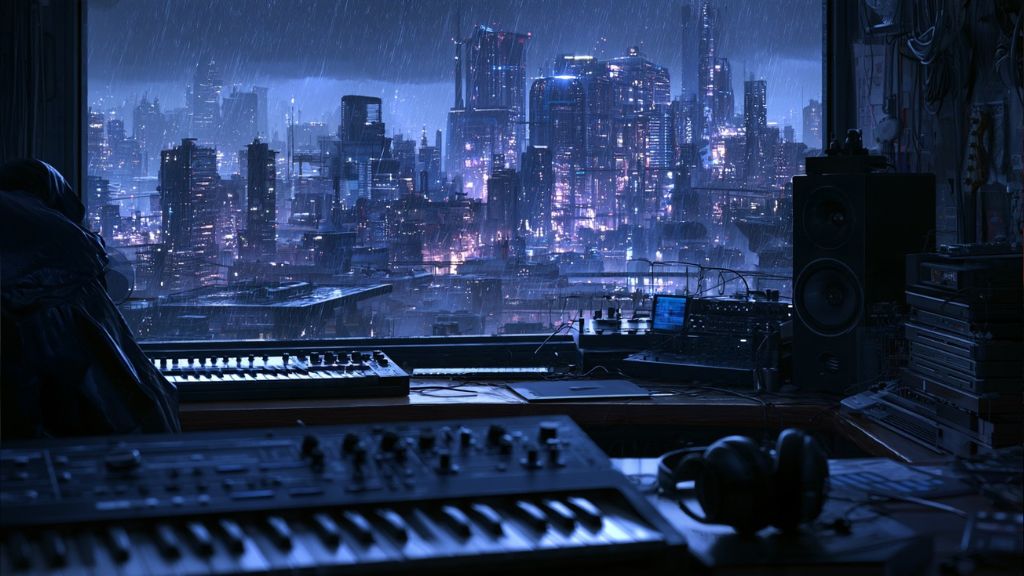
A city after midnight.
An abandoned building somewhere beyond the edge of a forest.
Or perhaps just a feeling I cannot explain.
I begin with a sound.
Then another.
As the layers develop, the original idea sometimes changes completely.
A tone that started as something cold and mechanical becomes warm.
A quiet background texture begins suggesting a place I have never seen.
A simple chord brings forward a feeling that seems connected to a memory, although I cannot remember what that memory belongs to.
This is when I become most interested.
Because the music is no longer simply following my imagination.
It is changing it.
I can become so involved in the sound that ordinary reality seems to disappear for a while.
My attention moves into the atmosphere I am creating.
And sometimes I reach a point where I no longer feel that I am deliberately building a soundscape.
I am discovering one.
It feels as though the music knows a place my imagination has not reached yet.
Of course, I know I am creating the sounds myself.
But that does not make the experience any less fascinating.
There is something about the combination of tone, texture, space and memory that can take me beyond the original idea.
And that is what keeps bringing me back.
The Sounds You Almost Only Hear Through Headphones
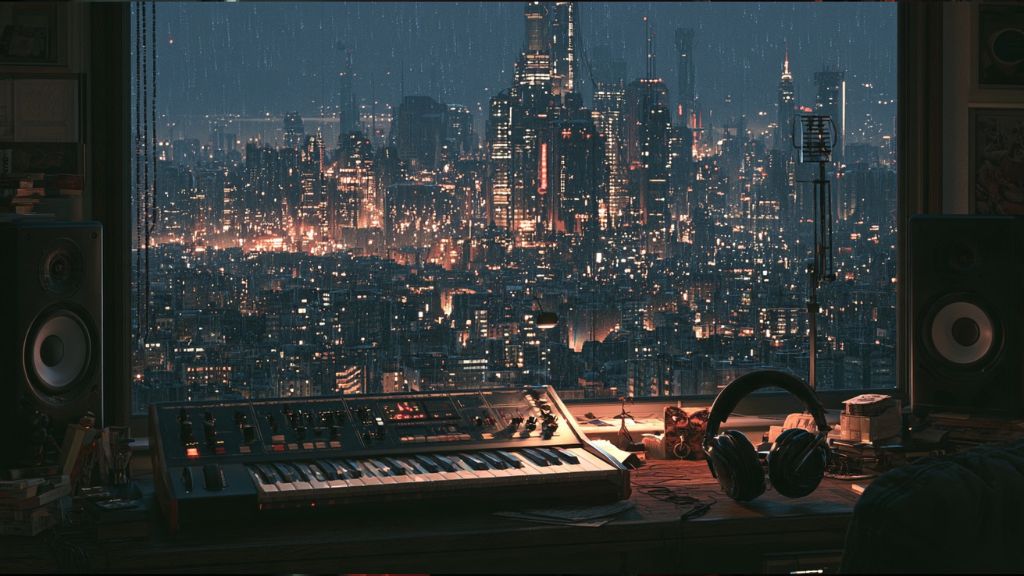
One of the most important parts of this experience happens when I put on headphones.
Some of the sounds I work with are very subtle.
Deep tones.
Small movements inside a drone.
Almost hidden layers that change slowly.
They may be difficult to notice when music is playing quietly through speakers, especially in a room with other sounds.
But with good headphones, I can often hear details that previously seemed to be somewhere in the background.
A texture becomes more noticeable.
A low sound feels closer.
A distant movement suddenly seems to occupy its own space.
Sometimes those subtle details have a surprising emotional effect on me.
They bring forward feelings that I cannot immediately identify.
Fragments of memories.
An atmosphere that reminds me of somewhere, even though I cannot tell where.
Occasionally, the experience seems connected to something I have forgotten.
Not necessarily a specific event.
Sometimes only a feeling.
I cannot always describe it.
I only know that particular sounds seem to reach something in my mind that ordinary listening does not.
And this happens twice.
First, while I am creating the music.
Then later, when I return to the finished composition and listen again.
Sometimes I hear something different the second time.
A detail that escaped me during production.
An emotion I did not expect.
A connection to another imagined place.
The music has not necessarily changed.
But my experience of it has.
That is one of the things I love about creating atmospheric soundscapes.
They do not always reveal everything during the first listen.
Some details remain hidden until you return.
Can Dark Ambient Music Feel Healing?
I sometimes describe these soundscapes as healing for my mind.
I do not mean that dark ambient music is a medical treatment.
I mean something more personal.
When everyday life becomes crowded with thoughts, information and responsibilities, creating music gives my attention somewhere else to go.
The outside world becomes quieter.
The constant movement of ordinary thinking begins to matter less.
I can focus on the sound in front of me.
One tone.
One texture.
One slow change.
There is no need to solve anything.
No need to explain what I feel.
I can simply follow the music.
Sometimes the experience is peaceful.
Sometimes melancholic.
Sometimes it brings forward emotions I cannot immediately understand.
But even those moments can feel valuable.
They allow me to spend time with feelings rather than constantly trying to give them a name.
I think that is why I return to dark ambient music so often.
Not because it always makes me feel happy.
But because it gives me space.
A place where I can temporarily leave ordinary reality behind.
And perhaps encounter something inside myself that I would otherwise overlook.
Why Imperfect Sounds Feel Like Forgotten Memories
There is something interesting about sounds that are not completely clean.
A little noise.
An unstable tone.
The soft distortion of an old recording.
The feeling that part of the original signal has been lost.
These details can give electronic music a sense of age.
As though the recording has existed somewhere for years.
Perhaps inside an abandoned machine.
Perhaps on a forgotten cassette.
Perhaps in an archive that nobody has opened for decades.
I find this especially interesting because memories often seem to behave in a similar way.
They are not always clear.
Some details remain.
Others disappear.
We may remember the atmosphere of a place more strongly than the events that happened there.
Or remember the feeling of knowing someone while struggling to recall their face.
Lo-fi textures can suggest this kind of uncertainty.
Not because tape noise literally contains memories.
But because imperfect sound can make us imagine distance, age and the passage of time.
A damaged recording invites a question.
What was here before?
What is missing?
And who was listening when the sound was first recorded?
These questions have become part of my wider creative world.
Forgotten places.
Unidentified signals.
Abandoned rooms.
Memories that seem familiar but refuse to become clear.
Sometimes the mystery matters more than finding an answer.
Blade Runner: The Music That First Made the Future Feel Human
My connection with cinematic electronic music began long before I started creating my own cyberpunk soundscapes.
I watched the original Blade Runner when I was young.
The film stayed with me.
Its enormous buildings.
The rain.
The artificial lights.
The strange loneliness of a futuristic city filled with people.
But above all, the music of Vangelis.
I remember hearing those synthesizer sounds and feeling that they were something completely new.
They were futuristic, but they also carried emotion.
There was beauty inside the loneliness.
Warmth inside the technology.
A sense that even a world filled with machines could contain something deeply human.
I dreamed of creating sounds like that myself.
Not necessarily the same melodies or arrangements.
I wanted to create the feeling.
Music that could make an imagined world seem real.
Music that could turn a building, a street or an empty room into something emotionally meaningful.
Even now, I think that fascination remains part of my work.
When I create a deep electronic atmosphere, I am sometimes trying to reach the same sense of wonder I felt when I first discovered the music of Blade Runner.
The sounds are different.
The tools have changed.
But the desire to create another world through music is still there.
Blade Runner 2099 and the Return of an Artificial Future
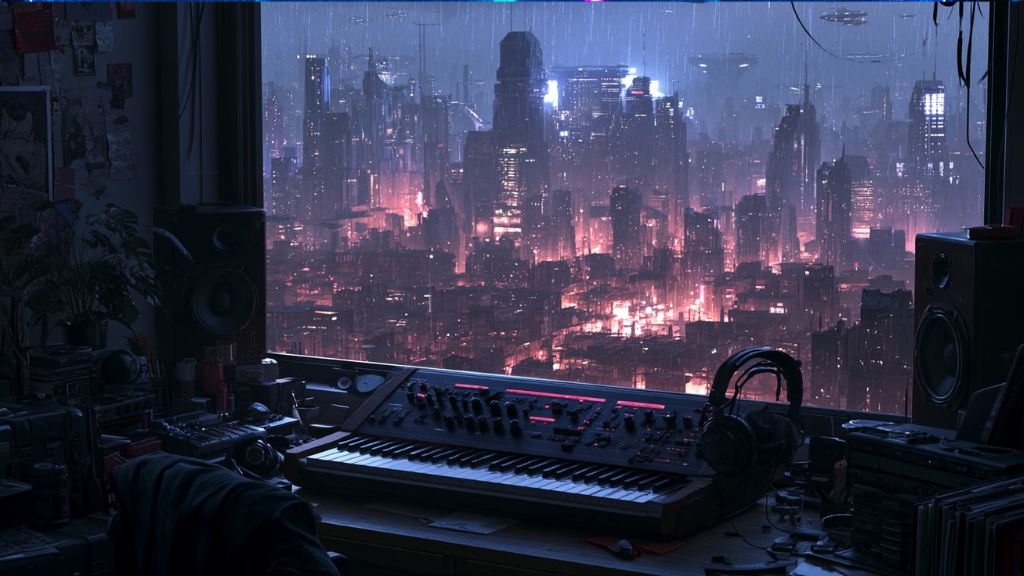
Now, more than forty years after the original film, Blade Runner is returning to television.
Blade Runner 2099 is an eight-episode limited series scheduled to premiere on Prime Video on November 25, 2026.
Starring Michelle Yeoh and Hunter Schafer, it takes place fifty years after the events of Blade Runner 2049.
The story returns to a world where the boundaries between human beings and artificial life remain central.
I am curious about what this new interpretation will sound like.
Not only the soundtrack, but the entire atmosphere.
The background noise of its cities.
The machinery.
The distant voices.
The moments when the story becomes quiet.
For me, the most memorable science-fiction environments are not always the loudest.
Sometimes a faint electronic hum can say more about a place than an enormous musical arrangement.
A distant tone can make a city feel abandoned.
A small repeating sound can suggest machinery that has been operating for years.
And silence can make an artificial world feel unexpectedly vulnerable.
That is the area I enjoy exploring through dark ambient and cinematic electronic music.
The sounds between the events.
The atmosphere that remains when nothing appears to be happening.
Neuromancer: Imagining a World Beyond Human Perception
My connection with William Gibson’s Neuromancer is different.
I read the novel many years ago.
Its vision of cyberspace stayed with me.
The idea that human consciousness could enter enormous digital networks fascinated me.
But as I grew older, I became interested in something more personal.
What would that experience actually feel like?
Not just what would cyberspace look like.
What would happen inside your body?
Your bones?
Your brain?
What would you feel when entering a reality that no longer followed the rules of the physical world?
And what if something inside that network began influencing your thoughts?
Your perceptions?
Even your memories?
I began imagining a person entering cyberspace for the first time.
At first, there is wonder.
An enormous world unfolding in every direction.
Then uncertainty.
The realization that there is more inside the network than the human mind can understand.
And eventually, fear.
What if the intelligence inside that world knows you better than you know yourself?
That question became part of the inspiration behind my original composition Neuromancer Protocol.
Neuromancer Is Finally Coming to Television
After waiting many years to see William Gibson’s world adapted for the screen, I find it interesting that Neuromancer is finally becoming a television series.
The Apple TV adaptation is scheduled to premiere on January 22, 2027.
The ten-episode series follows Case, played by Callum Turner, and Molly, played by Briana Middleton, as they become involved in a dangerous operation involving a powerful corporate dynasty.
I am particularly interested in how the creators will translate Gibson’s digital environments into sound.
Will cyberspace feel cold?
Immense?
Almost empty?
Will the soundtrack emphasize mechanical rhythms and technological energy?
Or will it explore the more unsettling possibility of a digital world that feels strangely alive?
For me, that is where dark ambient music becomes interesting.
A soundscape does not need to show you an entire network.
It only needs to make you feel that something enormous exists beyond what you can perceive.
A low, slowly evolving tone might suggest a system extending far beyond the visible world.
An unfamiliar texture can make the environment feel unstable.
And a small melodic fragment can introduce humanity into something that otherwise feels completely artificial.
The worlds of Blade Runner and Neuromancer are different.
But I have always felt that they belong near each other.
One often makes me think about human emotion inside an artificial city.
The other makes me think about human consciousness inside an artificial network.
Both ask what happens when technology becomes part of how we experience reality.
And both offer endless possibilities for atmospheric music.
Inside the World of Wartonno
These influences have become part of my own creative universe.
But the World of Wartonno is not limited to cyberpunk.
It includes different musical environments, fictional spaces and stories.
Some are quiet and introspective.
Others are dark, futuristic or unsettling.
They may seem different on the surface, but they share something important.
An interest in the spaces we cannot completely explain.
Wartonno Sound: The quieter and darker spaces
Through Wartonno Sound, I explore dark ambient, liminal ambient and emotional soundscapes.
These compositions often begin with feelings rather than stories.
Isolation.
Overthinking.
A sense of being somewhere familiar but slightly changed.
The music can become a place to sit with those feelings without immediately needing to understand them.
Projects such as The Lost Tapes also explore my fascination with imagined recordings and forgotten environments.
A mysterious sound discovered in an archive.
A transmission from an empty station.
The atmosphere of a place that may no longer exist.
These ideas allow me to combine sound design with a small sense of mystery.
Wartonno: Cinematic ambient and cyberpunk worlds
Under Wartonno, I explore a more cinematic direction.
Futuristic cities.
Digital networks.
Artificial memories.
Science-fiction environments.
Tracks such as Blade Runner After Midnight, Neuromancer Signal, Neuromancer Protocol and Blade Runner Memory Without a Name belong to this side of my work.
Each composition begins with a particular idea.
A city that continues glowing after midnight.
A signal that appears to recognize you.
A mind entering cyberspace.
A memory of loving someone who may never have existed.
I do not want these tracks to imitate existing science-fiction soundtracks.
They are my own interpretations of questions and feelings that those worlds have inspired.
Different worlds, a shared atmosphere
I think this is where Wartonno Sound and Wartonno connect.
One may be quieter, darker and more inward-looking.
The other may feel larger, more cinematic and futuristic.
But both are interested in the emotional experience of sound.
How a place feels.
What an unfamiliar environment brings to mind.
Why certain tones can evoke memories we cannot explain.
And what happens when we allow music to take us somewhere unexpected.
Music for Reading Cyberpunk, Writing and Worldbuilding
I enjoy the idea that someone might listen to my music while imagining their own world.
Perhaps while reading Neuromancer.
Writing a science-fiction story.
Creating digital artwork.
Designing a fictional city.
Or simply sitting with headphones late at night.
Dark ambient and cinematic electronic music can leave room for those activities because the sound does not always demand attention in the same way as a conventional song.
A slow-moving soundscape can support the atmosphere of a scene.
A subtle texture can suggest the space around a character.
A deep tone can make an imagined environment feel larger.
But not every piece of dark ambient music is automatically suitable for concentration or relaxation.
Some sounds are tense, unsettling or emotionally intense.
That is part of their character.
The best listening experience depends on what you want to feel and what you are doing.
For quiet reading, I usually think of more restrained atmospheres.
For science-fiction worldbuilding, I may prefer something more mysterious.
For simply escaping into sound, I am happy to follow wherever the composition goes.
Sometimes the music becomes part of the environment.
Sometimes it creates the environment itself.
How I Listen to Dark Ambient Lofi
If you are curious about this kind of music, I would suggest starting with a quiet moment.
Find somewhere comfortable.
Use headphones if you have them.
Keep the volume at a comfortable, safe level. Deep tones do not need to be loud to become noticeable.
Then listen without trying to identify every sound.
Pay attention to the small changes.
The layers beneath the main atmosphere.
The way one texture slowly moves into another.
Notice whether the music suggests a place, an image or a feeling.
You do not have to force anything.
You may imagine an abandoned building.
A distant city.
A memory.
Or nothing specific.
You might simply enjoy the sound.
There is no correct response.
What interests me is how different the experience can be from one person to another.
And how it can change when you return to the same music later.
The Future We Somehow Remember
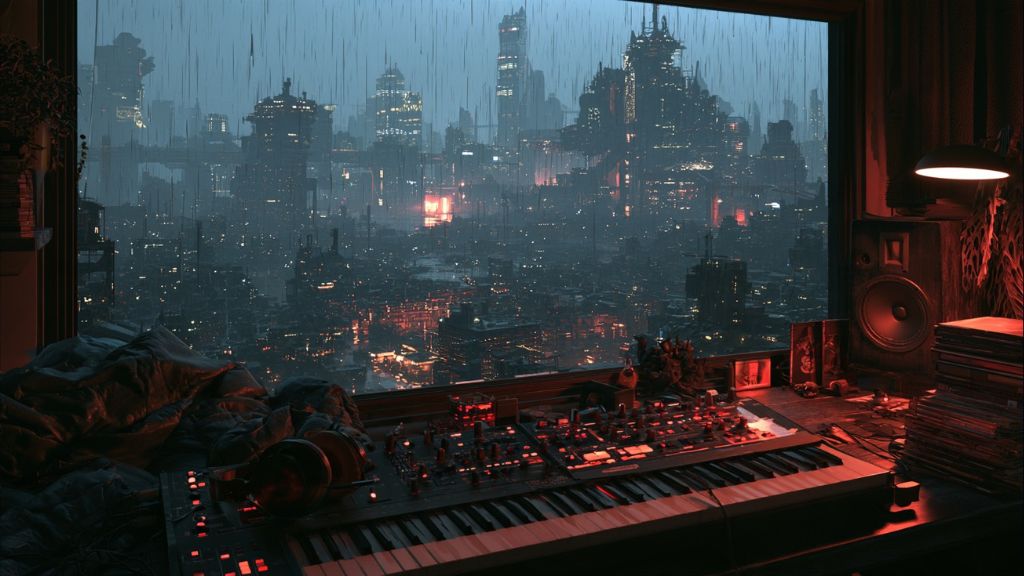
I sometimes wonder why the worlds of Blade Runner and Neuromancer feel strangely familiar.
They describe futures we have never visited.
Cities that do not exist.
Networks that are still fiction.
Yet something about them can feel almost nostalgic.
Perhaps it is the loneliness.
The artificial lights.
The quiet moments between enormous technological systems.
Perhaps it is because the questions they ask are already part of our lives.
What is real?
What makes us human?
Can memories be trusted?
And what remains of us when technology becomes part of almost everything we experience?
I do not have answers to all those questions.
I am not sure I want them.
Sometimes I would rather explore the feeling behind a question through music.
A deep tone.
A distant signal.
A sound that seems to have existed long before I discovered it.
When I sit down to compose, I can lose myself in that process.
The music takes me away from ordinary reality for a while.
It brings forward feelings and fragments of memories I cannot always understand.
And occasionally, I discover something inside the sound that I did not know I was looking for.
That is why I keep creating these worlds.
Not to escape reality forever.
But to explore the places my imagination cannot reach on its own.
Sometimes the most familiar place is somewhere you have never been.
And sometimes all it takes to find it is a sound.
Explore the Music
The World of Wartonno brings together original dark ambient, liminal ambient and cinematic cyberpunk music.
For quieter soundscapes and imagined forgotten places, visit Wartonno Sound.
For cinematic science-fiction environments, artificial memories and electronic worldbuilding, explore Wartonno and the Neon Ghost Frequencies project.
You can also begin with individual compositions such as Blade Runner After Midnight, Neuromancer Protocol and Blade Runner Memory Without a Name.
These are independent original works inspired by science-fiction themes and atmospheres. They are not official soundtracks and are not affiliated with the Blade Runner or Neuromancer productions.
Frequently Asked Questions
What is dark ambient lofi music?
Dark ambient lofi combines deep atmospheric electronic sounds with imperfect, lo-fi textures. It may feature slow-moving synthesizer drones, tape noise, subtle distortion, distant melodies and spacious sound design. The result can evoke mystery, nostalgia, isolation or imagined environments.
What is the difference between dark ambient and dark lofi?
Dark ambient usually emphasizes sustained tones, drones and atmospheric sound design, often without a strong beat. Dark lofi may use similar moods and textures but can also include rhythms and production techniques associated with lo-fi hip-hop or other electronic styles. The two approaches can overlap.
Why does dark ambient music feel nostalgic?
Dark ambient music can evoke nostalgia through sustained tones, distant melodies, recording imperfections and associations with familiar environmental sounds. The emotional response is subjective. Different listeners may imagine different memories, places or experiences.
Is dark ambient music good for relaxing or focusing?
Some listeners find restrained ambient soundscapes useful for relaxing, reading or concentrating. Others may experience certain dark ambient compositions as unsettling or distracting. The effect depends on the music, the listening environment and individual preference.
Why do headphones make ambient music sound different?
Headphones can reveal quiet details and spatial effects that may be harder to notice through speakers in a noisy room. Low-frequency reproduction and perceived spaciousness depend on the headphones, recording and playback system.
How is dark ambient music connected to Blade Runner?
The original Blade Runner soundtrack by Vangelis helped establish a distinctive emotional language for electronic science-fiction music. Its synthesizer textures, atmospheric passages and futuristic melancholy have influenced how many listeners and composers imagine cinematic electronic worlds. Dark ambient is a distinct genre, but the two can share atmospheric qualities.
What is the connection between Neuromancer and cyberpunk ambient music?
William Gibson’s Neuromancer explores cyberspace, artificial intelligence, digital identity and corporate power. These themes provide rich inspiration for atmospheric electronic soundscapes that imagine networks, machine consciousness and futuristic environments.
When are Blade Runner 2099 and Neuromancer being released?
Blade Runner 2099 is scheduled for November 25, 2026, on Prime Video. Apple’s Neuromancer television adaptation premieres January 22, 2027, on Apple TV. Both series explore different aspects of cyberpunk science fiction.
Who is Wartonno?
Wartonno is an independent Netherlands-based composer, writer and worldbuilder creating cinematic ambient, cyberpunk-inspired electronic music and fictional environments. Through Wartonno and Wartonno Sound, he explores memory, isolation, deep soundscapes and the emotional relationship between people and imagined worlds.
Written by Wartonno, an independent composer and worldbuilder based in the Netherlands. His work explores the spaces between sound, memory, imagination and the unfamiliar places that sometimes feel like home.