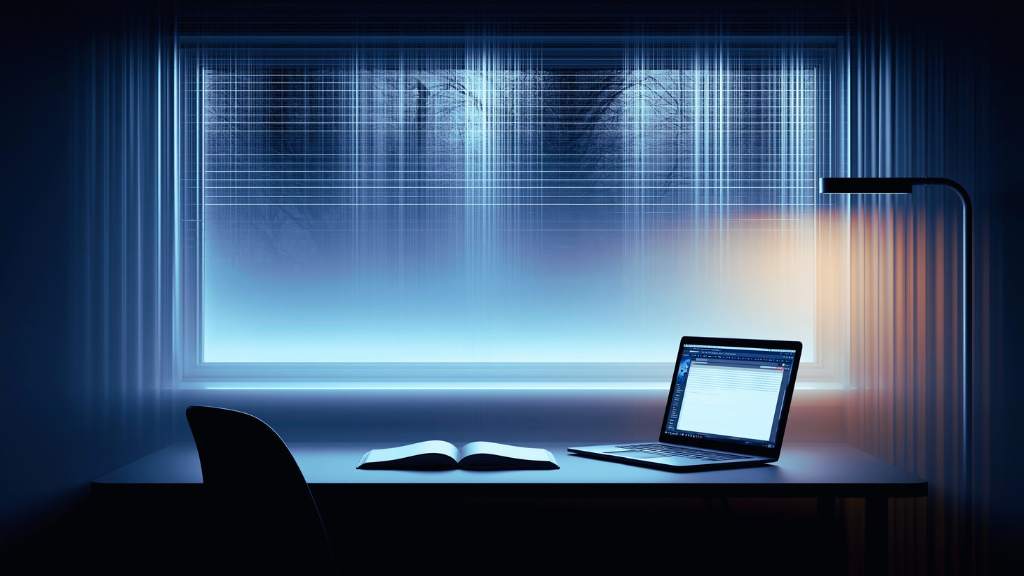
Ambient music for writing works best when it gives your mind a steady atmosphere without asking too much from your attention. The right sound does not interrupt the sentence you are trying to find. It holds the room around you.
For writers, journal keepers, worldbuilders, poets, screenwriters, and anyone who creates in the quiet hours, ambient music can become more than background sound. It can become a threshold.
A soft way into the work.
A place where the noise of the day begins to loosen.
A room you can return to when your own thoughts are too loud.
Table of Contents
Why Ambient Music Works So Well for Writing
Writing asks for a strange kind of attention.
You need enough focus to stay inside the page, but not so much pressure that every sentence feels forced. You need silence, but complete silence can sometimes become too sharp. You need space, but not emptiness.
That is where ambient music can help.
Unlike songs with strong lyrics, heavy hooks, or sudden changes, ambient soundscapes often move slowly. They create continuity. They give the mind a surface to rest against while the deeper part of you keeps working.
Good ambient music for writing usually has a few qualities:
- slow movement
- soft repetition
- minimal melody
- gentle texture
- enough atmosphere to shape the room
- not so much detail that it steals attention
It is not music that demands you follow it.
It simply stays near you.
The Best Writing Music Does Not Take Over
Not every beautiful track is useful for writing.
Some music is too emotional. Some music is too rhythmic. Some music makes you want to listen instead of write. That can be wonderful in the right moment, but when you are trying to enter a creative flow, the sound should support the work rather than compete with it.
The best ambient music for writing often feels almost invisible at first.
You notice the room becoming calmer before you notice the music itself.
The track becomes part of the air. The page feels less empty. The cursor feels less impatient. The story, article, poem, or journal entry has somewhere to arrive.
This is especially useful for:
- writing fiction
- outlining a story
- building a fictional world
- journaling before sleep
- editing long text
- writing blog posts
- creating atmospheric scenes
- planning creative projects
- reading your own work back slowly
Ambient music does not write for you.
It gives the writing somewhere quiet to begin.

Writing at Night: When the Mind Keeps Moving
Many writers create at night because the world finally becomes still.
The notifications fade. The room becomes smaller. The outside world feels further away. But night also has another side: thoughts become louder, unfinished tasks return, and the mind starts walking through rooms it avoided during the day.
This is where quiet ambient sound can become useful.
Not as a cure. Not as a promise. But as a companion.
A slow drone, a distant piano, a soft tape texture, or a cinematic pad can create a small boundary between you and the noise inside your head. It does not erase the thoughts. It gives them less power over the room.
For overthinking nights, choose music that feels steady rather than dramatic.
Look for soundscapes with:
- low contrast
- soft edges
- little or no percussion
- warm reverb
- slow harmonic movement
- minimal surprises
- a feeling of stillness rather than sadness
The goal is not to make the night disappear.
The goal is to make it writable.
Ambient Music for Worldbuilding
For worldbuilders, ambient music can do something slightly different.
It can help you feel the architecture of a fictional place before you fully understand it.
A city can begin as a chord.
A hallway can begin as a reverb tail.
A character can arrive through a distant melody.
A mystery can reveal itself through texture before plot.
This is one of the reasons cinematic ambient music works so well for fantasy, mystery, science fiction, liminal horror, and quiet urban stories. It helps you imagine space.
Not only what happens.
Where it happens.
What the air feels like.
What the silence is hiding.
If you are building a fictional world, try listening before you write. Put on a slow ambient track, close your eyes for a minute, and ask:
Where am I?
What kind of light is in this place?
Is the room safe, abandoned, sacred, forgotten, or watched?
What sound would this city make if it were dreaming?
What does the character hear before the story begins?
This is where music becomes a creative tool. It is no longer just background. It becomes a doorway.
A Simple Ambient Writing Ritual
You do not need a complicated system to use ambient music for writing. A small ritual is enough.
Try this:
1. Choose one sound world
Before you start, choose music that matches the emotional temperature of the piece.
For reflective writing, choose soft ambient or minimal piano.
For dark fiction, choose cinematic ambient or dark ambient.
For worldbuilding, choose soundscapes with atmosphere and space.
For editing, choose something more neutral and steady.
Do not keep changing tracks. The mind settles better when the room stays consistent.
2. Set a small writing window
Start with 20 to 40 minutes.
Long enough to enter the work. Short enough that it does not feel impossible.
Let the music mark the boundary. When the sound begins, you enter the room. When the session ends, you step out again.
3. Keep the volume low
The music should sit behind the words.
If you are noticing every detail, it may be too loud. If it disappears completely, that may be perfect.
Ambient music works best when it becomes the weather of the room.
4. Write before judging
Use the first few minutes to arrive. Do not immediately demand good sentences from yourself.
Let the first lines be simple. Let the page warm up. Let the room become familiar.
The music is not there to make the writing perfect.
It is there to make beginning easier.
5. Return to the same sound
If a certain track or playlist helps you write, use it again.
Over time, your mind may begin to associate that sound with entering the creative state. The music becomes a small signal:
We are here now.
The room is open.
The work can begin.
What Kind of Ambient Music Should Writers Choose?
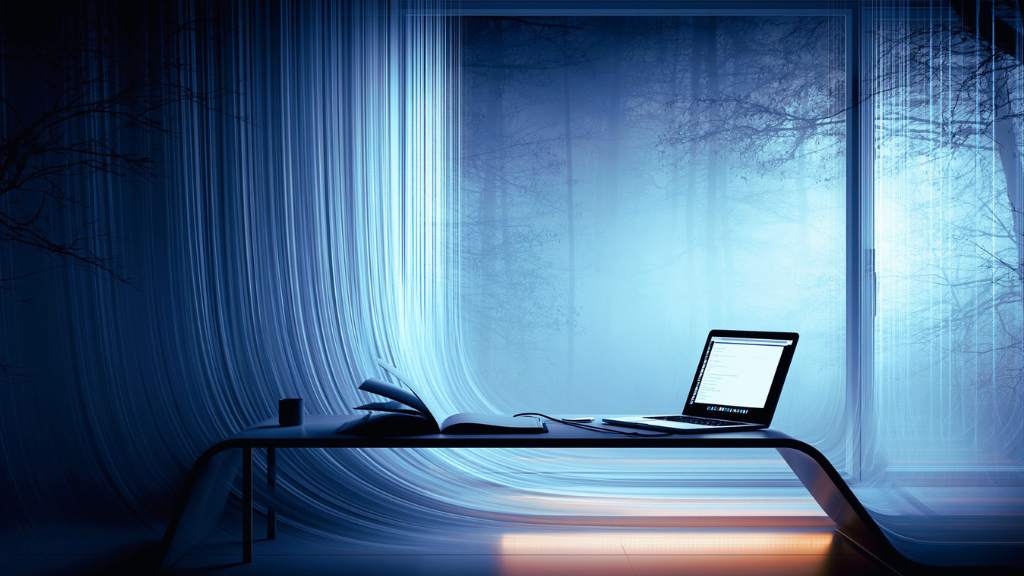
Different kinds of writing need different kinds of sound.
For journaling
Choose soft ambient music, gentle piano, warm pads, or slow textures. The sound should feel personal and close.
Search terms to try:
- ambient music for journaling
- peaceful ambient music
- music for reflection
- calm writing music
For fiction writing
Choose cinematic ambient music with atmosphere and space. It should feel visual, but not too dramatic.
Search terms to try:
- cinematic ambient music
- music for writing fiction
- background music for storytelling
- worldbuilding music
For dark fantasy or mystery
Choose darker soundscapes, slow drones, liminal textures, or subtle horror ambience. Keep it restrained. Too much tension can interrupt the writing.
Search terms to try:
- dark ambient music for writing
- liminal space music
- ambient horror music
- mystery writing music
For editing
Choose neutral ambient music with little emotional movement. Editing needs clarity more than mood.
Search terms to try:
- focus ambient music
- deep work ambient
- background music for concentration
- minimal ambient music
Where Wartonno Sound Fits
Wartonno Sound exists in the quiet space between ambient music, liminal rooms, overthinking nights, and cinematic imagination.
The music is made for listeners who need atmosphere without pressure. For writers who want a room around their words. For readers who want the page to feel deeper. For night thinkers who need something soft between themselves and the noise of the day.
It is not music that asks for your attention.
It gives your attention somewhere quiet to rest.
Some Wartonno Sound pieces move toward dark ambient and liminal horror. Others are softer, more reflective, closer to sleep, focus, or inner escape. Together they form a sound archive for people who create, think, wander, and return to the page when the world becomes quiet.
If you are writing a story, building a world, editing a scene, or simply trying to find your way into a calmer creative state, Wartonno Sound can become part of that ritual.
A small signal.
A room opening.
A soundscape for the space before the words arrive.
A Gentle Listening Path for Writers
If you are new to ambient writing music, try this simple path:
Start with something soft and minimal.
Move into cinematic ambient when you need imagery.
Use darker ambient only when the story asks for shadow.
Return to calmer soundscapes when you edit or reflect.
The key is not to find one perfect playlist.
The key is to notice what your mind needs.
Some days, writing needs warmth.
Some days, it needs distance.
Some days, it needs a hallway with the lights still on.
Some days, it needs a quiet room where nothing is asking anything from you.
Let the music support the version of attention you need today.
Final Thought
Ambient music for writing is not about escaping the work.
It is about entering it more gently.
The right sound can help you cross the small invisible distance between wanting to create and actually beginning. It can soften the room, slow the mind, and give your thoughts a place to gather.
Perhaps that is all a writing space really needs.
A little silence.
A little sound.
A threshold.
And the patience to step through it.
If you want to explore quiet ambient soundscapes for writing, focus, overthinking nights, and cinematic imagination, you can enter the world of Wartonno Sound through the Wartonno archive and the Wartonno Sound listening links.
FAQ
Is ambient music good for writing?
Yes, ambient music can be useful for writing because it creates atmosphere without demanding too much attention. Many writers prefer slow, minimal, instrumental soundscapes because they support focus while leaving space for language, imagination, and emotional tone.
What is the best music for writing?
The best music for writing is usually instrumental, steady, and not too distracting. Ambient music, cinematic ambient, minimal piano, soft drone, and gentle soundscapes often work well because they create a consistent background while allowing the words to stay in front.
Is dark ambient music good for writing?
Dark ambient music can be good for writing mystery, horror, dark fantasy, liminal fiction, and atmospheric scenes. It works best when it is subtle and slow rather than too intense. If the music becomes too dramatic, it may distract from the writing.
Can ambient music help with focus?
Ambient music can support focus by creating a steady sonic environment. It may help reduce the feeling of empty silence and give the mind a calm background to work within. It should not be treated as a medical solution, but it can be a useful creative tool.
What is cinematic ambient music?
Cinematic ambient music is atmospheric instrumental music that often feels visual, spacious, and emotional. It can sound like a film scene without dialogue. Writers and worldbuilders often use it to create mood, imagine places, and stay inside a fictional atmosphere.
Where can I listen to Wartonno Sound?
You can listen to Wartonno Sound through the official Wartonno Sound links, including Spotify and the Wartonno Sound bio link. The music is created for quiet focus, overthinking nights, liminal spaces, writing, reading, and cinematic imagination.