A softer end to the day
Night does not always arrive gently.
Sometimes the day ends, but the mind continues.
The room becomes quiet.
The phone is still close.
The body is tired.
But the thoughts are not finished.
A conversation returns.
A task remains open.
A future problem begins to rehearse itself.
A small worry grows louder in the dark.
This is where a night routine can help.
Not a perfect routine.
Not a complicated system.
Not another list of things you must do correctly.
Just a small sequence that tells the mind:
The day is ending now.
You do not have to keep carrying everything at full volume.
For me, dark ambient music can become part of that sequence.
Not as a cure.
Not as a promise.
Not as something that forces sleep to arrive.
But as atmosphere.
A slow soundscape.
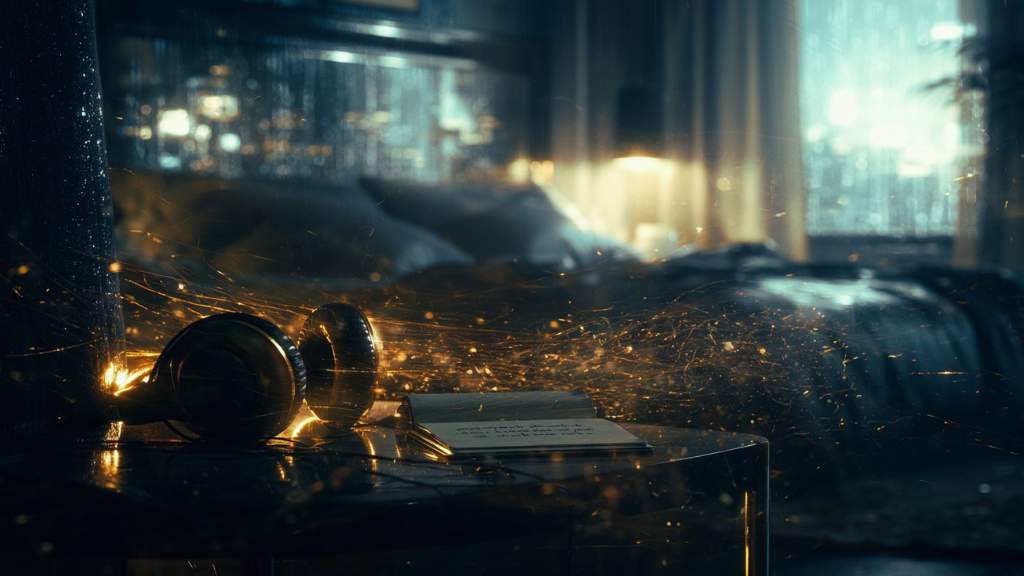
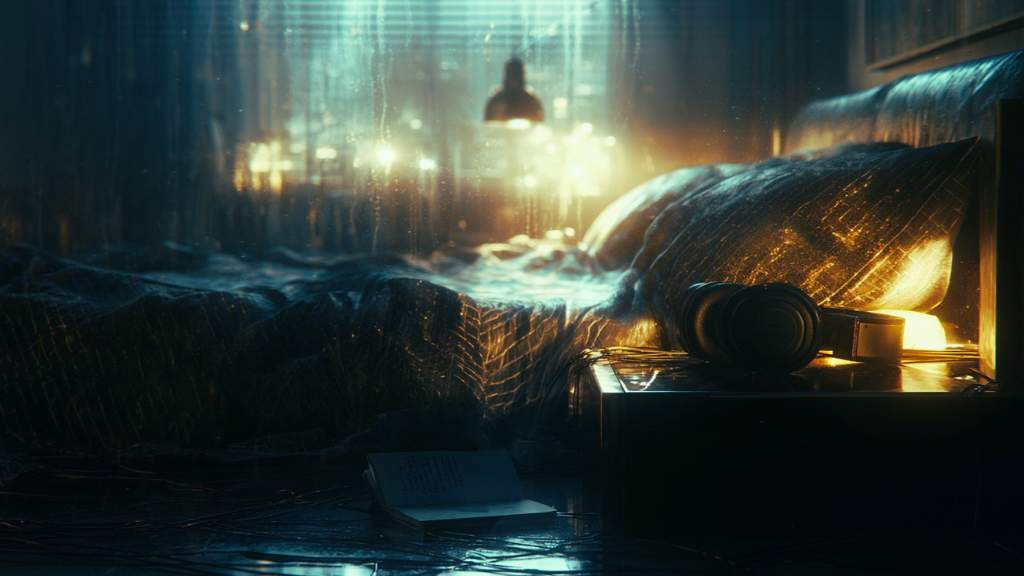
A dim room.
A quiet threshold between the day and the night.
That is the purpose of using dark ambient music in a night routine: to make the transition softer.
Why music belongs in a night routine
A night routine is not only about what you do.
It is also about what kind of space you create.
Many evening routines focus on actions:
brush your teeth, close the laptop, prepare clothes, make tea, turn off the lights, put the phone away.
Those things matter.
But the emotional atmosphere of the room matters too.
If the room still feels like work, the mind may stay in work mode.
If the phone keeps offering new input, the mind may stay alert.
If the silence feels too empty, overthinking may become louder.
Music can help shape the space between activity and rest.
Dark ambient music is especially useful because it does not usually demand much from the listener. It often has no lyrics, no fast rhythm, no bright chorus, no urgent emotional instruction.
It creates a room inside sound.
And sometimes, at night, that is enough.
What is dark ambient music?
Dark ambient music is a slow, atmospheric form of ambient music built around mood, texture, space, and depth.
It often uses:
- drones
- pads
- low tones
- reverb
- distant textures
- soft noise
- cinematic atmosphere
- minimal movement
- slow transitions
- shadowed emotional tones
The word dark does not need to mean frightening.
In this context, dark can mean:
deeper, slower, quieter, more nocturnal, more reflective.
A dark ambient track can feel like:
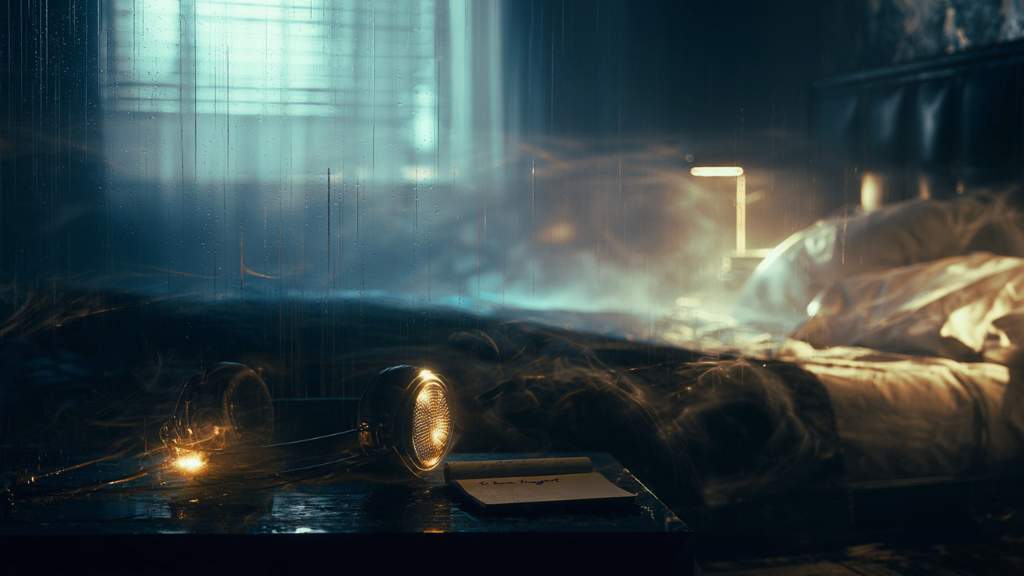
- rain against a window
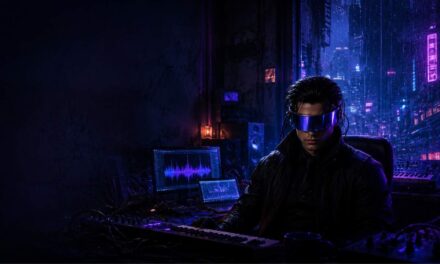
- a blue-lit room after midnight
- a distant city breathing under fog
- a hallway between waking and sleep
- a quiet place where thoughts can loosen
- a sound for when silence feels too sharp
That is why it fits a night routine.
It does not try to brighten the night.
It helps the night become spacious.
Why overthinking often gets louder at night
Overthinking often waits until the world stops moving.
During the day, the mind can hide inside motion. Work, errands, messages, screens, conversations, tasks, plans.
But at night, there is less noise to cover the inner noise.
The mind begins to replay.
The body wants rest, but thought keeps walking.
The room becomes quiet, but not peaceful yet.
This is not unusual.
Many people feel more mentally active when the day finally slows down. The problem is not always the thoughts themselves. Sometimes the problem is the lack of transition.
The day stops too suddenly.
One moment you are scrolling, answering, working, consuming.
The next moment you expect the mind to sleep.
A night routine creates a bridge.
Dark ambient music can become part of that bridge because it gives the mind something slow and steady to enter before silence.
It does not erase the thoughts.
It changes the room around them.
Choose your listening path: If you want to go directly into the sound, visit the Wartonno Sound listening gateway for playlists and tracks for overthinking at night, deep focus, overstimulation, liminal dreaming, and dark ambient escape.
The goal of a dark ambient night routine
The goal is not to become perfectly calm.
That is too much pressure.
The goal is smaller:
to reduce the speed of the evening.
to lower the amount of input.
to create a softer emotional environment.
to let the mind stop fighting every thought at once.
to give sleep a quieter place to approach.
A good night routine should not feel like homework.
It should feel like permission.
Permission to dim the world.
Permission to stop solving.
Permission to leave some things unfinished until morning.
Dark ambient music helps because it does not demand a performance from you.
You do not need to meditate perfectly.
You do not need to journal for an hour.
You do not need to become a different person.
You only need to enter the room a little more gently.
Step 1: Choose one listening path
Before starting your night routine, decide what kind of night this is.
Not every evening needs the same sound.
Ask yourself:
What is loudest right now?
If your mind is racing
Choose slow, low, repetitive dark ambient music.
You need stability, not drama.
If you feel emotionally heavy
Choose something warm, spacious, and soft-edged.
You need room, not pressure.
If you feel overstimulated
Choose minimal soundscapes with few melodic changes.
You need less input, not more.
If you want to write or reflect
Choose liminal ambient music with a little mystery and movement.
You need atmosphere, not distraction.
If you are preparing for sleep
Choose long, soft, low-volume tracks with no sudden changes.
You need a gradual descent.
This first choice matters because music should meet the state you are in.
Not every dark ambient track is right for every night.
Step 2: Lower the light before pressing play
Light tells the body what kind of world it is in.
Bright light says: continue.
Dim light says: return.
Before pressing play, lower the visual intensity of the room.
You can:
- dim the main light
- switch on one small lamp
- close unnecessary screens
- reduce phone brightness
- light a candle if that fits your space
- let the room become visually quieter
This is not about creating a perfect aesthetic.
It is about reducing signals.
The day often enters us through brightness, speed, and noise. A night routine begins when those signals become softer.
Then press play.
Let the music arrive into a room that is already beginning to listen.
Step 3: Put the phone away after the music starts
This may be the most important step.
Many people use music at night, but keep scrolling while it plays.
The music becomes background to more input.
Another video.
Another post.
Another message.
Another small disturbance.
Another reason for the mind to stay awake.
For a dark ambient night routine, try this:
choose the track or playlist first.
press play.
then put the phone away.
Not far enough to create stress.
Just far enough that you do not keep reaching for it.
A table.
A shelf.
Across the room.
Somewhere outside the hand’s automatic path.
The music should become the main atmosphere.
Not a soundtrack to endless scrolling.
Step 4: Let the first five minutes be messy
A night routine does not need to work immediately.
The first few minutes may still feel restless.
That is normal.
The mind may keep moving.
The body may still feel tense.
The thoughts may continue circling.
Do not treat that as failure.
Let the music hold the transition.
Dark ambient music often works slowly. It does not switch the mind off like a machine. It gives the nervous system and imagination a different environment to inhabit.
The first five minutes are not for becoming calm.
They are for arriving.
A track begins.
The room changes.
The day starts to move backward.
The mind slowly notices that nothing else is being demanded.
That is already part of the ritual.
Step 5: Write down one repeating thought
If your mind keeps returning to the same thought, write it down.
Only one sentence.
Not a full journal entry.
Not a deep analysis.
Not a solution.
Just a small act of removal.
For example:
I am worried about tomorrow’s work.
I keep replaying that conversation.
I feel behind.
I do not know what to do next.
I am tired but still switched on.
Putting one thought on paper can reduce the pressure of carrying it entirely in your head.
The point is not to solve the thought tonight.
The point is to show the mind that it has been seen.
You can return to it tomorrow if needed.
For now, it does not need to keep knocking from inside the dark.
Step 6: Use the music as a room, not a task
This is important.
Do not listen too hard.
You do not need to analyze the track.
You do not need to follow every texture.
You do not need to decide whether it is working.
Let the music become the room.
Let it sit behind the breath.
Behind the thought.
Behind the quiet movement of the evening.
Dark ambient music works best in a night routine when it is allowed to be environmental.
It is not there to entertain you.
It is there to soften the edges.
A low drone becomes the floor.
A pad becomes the air.
A distant texture becomes the shadow in the room.
A long reverb becomes the space between thoughts.
You do not need to hold it.
You can let it hold the room.
Step 7: Choose one closing action
A night routine should end with something simple.
One small action that tells the mind the ritual is complete.
Choose one:
- close the notebook
- turn the phone face down
- lower the volume
- switch off the lamp
- stretch for one minute
- drink water
- breathe slowly for ten breaths
- let the track finish without doing anything else
Do not add too many steps.
The more complicated the routine becomes, the easier it is to abandon.
A good night routine should feel possible even when you are tired.
Especially then.
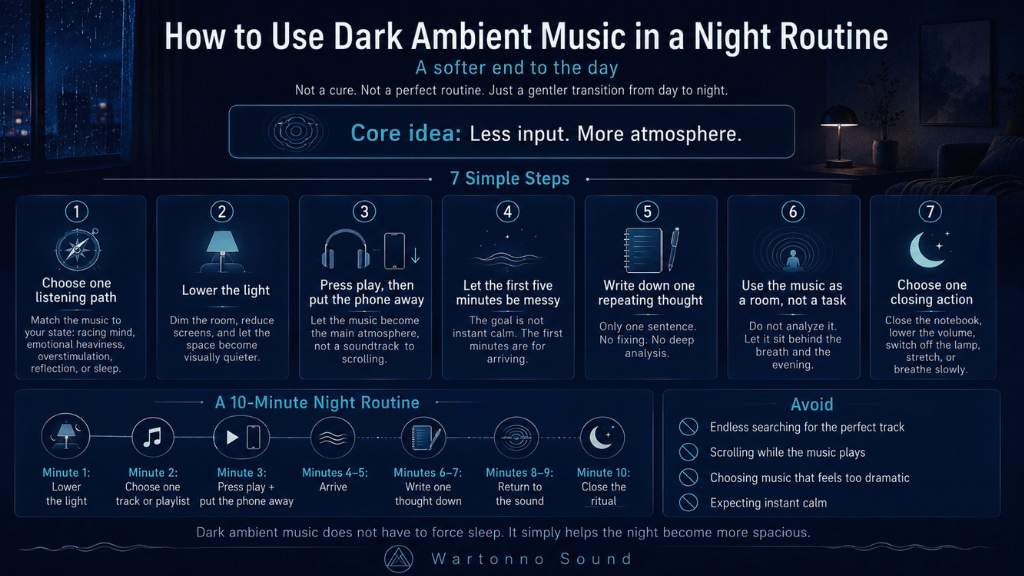
A 10-minute dark ambient night routine
Here is a simple version you can use tonight.
Minute 1: Lower the light
Dim the room. Close extra screens. Let the space become softer.
Minute 2: Choose one track or playlist
Pick one Wartonno Sound track, dark ambient playlist, or longform soundscape.
Minute 3: Press play and put the phone away
Let the music become the main atmosphere.
Minutes 4–5: Arrive
Do nothing. Let the first minutes be imperfect.
Minutes 6–7: Write one thought down
Only one sentence. No fixing. No explaining.
Minutes 8–9: Return to the sound
Sit, breathe, stretch, or simply listen.
Minute 10: Close the ritual
Turn down the light, close the notebook, or let the track continue as you prepare for sleep.
That is enough.
A small ritual works because it can be repeated.
Choose your listening path
If you want to go directly into the sound, visit the Wartonno Sound listening gateway for playlists and tracks for overthinking at night, deep focus, overstimulation, liminal dreaming, and dark ambient escape.
Use it when you do not want to search through everything.
Choose the state you are in.
Let the music meet you there.
How Wartonno Sound fits into a night routine
Wartonno Sound is built around slow, dark, liminal soundscapes for focus, sleep, writing, overthinking, and quiet escape.
That makes it naturally suited to night routines.
The music often works best when used as a threshold:
between screen and sleep.
between work and rest.
between overthinking and release.
between the noise of the day and the quiet room underneath it.
Some Wartonno Sound tracks may feel darker or more cinematic. Others may feel softer, wider, and more suitable for sleep preparation. The important thing is to choose the track that fits your emotional state.
For overthinking nights, choose slow and spacious.
For creative reflection, choose something more mysterious.
For sleep preparation, choose the softest path.
The music is not there to force a result.
It is there to make the room easier to enter.
Dark ambient music and quiet tools
Some nights need only music.
Other nights need a small object beside the music.
A notebook.
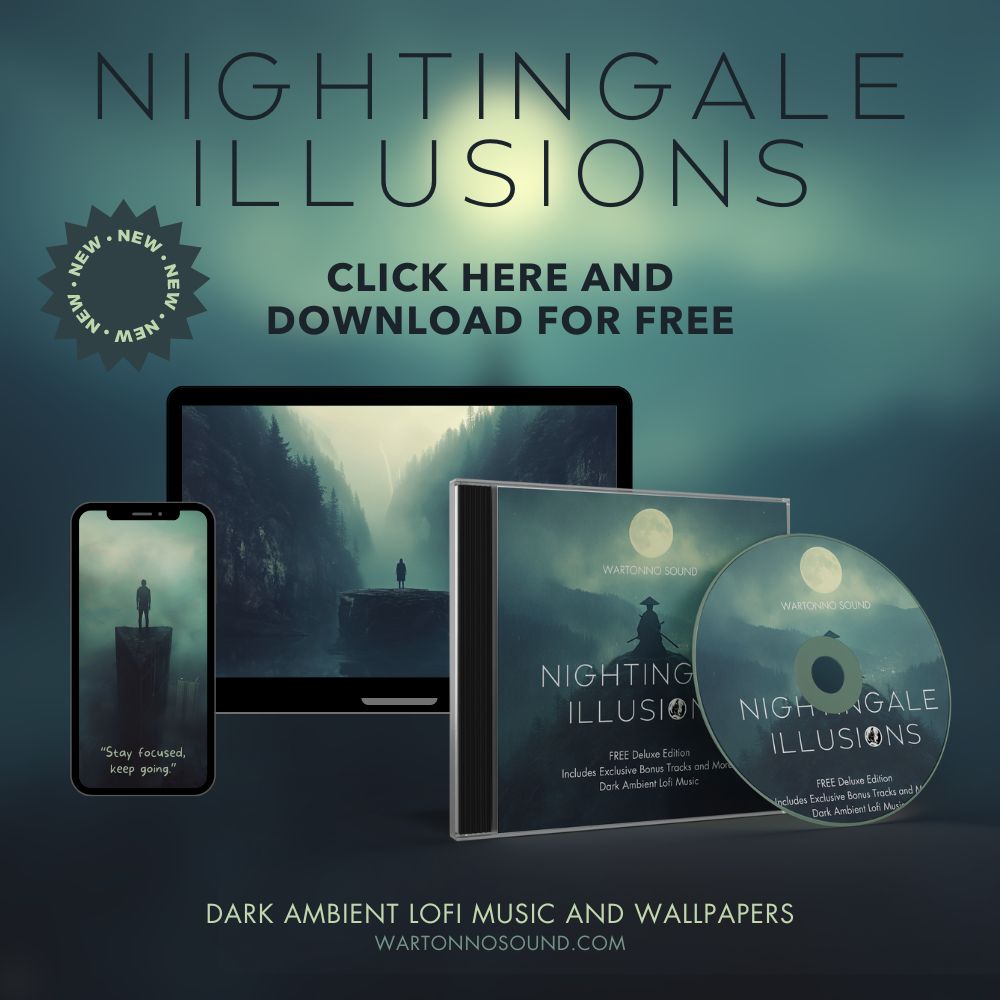
A printable reset sheet.
A tiny guide.
A simple prompt.
A phone wallpaper that reminds you to slow down.
This is where quiet tools can support the night routine.
They give the hands something simple to do while the music creates the atmosphere.
For example:
- write down one thought
- choose one thing to leave for tomorrow
- circle the feeling you are carrying
- list one small action for morning
- mark the moment when the day is allowed to end
Inside the Wartonno archive, these quiet tools are not meant to become another productivity system.
They are small companions.
A page beside the sound.
A way to stop carrying everything invisibly.
What not to do during a music-based night routine
A night routine is not only about adding the right things.
It is also about removing the wrong signals.
Try to avoid:
Searching endlessly for the perfect track
Choose one and begin. The search itself can become another form of stimulation.
Using the music while scrolling
The music will have less effect if the mind is still consuming new input every few seconds.
Choosing music that is too dramatic
Some dark ambient music is intense or unsettling. That may be good for writing or atmosphere, but not always for sleep preparation.
Expecting instant calm
The routine is a transition, not a switch.
Turning the ritual into a performance
You do not need to do it beautifully.
You only need to make the evening a little softer.
When dark ambient music may not be right
Dark ambient music is not for every night.
Sometimes you may need silence.
Sometimes you may need warmer music.
Sometimes a track may feel too heavy.
Sometimes the mind may need a human voice, a conversation, or something grounding.
That is okay.
The point is not to force a genre onto every mood.
The point is to notice what kind of atmosphere helps you return.
If a soundscape makes you feel more tense, choose something softer. If the darkness feels too intense, choose warm ambient, minimal piano, or nature sound.
A good night routine listens back.
It adapts.
A simple rule: less input, more atmosphere
If there is one principle behind using dark ambient music in a night routine, it is this:
less input, more atmosphere.
Less scrolling.
Less switching.
Less searching.
Less solving.
Less pressure.
More room.
More stillness.
More softness.
More threshold.
More permission to stop for tonight.
This is where dark ambient music can become useful.
It does not add another demand.
It gives the mind a place to set down the day.
Frequently asked questions
Is dark ambient music good for a night routine?
Dark ambient music can be useful in a night routine because it creates a slow, spacious atmosphere without adding many words, bright hooks, or fast rhythms. It can help make the transition from day to night feel softer.
Can dark ambient music help with sleep?
Dark ambient music may support sleep preparation when it is slow, soft, and free of sudden changes. It should not be treated as a medical solution, but it can help create a calmer nighttime environment.
What kind of music is best for overthinking at night?
Slow, minimal, low-pressure music often works best for overthinking at night. Dark ambient, liminal ambient, soft drones, sleep music, and gentle instrumental soundscapes can create space around repetitive thoughts.
How do I use music in a night routine?
Lower the light, choose one track or playlist, press play, put the phone away, write down one repeating thought if needed, and let the music become the room around the end of the day.
Should I listen to dark ambient music while scrolling?
It is better not to. Scrolling adds more input, while the purpose of a night routine is to reduce input. Press play, then put the phone somewhere slightly out of reach.
What is Wartonno Sound?
Wartonno Sound is a dark ambient and liminal ambient music project creating soundscapes for focus, sleep, writing, overthinking, emotional reset, and quiet escape.
What is a liminal night routine?
A liminal night routine is a small transition ritual between the active day and the quiet night. It uses atmosphere, light, sound, and simple actions to help the mind move from activity toward rest.
Where can I start listening?
Start with the Wartonno Sound listening gateway, where music is organized by state: overthinking at night, deep focus, overstimulation, liminal dreaming, and dark ambient escape.
Final reflection
A night routine does not need to be perfect.
It does not need to look beautiful.
It does not need to solve the whole mind.
It does not need to turn you into someone calmer than you are.
It only needs to create a threshold.
A small passage between the day and the dark.
Between the screen and the room.
Between the thought and the breath.
Between carrying everything and setting one thing down.
Dark ambient music can help build that passage.
A drone becomes the floor.
A texture becomes the air.
A slow soundscape becomes the room where the day can finally loosen.
And perhaps that is enough for tonight.
Not silence.
Not escape.
A softer way to end.