Small tools for a mind that feels too full
Overthinking rarely needs another complicated system.
Most of the time, the mind is already crowded.
Another long course, another productivity method, another 200-page self-improvement book, another app with reminders and notifications — these can sometimes become part of the same noise we are trying to escape.
That is why I like small tools.
A single page.
A short ritual.
A quiet prompt.
A simple checklist.
A piece of ambient music.
A phone wallpaper that reminds you to pause instead of spiral.
Inside the Wartonno archive, I think of these as quiet tools.
They are not designed to fix a whole life overnight. They are not meant to be loud, motivational, or overwhelming. They are meant to create one small moment of return.
A softer place to land.
For Wartonno, these tiny guides connect naturally with the world of Wartonno Sound: dark ambient music, liminal soundscapes, focus, sleep, inner escape, and music for overthinking minds.
The sound creates the room.
The guide gives the hand something simple to hold.
What are tiny guides?
A tiny guide is a small, focused digital tool designed around one specific emotional or practical moment.
It might be:
- a printable reset sheet
- a one-page focus ritual
- a short reflection prompt
- a seven-point checklist
- a calm evening routine
- a creative restart page
- a mobile wallpaper reminder
- a small PDF companion
- a short ambient track paired with a practical exercise
The key word is tiny.
Not because the problem is tiny.
Overthinking can feel huge. Creative overwhelm can feel heavy. A restless mind at night can feel impossible to switch off.
But the first step back does not always need to be huge.
Sometimes the first step is small by necessity.
When the mind is too full, small is kind.
A tiny guide gives the reader one clear thing to do, not twenty. It narrows the field. It turns a vague emotional state into a simple action.
Breathe here.
Write this down.
Choose one thought.
Return to the room.
Play the track.
Start again.
That is the purpose.
Why overthinking makes large systems difficult
Overthinking often creates too many open loops.
One thought connects to another.
One decision creates five more decisions.
One worry becomes a chain.
One task becomes a fog of invisible tasks.
When that happens, large systems can become difficult to use.
A big planner may ask for too much.
A long journaling method may feel like work.
A full productivity app may create pressure.
A complex routine may fail before it begins because the mind cannot find the first step.
That does not mean systems are bad.
It means the wrong size of system can become another source of friction.
For an overthinking mind, the best tool is often something with a very low entry point.
Something that says:
Start here. Only here. Nothing else right now.
A tiny guide works because it reduces the decision load.
It does not ask: “What should I do with my whole life?”
It asks something much smaller:
What do you need in the next ten minutes?
What thought is loudest right now?
What can you put down for tonight?
What small action would make the room feel less heavy?
That is why small creative tools can be powerful.
They do not solve everything.
They interrupt the spiral.
The Wartonno approach to quiet tools
The quiet tools inside the Wartonno world are built around the same atmosphere as the music.
They are calm, minimal, dark, reflective, and practical.
They are made for people who are drawn to:
- dark ambient music
- liminal spaces
- soft structure
- emotional reset
- night routines
- creative rituals
- focus music
- sleep preparation
- gentle self-reflection
- quiet design
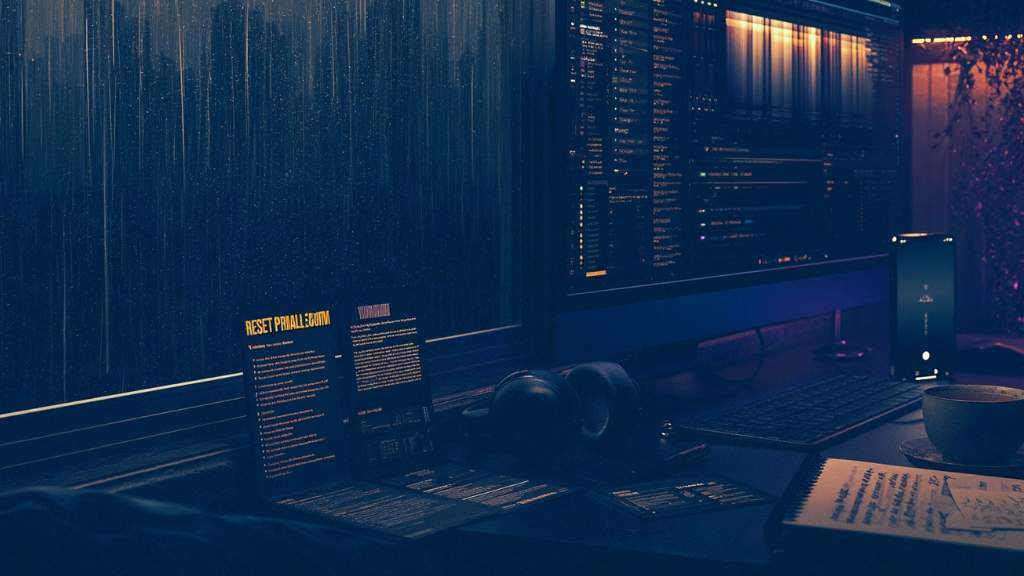
- small printable companions
The goal is not to create bright, loud, hyper-productive material.
The goal is to create tools that feel like they belong beside a Wartonno Sound track.
Something you can use with music playing in the background.
Something that does not break the atmosphere.
Something that helps the mind slow down without forcing it.
This matters because the emotional tone of a tool affects whether people actually use it.
A reset sheet for an overthinking mind should not feel like homework.
A focus guide should not feel like pressure.
A calm ritual should not feel like a performance.
It should feel possible.
Why music and tiny guides work well together
Music changes the emotional environment.
A printable guide gives that environment a simple direction.
Together, they can create a small ritual.
For example:
- You press play on a dark ambient track.
- The room begins to feel slower.
- You open a one-page guide.
- The guide gives you one simple action.
- The music holds the atmosphere while you follow the prompt.
- The mind has something soft and structured to return to.
This is why Wartonno’s quiet tools often connect naturally with ambient music.
Dark ambient music does not need to dominate the moment. It can sit behind the exercise like a low light in the room.
The guide does not need to explain everything. It only needs to give the listener-reader a small path.
Sound and structure.
Atmosphere and action.
Stillness and one next step.
That combination is especially useful for overthinking because it works on two levels at once:
- the music supports the mood
- the guide supports the behavior
One helps the nervous system soften.
The other helps the mind organize itself.
Tiny guides as creative reset tools
Overthinking is not only about worry.
For creative people, it can also appear as too many ideas.
Too many projects.
Too many possible directions.
Too many unfinished drafts.
Too many tools.
Too many platforms.
Too many versions of the same dream.
This kind of creative overwhelm can make it difficult to begin.
A tiny guide can help by turning the fog into a small ritual.
For example, a creative reset page might ask:
- What is the one project that matters today?
- What can wait until tomorrow?
- What is the smallest useful action?
- What mood do you want to create?
- Which soundscape will support the work?
That is enough.
Not a full business plan.
Not a complete content calendar.
Not a new identity.
Just one small bridge back into motion.
This fits deeply with the Wartonno ecosystem because the entire archive is built slowly:
One track.
One image.
One article.
One story fragment.
One quiet tool.
Tiny guides help protect that rhythm.
Why printable tools still matter
In a digital world, printable tools can feel surprisingly calming.
A screen often brings noise with it: tabs, messages, notifications, apps, feeds, updates, distractions.
A printable page is different.
It is limited.
It is quiet.
It does not scroll.
It does not refresh.
It does not ask for attention beyond the page itself.
That limitation is part of its strength.
For overthinking minds, a printable reset sheet can become a boundary. The page says: this is the space. These are the questions. This is enough for now.
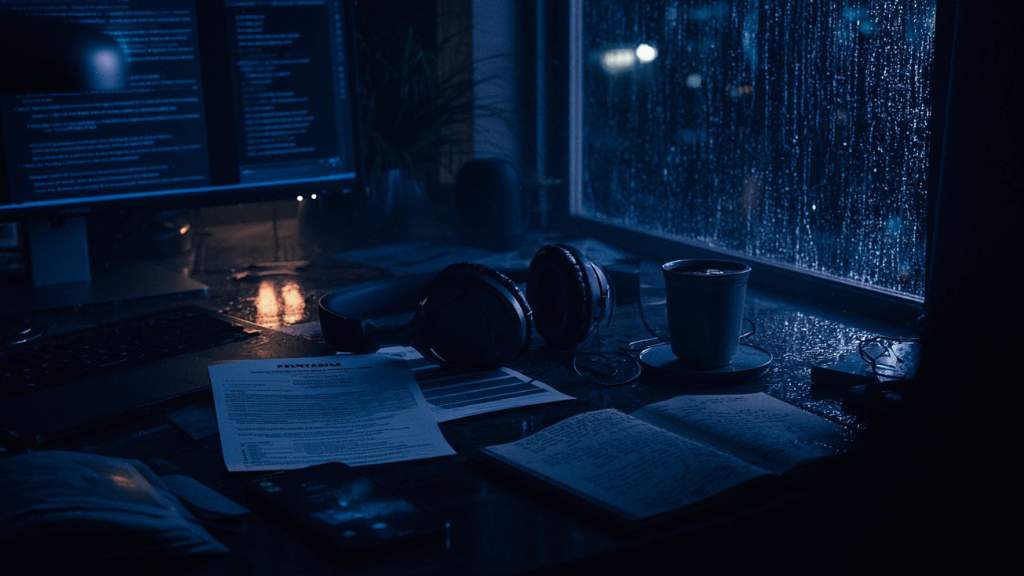
A printed guide can sit beside a notebook, a cup of tea, a keyboard, a bed, or a music setup. It can become part of a small ritual without pulling the person back into the noise of the internet.
This is why I like the idea of tiny printable companions.
They are simple objects for complicated states of mind.
Why mobile wallpapers can become quiet reminders
A mobile wallpaper seems small.
But small does not mean meaningless.
Most people look at their phone many times a day. That means the lock screen can become either a source of noise or a small moment of return.
A quiet wallpaper can act as a visual anchor.
Not a loud affirmation.
Not a dramatic quote.
Not a crowded design.
Just a gentle reminder.
Breathe.
Return.
One thing.
Slow the spiral.
Let the room widen.
Inside the Wartonno world, a mobile wallpaper can carry the same visual language as the music and stories: dark blue shadows, soft light, liminal rooms, atmospheric stillness, and minimal words.
It becomes a small piece of the archive someone can carry with them.
A little doorway in the pocket.
Why tiny tools should not promise too much
This is important.
A tiny guide should not pretend to cure anxiety, eliminate overthinking forever, or solve deep emotional pain.
That would be dishonest.
The better promise is smaller and more trustworthy.
A tiny guide can help create:
- a pause
- a reset moment
- a clearer next step
- a softer evening transition
- a calmer creative start
- a small structure for reflection
- a more intentional listening ritual
That is enough.
The Wartonno approach is not about claiming that one page or one track can fix everything.
It is about making the next ten minutes feel more possible.
For many people, that is already meaningful.
A quiet tool works best when it respects the complexity of the person using it.
The difference between a tiny guide and a productivity system
A productivity system often tries to manage a whole life.
A tiny guide tries to support one moment.
That is the difference.
A productivity system might ask:
- What are your long-term goals?
- What is your full schedule?
- What are your priorities this quarter?
- How do you optimize your habits?
A tiny guide asks:
- What are you feeling right now?
- What thought can you put down?
- What is one thing you can do next?
- What sound would support this moment?
Both can be useful.
But they serve different emotional states.
When someone is overwhelmed, the tiny guide is often the better doorway.
It does not require a full reset of life.
It only asks for a small return.
Quiet tools and the Wartonno Sound listening experience
Wartonno Sound is made for moments when the mind needs atmosphere.
Focus.
Sleep.
Writing.
Reading.
Reflection.
Escape.
Emotional reset.
Quiet tools extend that listening experience.
A person might use a Wartonno Sound track as background music while filling in a printable page. Or they might listen to a dark ambient soundscape before using a small guide to clear the mind before sleep.
The music and the tool do not compete.
They support each other.
The track creates a liminal space.
The guide gives that space direction.
For example:
- a focus track + one-page work reset
- a sleep track + evening thought release sheet
- a writing soundscape + creative start ritual
- an overstimulation track + five-minute decompression guide
- a liminal ambient piece + reflective journaling prompt
This is the future direction of the quiet tools inside the Wartonno archive.
Not products that feel separate from the music.
Companions that feel like they belong to the same room.
These quiet tools are designed to sit naturally beside the atmosphere of Wartonno Sound.
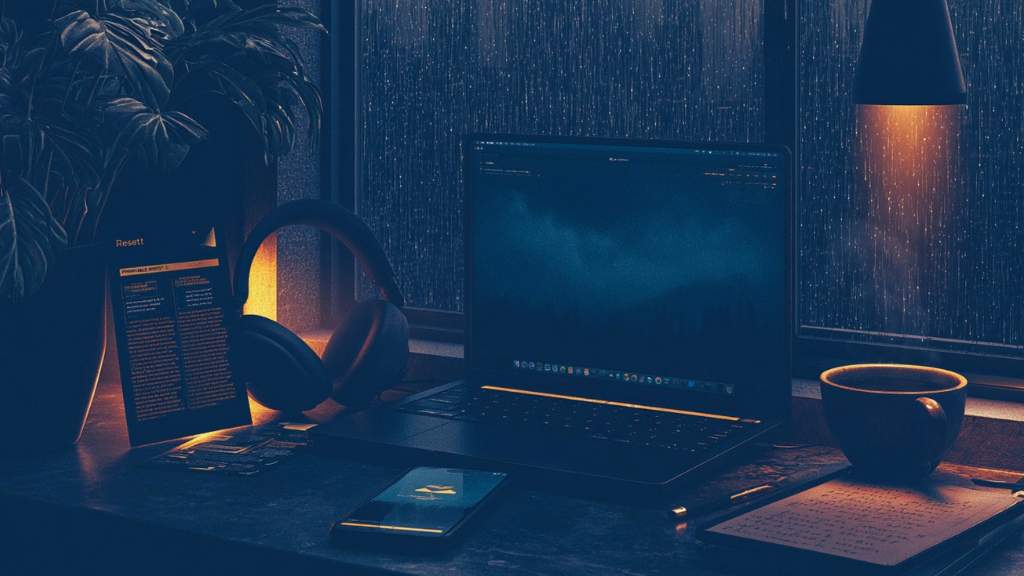
How tiny guides fit into Wartonno.com
Wartonno.com is the central creator archive.
That means it holds the map of the whole world:
- Wartonno Sound
- Meridian City
- AI-assisted visual art
- creative process notes
- quiet tools
- digital products
- stories and soundscapes
The quiet tools are the practical layer of this archive.
They translate the mood of the music into something usable.
If Wartonno Sound is the atmosphere, the quiet tools are the small ritual you can perform inside that atmosphere.
If Meridian City is the fictional shadow, the quiet tools are the real-world companion.
If the visual art opens the doorway, the tiny guide gives you a reason to step through it.
This makes the quiet tools an important part of the ecosystem.
They connect the emotional world of Wartonno to everyday life.
What kind of tiny guides belong in the Wartonno archive?
The best quiet tools for Wartonno should stay close to the main emotional themes.
They should support:
- overthinking at night
- focus and deep work
- writing and creative sessions
- emotional decompression
- overstimulation
- sleep preparation
- quiet reflection
- small creative rituals
- ambient listening routines
- returning to one next step
They should feel simple, atmospheric, and useful.
A few possible formats:
1. The 10-minute reset
A short guide for calming the mind after work, before sleep, or during an overwhelming day.
2. The overthinking release sheet
A printable page that helps move thoughts out of the head and onto paper.
3. The focus return ritual
A simple page for restarting a writing, music, or creative session.
4. The listening companion
A guide designed to be used while listening to a specific Wartonno Sound track.
5. The mobile wallpaper reminder
A minimal visual anchor for calm, focus, or emotional reset.
These formats work because they are small enough to use.
And for overthinking minds, usable is more important than impressive.
Why small tools can become part of a larger world
One of the reasons tiny guides fit Wartonno so well is that they do not need to be generic.
They can carry the same atmosphere as the music, fiction, and visual art.
A quiet tool can feel like it belongs to the archive.
A printable sheet does not need to look clinical.
A reset guide does not need to sound like corporate wellness.
A focus ritual does not need to be bright and loud.
It can be dark, soft, poetic, minimal, and still useful.
It can feel like:
- a field note
- a listening ritual
- a page from an archive
- a small instruction from a liminal room
- a practical object found inside the Wartonno world
That is where the creative opportunity lives.
The product does not only solve a tiny problem.
It also deepens the world.
Where to find Wartonno quiet tools
Some Wartonno quiet tools are available through the Ko-fi shop.
These may include small digital guides, printable sheets, wallpapers, and ambient companions connected to overthinking, calm, focus, creative reset, and liminal sound.
They are designed to be simple, useful, and atmospheric.
Not big systems.
Small companions.
You can use them while listening to Wartonno Sound, during a quiet evening routine, before a creative session, or when the mind feels too full and needs one clear place to begin.
Frequently asked questions
What are tiny guides?
Tiny guides are small digital tools such as printable reset sheets, one-page rituals, short reflection prompts, wallpapers, or simple PDF companions designed to support one specific moment.
What are tiny guides for overthinking minds?
Tiny guides for overthinking minds are simple tools that help reduce mental clutter, create a pause, support focus, or offer a small reset when thoughts feel too loud or repetitive.
Can a printable guide stop overthinking?
A printable guide cannot promise to stop overthinking completely. But it can help create a pause, organize thoughts, and offer one small next step when the mind feels crowded.
Why combine ambient music with printable tools?
Ambient music creates atmosphere, while printable tools provide simple structure. Together, they can support a small ritual for focus, reflection, sleep preparation, or emotional reset.
What is the connection between Wartonno Sound and quiet tools?
Wartonno Sound creates dark ambient and liminal soundscapes for focus, sleep, and escape. Quiet tools extend that listening experience with simple guides, reset sheets, and practical companions.
Are Wartonno quiet tools productivity products?
Not in the traditional sense. They are not designed as large productivity systems. They are small creative and reflective tools for calm, focus, emotional reset, and overthinking minds.
Where can I find Wartonno’s tiny guides?
Some Wartonno tiny guides and quiet tools are available through the Ko-fi shop. They may include printable PDFs, mobile wallpapers, and ambient music companions.
Who are these tools for?
They are for people who overthink, create, write, listen to ambient music, need focus, want a calmer evening routine, or prefer small gentle systems instead of overwhelming productivity methods.
What Is Wartonno? The World Behind Wartonno Sound.
How I Create Dark Ambient Music for Overthinking Minds.
What Is Meridian City? A Beginner’s Guide to the Fictional Archive.
Final reflection
A tiny guide is not a cure.
It is not a complete map.
It is not a perfect system.
It is not a loud promise.
It is a small doorway.
A page.
A track.
A question.
A breath.
A moment where the spiral slows enough for you to see one next step.
That is why small creative tools matter inside the Wartonno world.
Because not every return needs to be dramatic.
Sometimes the mind does not need a new life.
It needs a quiet room.
A soft sound.
A simple page.
A place to begin again.